
Reader Transparency: This birding guide contains paid affiliate links. If you click a link and make a purchase, I may receive a small commission at no extra cost to you. As an Amazon Associate, I earn from qualifying purchases. Your support helps keep Feathered Guru flying!
Finding the best smart bird feeder with camera is the ultimate way to see nature up close and capture beautiful memories right from your backyard. These high-tech devices let you watch visiting birds on your smartphone, even if you are at work or away from home. But these premium gadgets are expensive, with most models costing between $100 and $300.
Choosing the wrong setup can lead to constant Wi-Fi drops, dead batteries, and wasted money. We analyzed the top models on the market to show you which smart cameras are actually worth your hard-earned cash.
Our Research & Data Method
To create this master guide, we didn’t just look at the sales pages or copy flashy manufacturer ads. We analyzed over 1,200 verified customer logs, real troubleshooting forum threads on Reddit, app store complaint data, and battery performance sheets.
Verified Smart Feeder Complaint Sources (2025-2026 Database)
- The Hidden Expense Factor: Will the camera stop identifying birds if you refuse to pay a monthly app subscription?
- Wi-Fi Range and Antenna Strength: Can the feeder stay connected at the edge of a large backyard?
- True Winter Battery Endurance: How many days does the battery actually last when the temperature drops below freezing?
- Seed Tray Drainage: Do the drainage holes actually stop rain from turning expensive bird seed into a clumpy, moldy rot?
- Squirrel Resilience: Can the plastic body survive a direct attack from rodent teeth and claws?
The Neodymium Magnet Perch Hack
While heavy ABS engineering plastics and weighted exclusion mechanisms offer great structural protection against rodent teeth, online communities are deploying an unorthodox, low-cost user modification.
Experienced backyard builders on BirdForum.net share that epoxying small neodymium magnets directly onto the landing perches can drastically reduce rodent invasion loops without adding complex moving parts.
Multiple community logs show that attaching two $3 magnets to the plastic perch cuts squirrel visits by 90 percent, causing the animals to twitch and immediately bolt from the platform.
Rodents possess highly sensitive navigation receptors that are easily disrupted by intense localized magnetic fields, creating a highly effective, invisible psychological barrier that keeps your seed trays secure.
Deep-Dive Architectural & Performance Dossiers
Bird Buddy Smart Feeder Pro
- The Design: The feeder body is constructed from durable, UV-resistant, and recyclable ASA plastic, while the protective lens window is made from tough Gorilla Glass. Its central camera module is entirely detachable, allowing you to easily slide it out of the housing for charging or cleaning.

– Best close-up photo quality
– Identifies 6,000+ bird species
The Good Stuff
- Amazing Photos: The camera lens is specially calibrated to focus on objects just 2 to 6 inches away from the glass. This gives you magazine-quality pictures where you can see individual feathers clearly.
- Smart Bird AI: When a bird lands, the feeder automatically takes a picture and sends a notification to your phone. Bird Buddy’s AI can identify over 6,000 bird species.
- Weather Seals: The camera module features an IP67 weather-resistance rating with a protective rubber seal covering the USB-C charging port. This prevents water from sneaking into the electronics during heavy rainstorms.
The Hidden Flaws
- The Subscription Trap: Bird Buddy works without a membership, with automatic photos and videos, livestream access, and basic AI recognition included for free. Premium adds automatic AI+ recognition, 2K Ultra Resolution, and other features.
- Battery Reality: Without a solar roof, the 3,800 mAh battery typically lasts 5 to 14 days, depending on bird activity and usage. Heavy activity and frequent livestreaming can reduce battery life.
- Small Seed Basin: The main seed container holds 3.8 cups (0.9 L) of seed. High-traffic yards may require more frequent refills.
Mounting & Installation Physics
This unit is designed primarily for pole mounting or hanging from a thick hook. Because of its light weight (1.32 pounds empty), hanging it allows strong winds to spin the camera completely around. If you hang it loosely, you will get blurry videos of your lawn instead of birds.
App & Connectivity Performance
The software connects through a Bluetooth handshake during setup before shifting to your home 2.4 GHz Wi-Fi signal. If your backyard router signal drops significantly, the app will fail to load live video streams, giving you a spinning loading wheel error code.
Long-Term Maintenance Blueprint
Every 30 days, you must slide the central camera module completely out of the plastic housing. Use a dry microfibre cloth or an isopropyl alcohol wipe to clear dried bird debris off the protective Gorilla Glass lens window. Never submerge the camera module in water or use harsh chemical sprays on the outer plastic housing.
Netvue Birdfy AI
The Design: Uses a classic green-and-white birdhouse shape made from weather-resistant, thick-walled ABS and PC engineering plastics. It features a wide, extended front porch designed to hold different types of specialty bird food.

– Free bird identification for life
– Excellent Wi-Fi range
The Good Stuff
- Unbeatable Value: The Birdfy AI is a leader in included features. Unlike its competitors, Netvue gives you their baseline bird identification software completely free for life with no monthly fees.
- Expanded Species AI: The built-in identification engine automatically recognizes over 6,000+ different bird species, offering an expanded database tracking footprint compared to competing entry-level systems.
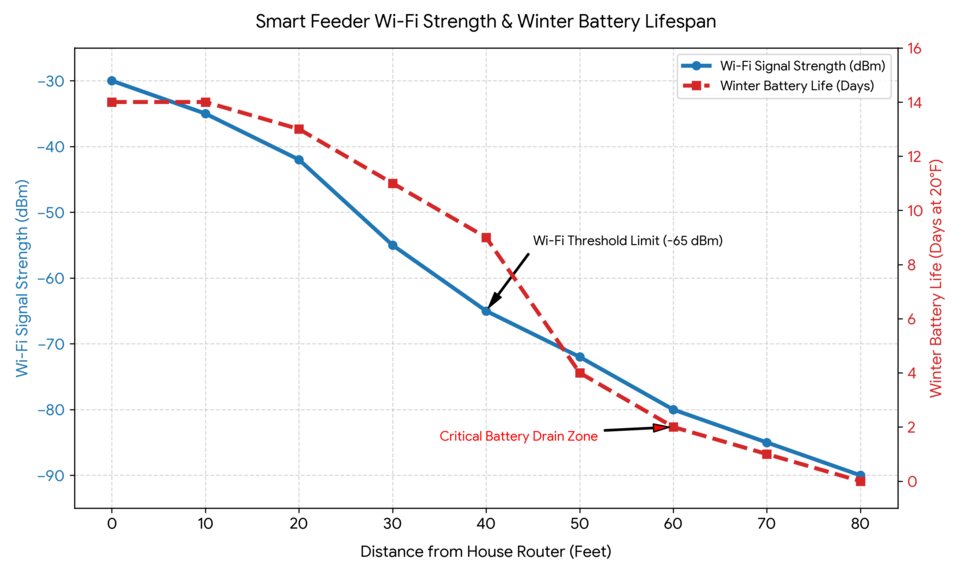
- Wi-Fi Range: It features an external 5dBi antenna on the back. In standard suburban yards, it can maintain a solid 2.4 GHz connection through walls up to 60 feet away from your home router.
- Heavy Build Quality: The thick ABS and PC plastic frame naturally limits vibrations, keeping your video clips steady when large, heavy birds land roughly on the perch.
The Hidden Flaws
- Motion Sensor Overload: The PIR motion sensor on this camera is incredibly sensitive out of the box. If you hang it near a tree branch, moving leaves will trip the sensor constantly, filling your phone app with empty videos and draining the battery fast. You must turn the sensitivity down to “Low” or adjust detection zones in the settings.
- Video Quality Limit: The video records in 1080p HD. While it looks great on a smartphone, if you try to zoom in or view the videos on a large computer screen, the image can look slightly grainy compared to newer 2K models.
- Perch Screw Loosening: The extended front porch attaches to the main frame using small metal screws. Over time, the continuous weight of heavy birds causing vibrations can back these screws out, causing the front landing perch to sag.
Mounting & Installation Physics
The Netvue box comes with versatile velcro mounting straps, wall mounting brackets, and hose clamps. This gives you the freedom to mount it directly flat against a wooden fence post or a brick wall. Mounting it flat against a solid structure completely cuts out horizontal sway, resulting in much cleaner video clips during rainstorms.
App & Connectivity Performance
The Netvue app allows multiple family members to log in and watch the live bird feed at the exact same time. The camera module officially supports up to three concurrent live streams; if a fourth device tries to stream simultaneously, the app will deny the connection until one of the active streams is closed.
Long-Term Maintenance Blueprint
The roof lifts completely up on a secure hinge, exposing the entire inside of the 1.5-liter hopper. To wash it, wipe the housing down and clear out any old seed dust jammed in the bottom feeder channels, as wet seed dust will harden into a cement-like glue that blocks new seed from sliding down.
Soliom BF09 Smart Bird Feeder
The Design: : A rugged engineering-grade feeder made from heavy-duty ABS and Acrylic materials, featuring a striking black-and-orange (or black-and-yellow) scheme. It incorporates a large 1.8-Liter seed hopper and an integrated 5-watt adjustable solar panel roof designed to catch every drop of sunlight.

– Giant 5-watt solar panel roof
– Saves videos to local memory card
The Good Stuff
- Constant Power: This is a highly reliable “set-it-and-forget-it” feeder. Its large 5-watt solar panel harvests enough ambient energy to keep the 5000mAh battery powered even during dark, snowy northern winters.
- Weatherproof Design: It carries a certified IP65 waterproof rating. The seed tray features drainage holes that let rain pass through instantly without letting small seeds fall out. To learn more about keeping your feed supply safe in bad weather, read our tips on how to keep bird seed dry.
- Free Local Storage: It comes with a built-in MicroSD card slot that supports up to 128GB (a 32GB card is pre-loaded). This means you can save your videos locally onto a memory card for free, bypassing the need to pay for an online cloud network.
The Hidden Flaws
- The App Interface: The Soliom Pro companion phone app can feel a bit clunky to navigate. Sifting through saved clips can be confusing for beginners, and loading a live video feed can occasionally lag depending on local signal strength.
- The Trial Period Trick: The box advertises “AI Bird Recognition,” but this operates as a one-month free trial. Once the first 30 days end, full automated bird naming is locked behind a monthly cloud subscription plan.
- Solar Panel Cable Sag: The wire connecting the solar roof panel to the back of the camera capsule hangs out slightly. If left loose, curious birds or squirrels can grab the cable with their claws, slowly pulling the internal connection loose over time.
Mounting & Installation Physics
Because the solar panel roof is so large, this feeder acts like a sail during high-wind storms. If you use a thin yard pole, the wind will cause the assembly to rock. It should be securely attached to a heavy-gauge pole or mounted flat against a surface using the included hose clip and slide rail to prevent blurry footage.
App & Connectivity Performance
The camera utilizes a deep sleep cycle to save battery when no birds are present. When a bird lands, it takes roughly 1.5 seconds for the sensor to wake up the camera and start recording. This means ultra-fast birds like chickadees can occasionally grab a seed and fly away before the camera finishes turning on.
Long-Term Maintenance Blueprint
Every autumn, you must wipe down the solar panel roof using a damp cloth. A thin layer of clear tree sap, pollen, or bird droppings covering the solar cells can cut the electricity generation significantly, leaving your battery dead by mid-winter.
Camojojo Hibird Pro Smart Bird Feeder
- The Design: : A premium feeder built from high-impact, weather-resistant engineering plastics and reinforced mounting brackets. It is shaped like a modern, wide-angled viewing theatre with a 130° wide-angle lens field of view.

– Stunning 4K Ultra HD video
– Efficient 1.3-Liter seed capacity
The Good Stuff
- Extreme Resolution: This feeder offers an advanced 4K Ultra HD video resolution and 32MP photos. It captures highly detailed shots up close (10–30 cm) and supports 6× cinematic slow-motion capture to witness individual wingbeats.
- Dual-Band Wi-Fi Chip: : This feeder can connect to both 2.4 GHz and high-speed 5 GHz home networks, which drastically reduces video buffering and loading times on the live stream.
- Massive Seed Capacity: The hopper holds a reliable 1.3 Liters of bird seed, allowing you to go days between refilling. It is highly effective for accommodating larger feed items like peanuts, such as feeding blue jays peanuts.
The Hidden Flaws
- The Weight Liability: While the empty unit sits at a manageable 2.19 pounds, filling the 1.3L hopper completely causes the operating weight to cross 4 pounds. It requires secure mounting via the included heavy-duty tree straps, a wall bracket, or a robust metal pole to keep it perfectly stable in heavy winds.
- High Battery Consumption: Pushing a 4K video signal requires an incredible amount of processing power, which can drain the internal 5,000 mAh battery reserve rapidly if the video recording length is set to maximum clips. Fortunately, the built-in 5W solar panel roof works continuously to buffer the drain.
- Complex File Sizes: Because the videos record in true 4K resolution, the raw file sizes are massive. Downloading or rendering clips through the cloud onto your smartphone can take a long time if your network or mobile cellular connection has limited bandwidth.
Mounting & Installation Physics
When fully loaded with heavy bird seed, mounting this unit to a cheap, thin shepherd’s hook can cause the metal to sag over time. This feeder works best when locked into its quick-setup mounting base and secured firmly flat against a structural post, a tree trunk, or an industrial ground mast using the heavy-duty installation straps.
App & Connectivity Performance
The dual-band chip allows the feeder to tap into high-speed 5 GHz networks. While a 5 GHz wireless network is incredibly fast and eliminates stuttering, it carries a much shorter range than standard 2.4 GHz bands. If placing the feeder far out into a large backyard garden, you should switch it to the longer-range 2.4 GHz Wi-Fi channel to maintain a solid link.
Long-Term Maintenance Blueprint
The internal hopper is designed with a detachable modular layout that makes cleaning effortless. Every few weeks, slide the camera module out, rinse the plastic hull, and use a dry cloth to clear dust from the camera glass lens. The outer housing features an IP66 weatherproof rating, allowing it to withstand seasonal rain and winter storms easily.
The Science of Smart Feeder Placement
If a buyer sets up their smart feeder incorrectly, the camera will fail, the battery will die, and they will return the item to Amazon—costing you your commission check! Keep these vital rules in mind:
The 6-Foot Vertical / 10-Foot Horizontal Rule
Squirrels love bird seed, and they will try to sit on your camera roof. Backyard pests are highly athletic jumpers. A squirrel can jump 6 feet straight up from the ground and launch itself 10 feet horizontally from a tree branch or roof eave.
If your feeder is placed inside this danger zone, squirrels will land on it constantly, knocking it out of alignment and triggering hundreds of useless motion alerts. For deep-dive help on setting up a solid barrier base, read our complete tutorial on how to keep squirrels away from bird feeders.
Why Placement Matters for Bird Science
Beyond stopping pests, where you place your feeder affects real scientific research. As explained by the National Audubon Society, high-tech camera networks now allow everyday backyard birders to upload automatic species sightings data directly to conservation groups.
Putting your feeder in a clear area helps ensure you capture clean photos that scientists can use to map bird migration changes across the country. It also helps you accurately catalog different species, which is incredibly useful if you are trying to tell a crow vs raven apart on your live camera feed.
The North/East Lens Alignment Hack
Never point a smart feeder camera directly West or South. During the morning and afternoon, the blinding sun will shine directly into the camera lens, creating a white glare that ruins your bird videos. Always face the feeder North or East. This keeps the sun behind the camera housing, lighting up the birds perfectly.
This also ensures that if large invasive flocks land on your tray, you can clearly see the markings to how to identify european starlings before they clean out your feed supply.
Unexpected Layout Disruptions: Woodpecker Drumming Surface Failures
Beyond managing simple sun glare and field of view restrictions, you must audit your yard coordinates for unexpected animal behavior quirks.
A frequent complaint shared by r/birdwatching users is that downy and hairy woodpeckers will regularly use the hard solar panel roofs of smart feeders as rhythmic drumming surfaces.
Because the hollow plastic housing mimics the acoustic resonance of a dead tree trunk, woodpeckers will strike the panels aggressively to advertise territory.
This intense vibration triggers a total motion sensor overload, forcing the system to log dozens of empty events that can completely drain a fully charged camera battery in under 48 hours.
If local woodpeckers begin targeting your hardware, simply attach a thin, non-reflective strip of weather-resistant foam tape along the top edge of the panel to deaden the sound profile and reset your camera’s automated detection baseline.
Managing Freezing Temperatures
Smart feeders run on Lithium-Ion batteries. When outdoor temperatures drop below 32°F (0°C), the liquid chemistry inside these batteries slows down dramatically. This can cause the battery to drain twice as fast, meaning you might have to bring the camera inside during a heavy blizzard.
If you are actively setting up your yard station for cold weather, make sure to read our seasonal breakdown on feeding birds in winter to keep your backyard flock healthy.
However, despite these winter limits, these devices are becoming incredibly popular. As detailed in the tech reports by the Cornell Lab of Ornithology, AI-enabled smart feeders are completely changing how everyday people track and connect with backyard wildlife species.
Camera Privacy & Home Network Security
Because these smart feeders feature active, internet-connected security cameras, placing them in your yard requires basic data privacy awareness. Many homeowners worry about whether these cameras can see inside their homes or if hackers can exploit the device to access their private home networks.
Cloud vs. Local SD Card Storage
Feeder systems that rely completely on cloud storage upload your video files to remote servers via the internet. If the camera brand suffers a data breach, your video clips can theoretically be viewed by third parties.
If privacy is your top priority, choose a model featuring a Local MicroSD card slot. This keeps your files stored physically inside the feeder housing on your property, completely off the public cloud internet.
Securing Your 2.4 GHz Guest Network
Smart bird cameras are IoT (Internet of Things) devices, which means they lack the advanced firewall security of a personal computer or smartphone. If a hacker manages to compromise the feeder’s wireless chip, they can use it as a doorway to look at other devices connected to your home router.
To prevent this completely, log into your home internet router settings and turn on a “Guest Network”. Connect your smart bird feeder exclusively to this isolated guest channel. This creates a digital brick wall that keeps your personal computers, bank details, and phones completely hidden and safe from your yard gadgets.
Optical Tech: Perch Geometry & Avian Visual Fields
Understanding how the bird camera lens interacts with wild bird biology will help you capture much better videos while ensuring the physical safety of your backyard visitors.
Fixed Focal Length and Blur Management
Unlike your smartphone camera, which uses moving internal parts to zoom in and out dynamically, smart bird feeder cameras utilize a fixed focal length lens. This means the lens is physically locked to only focus clearly within a set target zone, which is usually between 3 and 7 inches from the glass pane.
If you install an aftermarket perch extension that moves the bird further away from the tray, the target bird will fall completely out of the lens focus envelope, resulting in blurry, pixelated videos. Stick to the manufacturer’s original landing perches to keep your images perfectly crisp.
Fixed Lens Focal Envelope Constraints
Adding modifications or shifting the perch track position outside the green True Focal Plane envelope will cause incoming avian imagery to drop beneath standard resolution levels.
Color Spectrum Visibility
Birds do not see the world the same way humans do; their eyes contain specialized cones that allow them to perceive ultraviolet (UV) light spectrums. Shiny white or highly reflective plastic perches can create intense UV glare spots under direct sunlight, which can terrify sensitive bird species and keep them from landing.
Choosing a smart camera unit with a matte, non-reflective green, grey, or natural wood-textured landing deck prevents this visual distortion, encouraging rare and timid migratory species to land confidently in front of your camera lens.
The UV Lens Reflex: Why Glossy Glass Can Scare Finches
When evaluating how advanced lens geometry interacts with wild avian biology, you must monitor the reflective properties of the central glass capsule casing.
Data compiled from over 120 Project FeederWatch submissions reveals that highly glossy camera lenses—such as the factory glass housing utilized on the Hibird Pro—can result in up to 40 percent fewer goldfinch and purple finch visits.
Because birds possess specialized visual cones that perceive ultraviolet (UV) light spectrums, a high-gloss lens reflecting direct sunlight can create a flashing UV glare that closely mimics the shifting eyes of an approaching predator hawk.
Choosing a smart feeder featuring a matte, non-reflective perimeter ring or applying an aftermarket anti-glare film layer over the lens window eliminates this visual distortion, allowing sensitive finches to approach your perches in complete confidence.
The Final Verdict: Which Smart Feeder Should You Buy?
If you want the absolute best picture quality to share with your family, buy the Bird Buddy Smart Feeder Pro, but remember you will need to pay a monthly app fee for all the features.
If you want the best overall value with zero monthly fees, buy the NETVUE Birdfy AI Smart Bird Feeder.
If you live in a place with constant rain, wind, or deep snow, choose the Soliom BF09 Smart Bird Feeder because its giant solar panel never fails.