
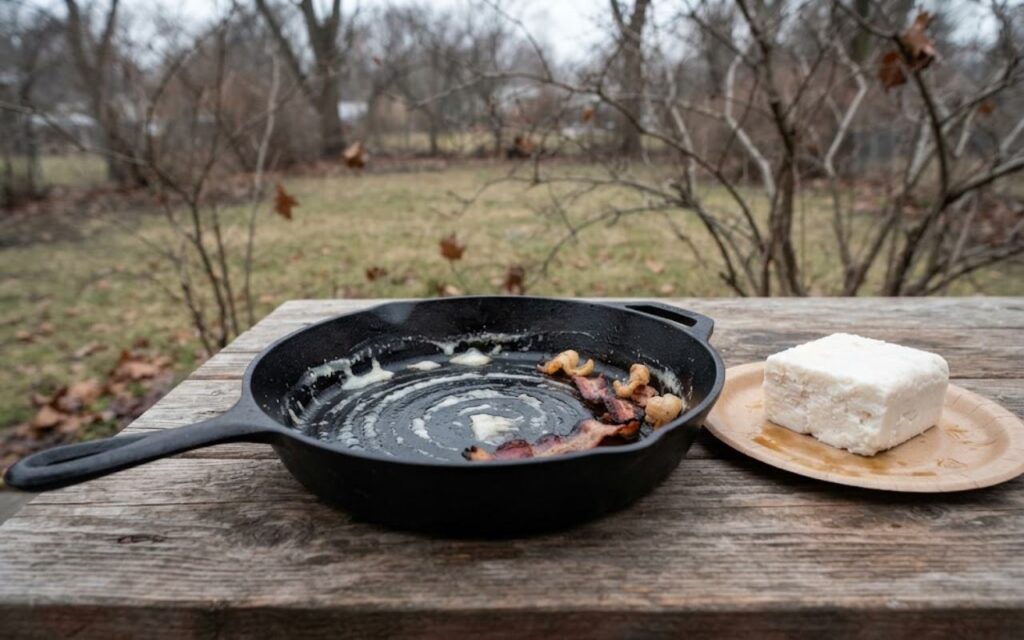
Clearing off the breakfast table often leaves behind a pan full of bacon fat or a plate of leftover dinner scraps that look like an easy, high-energy meal for backyard wildlife. However, if you are wondering can birds eat bacon grease or leftover table meats safely, avian biologists and wildlife rehabilitators issue a strict warning: these processed animal byproducts introduce major physical and bacterial hazards to wild songbirds.
While birds will readily gorge on greasy meats out of pure convenience, human cooking ingredients contain chemical preservatives and soft fat consistencies that wild avian bodies cannot safely navigate. Putting out the wrong types of animal fats can ruin a bird’s plumage or turn your feeding station into a toxic zone for disease.
TL;DR / Quick Verdict: Are Meat Scraps and Bacon Fat Safe?
- The Bacon Fat Threat (Feather Destruction): Bacon grease remains soft at room temperature, easily smearing onto a bird’s chest and wings. This destroys their intricate feather insulation, stripping away their weatherproofing and leaving them to die of hypothermia.
- The Chemical Burden (Nitrates & Sodium): Unlike raw beef suet, pork bacon fat is heavily saturated with chemical preservatives, synthetic nitrates, and high sodium levels that strain songbird kidneys.
- The Bacterial Trap (Rapid Rot): Leftover cooked table meats spoil within hours under the sun, inviting blowflies, maggots, and lethal Salmonella bacteria colonies straight to your platform feeders.
Interactive Tool Integration
Unsure if other meat scraps, gravies, or fats in your kitchen harbor hidden sodium loads or dangerous preservatives? Do not gamble with your local wildlife populations. Run your specific leftovers through our fully loaded, veterinary-backed 100-Food Avian Toxicity & Nutritional Diagnostic Index for an instant, color-coded safety tier rating and pathological analysis.
The Grease Trap: How Soft Fats Destroy Feather Insulation
The most severe hazard of putting out bacon grease has nothing to do with digestion; it is a direct physical threat called lipid plumage contamination. Woodpeckers, chickadees, and nuthatches actively seek out heavy animal lipids to fuel their high metabolisms, but their bodies are structurally evolved to only interact with hard, solid fats like raw beef suet.
Bacon grease, pork drippings, and chicken fat are molecularly soft fats that turn into a runny liquid or soft paste at standard ambient temperatures.
- The Transfer Mechanic: When a bird lands on a feeder coated in bacon grease, the soft fat easily transfers onto their throat, breast, and primary flight feathers.
- The Structural Collapse: Songbird feathers stay airtight using microscopic hooks called barbules. Soft grease causes these barbules to clump together permanently, unhooking the feather structure and leaving gaping holes in their plumage.
Once a bird’s feathers are matted with soft fat, they lose their natural weatherproofing and wind insulation. The bird cannot stay dry or regulate its core body temperature, causing them to freeze to death during damp or cold nights.
Chemical Loads and the Spoilage Trap
Beyond the physical danger to their feathers, processed human meats introduce invisible chemical toxins and aggressive bacterial pathogens into your yard.
Preservatives and Salt Toxicity
Commercial bacon, sausage, and deli lunchmeats are heavily treated with sodium nitrates and extreme table salts to extend shelf life. Terrestrial songbirds have tiny kidneys and completely lack specialized salt-excreting organs. Feeding them these salted pork products forces rapid tissue dehydration and acute renal strain, which can lead to organ collapse.
The Pathogenic Bacteria Loop
While raw insect protein is vital for wild birds, cooked table meats (like leftover steak shreds or chicken scraps) carry a massive risk of rapid outdoor spoilage. Left out on a warm afternoon, cooked meat cells rot within hours. This decaying protein acts as an immediate magnet for blowflies, maggots, and lethal Salmonella enterica bacteria lines, which can spark an outbreak and wipe out an entire backyard flock.
How to Offer Safe High-Energy Fats Instead
You can easily provide your local backyard birds with the dense, winter caloric fuel they need without introducing dangerous chemical preservatives, soft pork lipids, or spoiling table meats into the ecosystem.
Safe Bird-Approved Alternatives
- Pure Rendered Beef Suet: The ultimate alternative to pork bacon grease. Pure beef kidney tallow is a hard, stable fat that does not melt or smear onto feathers at normal temperatures, providing clean, bird-safe caloric fuel for woodpeckers and nuthatches.
- Roasted, Unsalted Peanuts: Drop the processed breakfast meats and offer whole or crushed roasted peanuts instead. They provide a massive, clean return of bioavailable fats and plant proteins without any dangerous chemical additives.
- Plain Natural Peanut Butter: Pure, sugar-free peanut butter is an outstanding source of caloric density. For maximum safety, mix it with coarse yellow cornmeal or raw rolled oats to eliminate the sticky texture, creating a crumbly suet cake that is easy to swallow.
- Hard-Boiled Eggs: If you want to supply an emergency protein boost during the spring breeding season, mash up whole hard-boiled eggs (including the shells). This provides nesting parents with a complete, safe protein and calcium resource.