
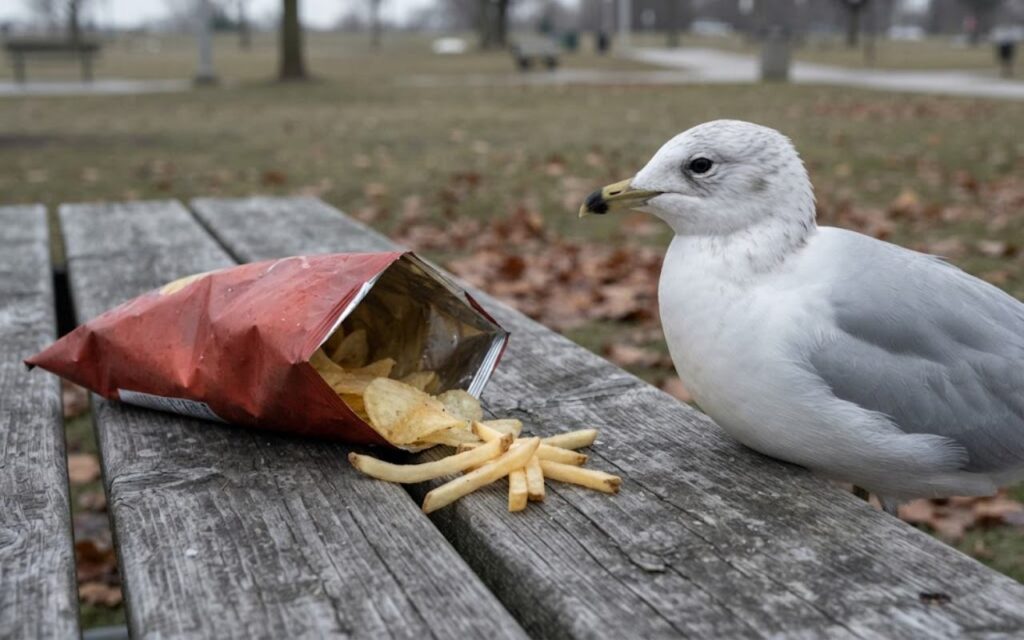
Dumping the leftover crumbs from a bag of potato chips or a box of greasy french fries into the yard seems like an easy way to treat local wildlife. However, if you are wondering can birds eat potato chips safely, avian veterinarians and wildlife rehabilitators issue a strict warning: processed, heavily salted human fast foods cause immediate and dangerous biological trauma to songbirds.
While birds will readily scoop up salty leftovers out of convenience, their microscopic kidney structures cannot process human sodium levels. Feeding fried fast-food snacks to local backyard flocks triggers hidden physiological stresses that can quickly end in rapid organ collapse.
TL;DR / Quick Verdict: Are Chips and Fries Safe?
- The Salt Threat (Hypernatremia): Terrestrial songbirds completely lack the specialized supraorbital salt glands found in marine avians. Peer-reviewed studies in avian toxicology reveal that acute clinical signs of sodium toxicosis can manifest rapidly when dosage levels reach or exceed 1,500 mg/kg, while a dosage of 3,000 mg/kg represents the median lethal dose (\(LD_{50}\)) for a standard passerine model.
- The Fatty Hazard (Feather Matting): Grease and lipid residue from fried items actively disrupt the microscopic hook structures (barbules) that hold feathers together. According to veterinary rehabilitation protocols from International Bird Rescue, this physical contamination breaks down the bird’s natural waterproofing matrix, leading to rapid heat loss and a severe risk of hypothermia during cold or wet conditions.
- The Organ Impact: Excess plasma sodium concentrations exceeding 200 mmol/L force severe intracellular fluid shifts. This shifts water out of delicate tissues, producing systemic cellular dehydration, central nervous system depression, muscle tremors, ataxia, and eventual renal shutdown.
Interactive Food Safety Checker
Unsure if other processed pantry items harbor hidden sodium counts or dangerous oils? Do not gamble with your local wildlife populations. Run your specific leftovers through our fully loaded, veterinary-backed 100-Food Avian Toxicity & Nutritional Diagnostic Index for an instant, color-coded safety tier rating and pathological analysis.
This dynamic tool cross-references exact human sodium metrics and lipid concentrations against standard avian toxicological parameters, helping you immediately identify hidden threats in your pantry before they reach your backyard feeders.
Launch Avian Toxicity Index Tool →Osmotic Shock: The Danger of Extreme Sodium
The primary threat of a processed diet is an acute metabolic disturbance known as sodium toxicosis or hypernatremia.
Unlike marine avians (such as gulls and petrels) that possess functional nasal salt glands to continuously filter high-saline loads from their blood, terrestrial backyard songbirds rely solely on their kidneys to filter out excess table salt.
The avian kidney is structurally less efficient than the mammalian kidney at handling heavy, concentrated sodium influxes.
According to experimental data published in avian toxicology journals, oral ingestion of granular sodium chloride causes a rapid rise in blood sodium concentration.
- The Biological Impact: When plasma sodium concentrations cross a critical threshold of 200 mmol/L, the bird’s body experiences a severe osmotic fluid shift, aggressively pulling moisture out of the intracellular space and into the extracellular fluid.
- The Outcome: This cellular dehydration causes the brain cells to shrink, leading to rapid-onset central nervous system signs including severe depression, ataxia (inability to fly or perch), and convulsions.
Pathological necropsies of birds exposed to toxic sodium concentrations consistently reveal distinct gross lesions, including notable fluid accumulation, edema, and distension beneath the tough koilin layer of the gizzard.
If exposed songbirds do not have immediate, unrestricted access to fresh, uncontaminated drinking water to cycle out the concentrated systemic load, complete renal shutdown can occur within hours.
The Greasy Residue: Destroying Feather Insulation
Beyond internal chemical poisoning, fried fast-food scraps present an aggressive physical threat to a bird’s structural health: lipid plumage contamination.
French fries, tortilla chips, and microwave buttered popcorn are thoroughly saturated with vegetable oils, trans fats, and industrial lards that remain soft or greasy at ambient outdoor temperatures.
When birds peck at these oily scraps or carry them back to a nest box, the grease naturally transfers onto their throat, breast, and facial feathers.
Songbird feathers are precision-engineered tools held together by microscopic hooks called barbules. Oily grease coats these barbules, forcing them to unhook and clump together permanently.
- The Weatherproofing Fail: Once feathers clump, they lose their airtight seal, rendering the bird completely vulnerable to wind, rain, and morning dew.
- The Fatal Link: Without a functional waterproof barrier, the bird cannot regulate its core body temperature, frequently resulting in death from hypothermia during wet or cold nights.
How to Offer Safe Backyard Treats Instead
You can easily satisfy your local birds’ craving for raw carbohydrates and fats without introducing dangerous human processing chemicals, refined table salts, or deep-fryer oils into your yard.
Safe Bird-Approved Alternatives
- Plain Air-Popped Popcorn: The absolute best alternative if you want to feed a crunchy snack. Pop the kernels entirely plain using heat alone—zero butter, zero oils, and zero salt. Jays and mockingbirds will love sorting through the flakes safely.
- Plain Rolled Oats: Drop the salted breakfast pastries and replace them with raw quick oats or steel-cut groats scattered on raised platforms. They provide clean complex carbohydrates that easily break down inside the gizzard.
- Rinsed Melon and Squash Seeds: Save the raw seeds from watermelons, cantaloupes, or pumpkins instead of throwing them away. Rinse and dry them to give large-billed cardinals a fantastic, oil-rich lipid treat.
- Hulled Sunflower Hearts: If your yard is experiencing high pest or rodent traffic from throwing table scraps on the grass, switch exclusively to premium hulled sunflower seeds on elevated tube feeders for a zero-mess nutrition block.