
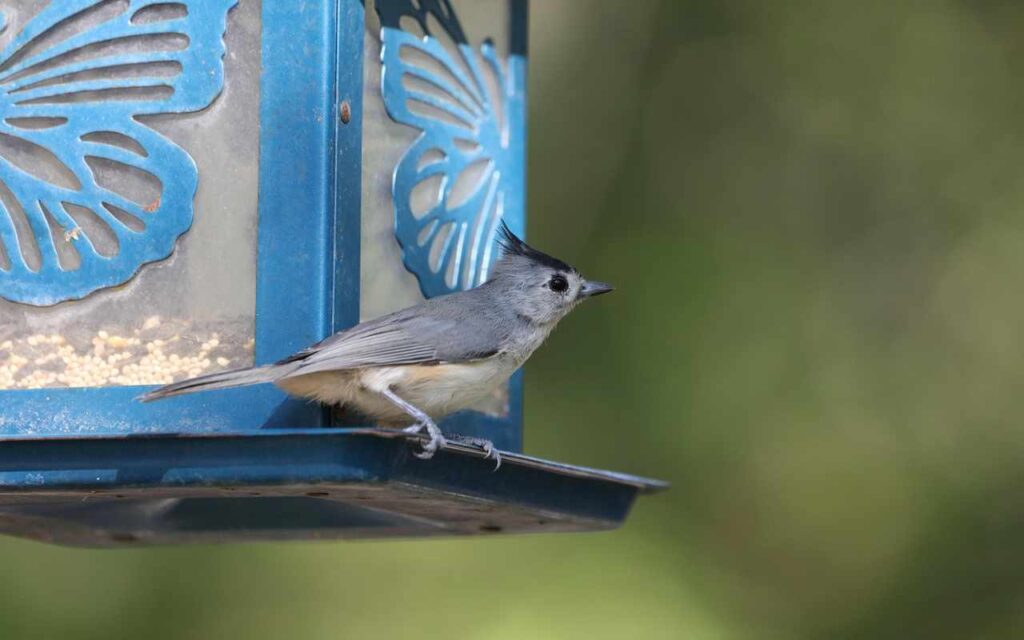
There’s this moment that happens at feeders where a tufted titmouse lands, scans the situation with those impossibly large black eyes 😳, snatches a single sunflower seed, and vanishes into the trees like a tiny gray ninja. Thirty seconds later, it’s back for another. And another. If you’ve ever watched this routine and wondered how to attract tufted titmice and get these adorable crested birds to visit your yard regularly, you’re in the right place.
I’ve been feeding tufted titmice for years, and they’ve become some of my favorite backyard visitors. They’re bold but not aggressive, curious but cautious, and they’ve got personality for days packed into their small bodies. The good news? Attracting them isn’t complicated. Once you understand what tufted titmice want, you’ll have them visiting daily, stashing seeds in your trees, and probably scolding you from the branches when the feeder runs dry.
- Mature trees, shrubs, and dead wood = food, shelter, and nesting.
- Feed sunflower seeds, peanuts, safflower, suet, and mealworms.
- Use tube, hopper, platform, and suet feeders near cover.
- Install nest boxes with 1¼” entrances for breeding pairs.
- Provide clean water; heated baths help in winter.
- Plant native berry- and nut-bearing trees for natural food.
- Skip pesticides and cheap seed blends—they deter titmice.
- Be patient, once found, titmice return regularly.
Why Tufted Titmice Are Worth Attracting
Show Transcript
0:00
All right, let’s get into it. Today, we’re talking about how to attract one of the most fun, charismatic little birds to your backyard: the tufted titmouse. If you want more activity at your feeders, you’re definitely in the right place.
0:13
You’ve probably seen this before: a small gray bird swoops into your feeder, grabs a single seed with surgical precision, and then poof—it disappears back into the trees. That’s your feathered ninja in action, and it’s their signature move.
0:28
Let’s properly introduce this little guy: the tufted titmouse. You can’t miss them—they have a sharp gray crest, a chunky little body, and huge, dark, curious eyes. They’re bold, loud, and bring a ton of personality to your yard.
0:43
These birds aren’t shy. They show up, make their presence known, and while they’ll hang out with other birds, they definitely have their own vibe. They’re a constant source of backyard entertainment.
0:58
So why bother attracting them? Unlike migratory birds that pass through for a season, tufted titmice are year-round residents. Once they find your yard, they often stick around. They’re excellent at natural pest control, snacking on beetles, caterpillars, and even wasps.
1:27
They’re also super smart and often join mixed flocks with chickadees and woodpeckers, creating a backyard birdwatching party right outside your window. And you’ll hear them before you see them—their classic “Peter Peter Peter” whistling call is unmistakable.
1:50
Step one in attracting tufted titmice is creating a safe, comfortable space—a personal backyard sanctuary for them.
2:01
Safe from a tiny bird’s perspective means a few key things:
- Mature trees, especially oaks and beeches, act as both a food source and shelter.
- Shrubs provide quick hiding spots from predators.
- Dead tree limbs or old woodpecker holes serve as ideal nesting cavities.
2:36
The easiest thing you can do today? Add water. A simple birdbath gives them a reliable place to drink and clean up. Heated birdbaths in winter are a total game-changer.
2:50
Next, food grabs their attention fast. Tufted titmice love high-energy foods, especially black oil sunflower seeds—their absolute favorite. Peanuts and high-fat suet are also excellent, particularly in cold weather.
3:16
Choose quality over quantity. Avoid cheap seed mixes full of millet and fillers; titmice will flick that onto the ground, attracting unwanted birds like house sparrows.
3:33
Where you place your feeder matters as much as what’s in it. Tube feeders, hopper feeders, and platform feeders all work, but position them within about 10 feet of trees or shrubs for a safe escape route.
3:52
Once they’re visiting daily, you can encourage them to become permanent residents by providing a nest box.
4:06
Important details:
- The entrance hole must be exactly 1 1/4 inches—perfect for titmice, too small for larger aggressive birds.
- Mount the box 6–10 feet off the ground, ideally in some shade.
- Add a thin layer of wood shavings for nesting material.
4:38
Fun fact: titmice love to line nests with soft animal hair, and they’re bold about collecting it—even plucking it from a sleeping dog or a person’s head!
4:59
Attracting titmice is about creating a reliable, year-round spot. Seasonal care matters:
- Spring: mealworms help feed growing chicks.
- Summer: fresh water is crucial.
- Fall/Winter: keep feeders stocked with high-fat seeds for caching.
5:30
Provide consistent care, and they’ll remember your yard, return year after year, and even bring their young along—a new generation of backyard visitors.
5:46
In short, here’s the four-step recipe for success:
- Get a feeder.
- Fill it with black oil sunflower seeds.
- Place it near trees or shrubs for cover.
- Add a fresh water source.
6:02
By taking these small steps, you’re not just feeding a bird—you’re participating in your local ecosystem. Once you’ve invited the tufted titmouse, who will you welcome next?
Before we get into the how-to, let’s talk about why these birds are such fantastic backyard companions. Tufted titmice are year-round residents across the eastern United States, meaning once you attract them, they stick around through all seasons. They’re not fair-weather friends who bail when migration season hits.
These birds are also incredibly entertaining to watch. They’re members of the chickadee family, and like their cousins, they’re active, acrobatic, and constantly on the move. According to the Cornell Lab of Ornithology, tufted titmice are known for their food-storing behavior, taking seeds from feeders and caching them within 130 feet of the source. You’ll literally watch them turn your yard into a network of hidden seed stashes.
Their call is distinctive too: a clear, whistled “peter-peter-peter” that once you learn to recognize, you’ll hear constantly. They’re vocal birds that aren’t shy about announcing their presence. IMO, that characteristic crest and those big eyes give them an expression that’s somehow both innocent and mischievous at the same time 🙂
Plus, tufted titmice help control insect populations. During breeding season, they consume massive quantities of caterpillars, beetles, wasps, and other insects. They’re working pest control that also happens to be adorable. What’s not to love?
Understanding Tufted Titmouse Habitat Requirements
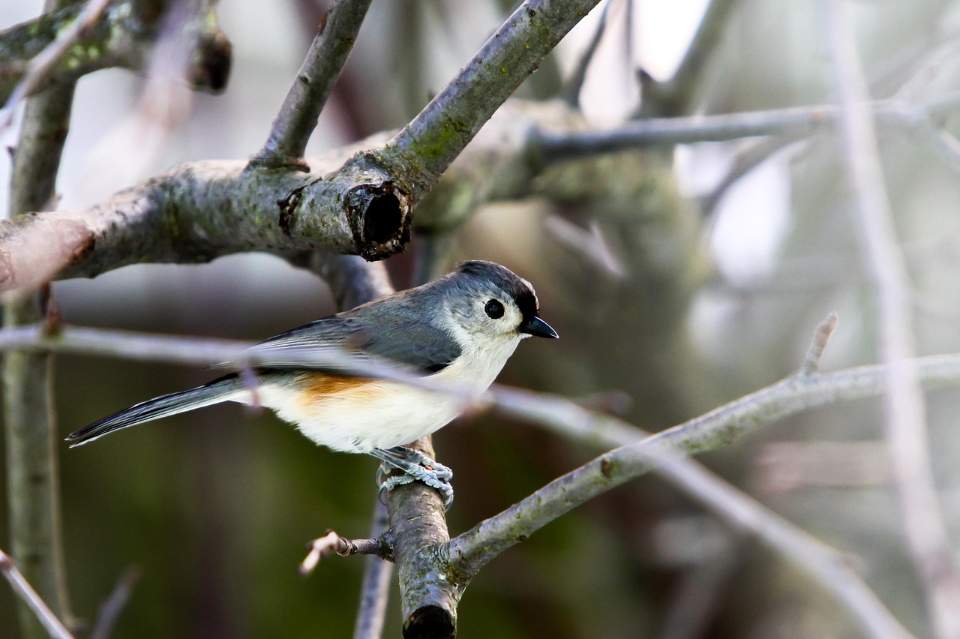
To attract any bird species, you need to understand their natural tufted titmouse habitat preferences. These birds are deciduous forest specialists, thriving in areas with mature trees, particularly oak, hickory, and beech forests. They need vertical structure: tall trees with dense canopies for foraging and protection.
Unlike some backyard birds that adapt well to open suburban lawns, tufted titmice prefer yards with significant tree coverage. If your property is mostly grass with one or two isolated trees, you’ll have a harder time attracting titmice than someone with a wooded lot or at least a tree-dense corner of their yard.
The good news is that tufted titmice have expanded their range northward over the past several decades, likely due to a combination of climate change, forest regeneration, and the proliferation of backyard feeders. According to research from NestWatch, favorable habitats include forests, parks, and suburban neighborhoods with mature trees. They’ve adapted to human-altered landscapes remarkably well.
Dead wood and natural cavities are critical for tufted titmouse habitat. These birds are secondary cavity nesters, meaning they don’t excavate their own holes but rely on old woodpecker cavities, natural tree hollows, and nest boxes. If your yard has standing dead trees or large dead limbs (snags), you’ve already got a major attractant in place. Learn more about creating optimal bird-friendly garden design to support cavity-nesting species.
Water sources matter too. A reliable birdbath or small pond provides drinking and bathing opportunities that tufted titmice use regularly. They’re not as water-dependent as some species, but offering clean water definitely increases your yard’s appeal.
Best Seeds for Tufted Titmice: What They Actually Want
Let’s get straight to what matters most: food. The fastest way to attract tufted titmice is offering the right seeds in the right feeders. These birds have clear preferences, and catering to them pays off immediately.
Black oil sunflower seeds are the undisputed champion for attracting tufted titmice. According to Perky-Pet, sunflower seeds are among their favorite feeder foods. The seeds are large enough that titmice can carry them easily, they’re packed with fat and protein, and they’re available year-round. If you stock only one seed type, make it black oil sunflower.
Here’s what makes sunflower seeds perfect for titmice: they don’t eat them at the feeder. Information from the Cornell Lab notes that titmice typically shell seeds before caching them. You’ll watch a titmouse grab a seed, fly to a nearby branch, wedge the seed under its feet, and hammer it open with precise strikes from that stout little beak. It’s like watching a tiny carpenter at work.
Sunflower hearts or chips (pre-shelled sunflower seeds) are even better in some ways. They eliminate the work of shelling, which means titmice can cache more seeds faster. The downside is that sunflower hearts cost more and spoil faster than whole seeds. I use whole black oil sunflower in winter and switch to hearts during wet spring weather when shells can get moldy.
Peanuts are another tufted titmouse favorite. Whole peanuts in the shell, peanut halves, or even peanut butter all work well. Research from Kaytee indicates that peanuts are excellent for attracting titmice to backyard feeders. I’ve watched titmice struggle comically with whole peanuts that are almost as large as they are, determinedly wedging them into bark crevices.
Other best seeds for tufted titmice include safflower seeds, which have the bonus of deterring squirrels and grackles while still attracting titmice. Nyjer seeds work less reliably; titmice will eat them, but they don’t go crazy for them like goldfinches do.
Suet is essential, especially during winter months. Tufted titmice love suet cakes, particularly formulations with insects, nuts, or fruit mixed in. During cold weather, the high-fat content of suet provides crucial calories. Check out our guide on how to make suet cakes for birds if you want to create custom blends.
Mealworms (live or dried) are like candy to tufted titmice, especially during breeding season when they’re feeding nestlings. Offering mealworms in spring can turn your yard into titmouse central as parents make repeated trips to feed hungry chicks.
Best Feeders for Attracting Tufted Titmice
Having the right seeds means nothing if your tufted titmouse feeder tips don’t include appropriate feeder types. Tufted titmice are adaptable and will use various feeder styles, but some work better than others.
Tube feeders with perches work excellently for titmice. They can perch comfortably while selecting seeds, and the clear tube lets you monitor seed levels easily. Make sure the perches are sturdy; titmice are larger than chickadees and need solid landing spots. Metal perches hold up better than plastic over time.
Hopper feeders are probably the most effective option for attracting tufted titmice. These feeders hold significant quantities of seed, offer multiple feeding spots, and provide some weather protection. Titmice seem to prefer the security of hopper feeders where they can land, quickly grab a seed, and escape to nearby cover. I use a large wooden hopper feeder as my primary station, and titmice visit it constantly.
Platform or tray feeders work well for titmice, particularly if you’re offering peanuts or sunflower hearts. The open design gives titmice plenty of room to land and select their preferred seeds. The downside is that platform feeders offer no protection from weather, so seeds can get wet and spoil quickly. I only use platforms with good drainage during dry weather or under roof overhangs.
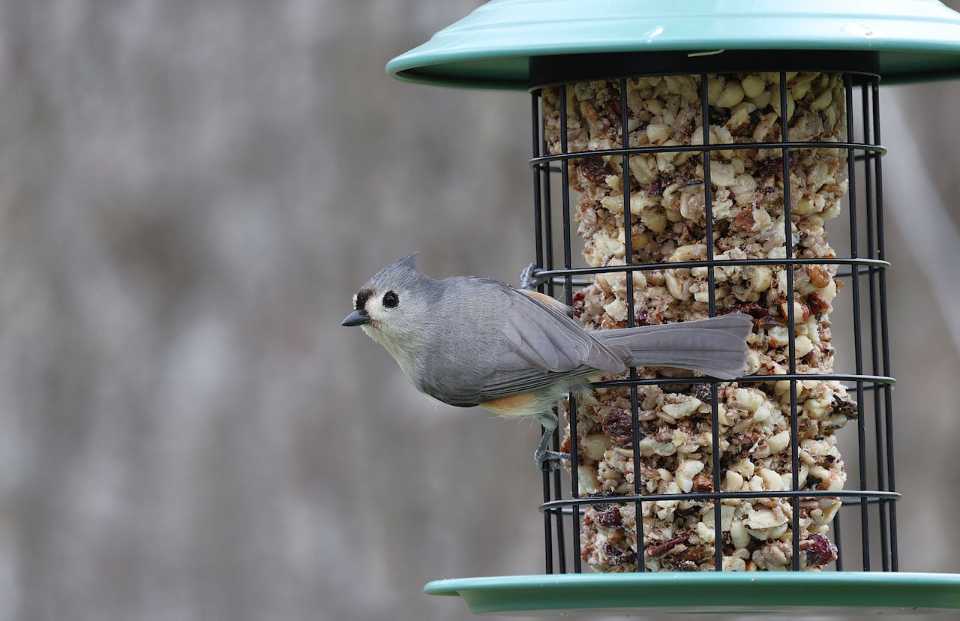
Suet feeders should be cage-style or log-style feeders that allow titmice to cling while feeding. Titmice are strong clingers like woodpeckers and nuthatches, so they handle cage feeders easily. Avoid suet feeders designed only for perching birds; titmice prefer feeders where they can grip vertically.
Feeder placement matters as much as feeder type. Mount or hang feeders within 10-15 feet of trees or large shrubs. Tufted titmice prefer quick escape routes to cover. A feeder hanging in wide-open space makes them nervous, even if it’s stocked with their favorite seeds. They want to be able to grab food and retreat to safety immediately.
Height is flexible; I’ve had success with feeders everywhere from 4 feet to 12 feet off the ground. Titmice are comfortable at various heights as long as protective cover is nearby. If you’re struggling with how to keep squirrels away from bird feeders, consider baffled poles that allow titmice access while blocking squirrels.
How to Attract Tufted Titmice to Your Backyard Year-Round
Attracting titmice during one season is easy; keeping them year-round requires understanding their seasonal needs and behaviors.
Spring is breeding season, and tufted titmice shift heavily toward insect consumption. They still visit feeders but less frequently as they hunt caterpillars, beetles, wasps, and spiders to feed growing nestlings. Continue offering sunflower seeds and suet, but add mealworms if you want to maximize titmouse traffic. This is also nest-building season, so providing nesting materials helps attract breeding pairs.
Summer sees continued insect focus, though titmice never completely abandon feeders. According to information from BioKIDS, caterpillars are an essential part of their summer diet. Keep feeders stocked but don’t be alarmed if visitation drops compared to winter. Titmice are foraging naturally, which is exactly what they should do.
Fall is when tufted titmice become caching machines. Research from Wikipedia notes that during fall and winter, tufted titmice hoard food extensively. You’ll see them making dozens of trips per hour, each time carrying a single seed to hide in bark, under leaves, or in other concealed spots. This is prime time for feeder watching because the action is constant and fascinating.
Winter is when tufted titmice rely most heavily on feeders. Natural food sources are scarce, and the high-calorie seeds and suet you provide become critical for survival. This is the season when consistent feeding matters most. Empty feeders during cold snaps can genuinely impact bird survival. Our comprehensive guide on feeding birds in winter covers strategies for supporting titmice and other species during harsh weather.
Tufted titmice are also social birds that often join mixed-species flocks in winter, traveling with chickadees, nuthatches, downy woodpeckers, and other small songbirds. When you attract tufted titmice, you’re often attracting an entire suite of woodland birds. It’s like getting a package deal of awesome backyard visitors.
Foods That Tufted Titmice Can’t Resist
Beyond standard feeder fare, there are some special treats that tufted titmice find absolutely irresistible.
Peanut butter is like titmouse catnip. Smear it on tree trunks, pack it into drilled log feeders, or offer it in specialized peanut butter feeders. Titmice will work at peanut butter for extended periods, and it provides excellent nutrition. Just use regular full-fat peanut butter; avoid low-fat varieties or those with added sugar.
Berries and fruit attract tufted titmice, particularly native fruits. According to Perky-Pet research, among their favorite wild foods are blueberry, mulberry, and Virginia creeper berries. If you have space for berry-producing shrubs, elderberry, serviceberry, dogwood, and viburnum all provide natural food sources that titmice love. Consider planting native plants for birds to create year-round food resources.
Acorns and beechnuts are natural fall and winter foods that tufted titmice cache extensively. If you have oak or beech trees in your yard, you’re already providing premium titmouse food. If not, you can actually collect acorns and offer them at platform feeders. Titmice will carry them off to cache just like sunflower seeds.
Suet with insects is premium winter food. Commercial suet cakes that include mealworms, crickets, or other insect bits provide protein alongside fat. During cold weather, this combination gives titmice the complete nutrition they need. I’ve noticed significantly more titmouse activity at insect suet feeders compared to plain suet.
Live mealworms deserve special mention again because titmice go absolutely nuts for them. Offer them in a smooth-sided bowl or specialized mealworm feeder. During breeding season, parent titmice will visit mealworm feeders repeatedly, stuffing their beaks with multiple worms before flying off to feed nestlings. It’s expensive but spectacularly effective for attracting titmice.
Birdhouse for Tufted Titmouse: Nest Box Specifications
If you want breeding tufted titmice in your yard, providing proper birdhouse for tufted titmouse setups dramatically increases your chances.
Tufted titmice are secondary cavity nesters, meaning they don’t excavate their own holes. According to the Tennessee Wildlife Resources Agency, the preferred nest box for tufted titmice is slightly smaller than a standard bluebird box with a 1 ¼ inch entrance hole. This size accommodates titmice while excluding larger, more aggressive species like starlings.
Specifications for an ideal tufted titmouse nest box:
- Floor dimensions: 4 inches by 4 inches
- Interior height: 8-10 inches from floor to ceiling
- Entrance hole: 1 ¼ inches in diameter
- Hole height: 6-7 inches above the floor
- Ventilation: Drill or cut ventilation holes near the top
- Drainage: Small holes in the floor prevent water accumulation
Research from 70birds confirms that tufted titmouse nest boxes are the same size as those for chickadees, plain titmice, and nuthatches. This means your nest box may attract multiple species, which is actually a benefit for overall backyard bird diversity.
Placement is critical. Mount nest boxes 5-15 feet high on trees or poles in areas with mature deciduous trees. Tufted titmice prefer forest or woodland edge habitat, so position boxes near tree lines rather than in wide-open areas. Face the entrance hole away from prevailing winds and afternoon sun if possible.
Timing matters for nest box installation. Put boxes up in late winter (February or early March) so titmice can discover them before nest-site selection begins. Tufted titmice typically nest from April through July, sometimes raising two broods in southern parts of their range.
Fill the box with 1-2 inches of wood shavings (not sawdust) to provide a base for nest building. Information from Sialis.org notes that nest cavities are typically 8-10 inches deep with 5-8 inches from nest rim to nest cup bottom. Titmice will add their own nesting material, including the distinctive hair or fur they collect to line the nest cup.
One fascinating behavior: tufted titmice often line their nests with hair from living animals. Research from Animal Spot indicates they can be trained to recognize human voices and will even take food from hands. Some people have successfully trained titmice to pull hair directly from their heads for nest material. It’s weird, slightly creepy, and absolutely hilarious to watch :/
Want to help nesting birds? Check out our guide on how to encourage birds to nest in your garden for additional strategies.
Backyard Birdwatching for Beginners: Identifying Tufted Titmice
If you’re new to backyard birdwatching for beginners, tufted titmice are excellent identification subjects because they have such distinctive features.
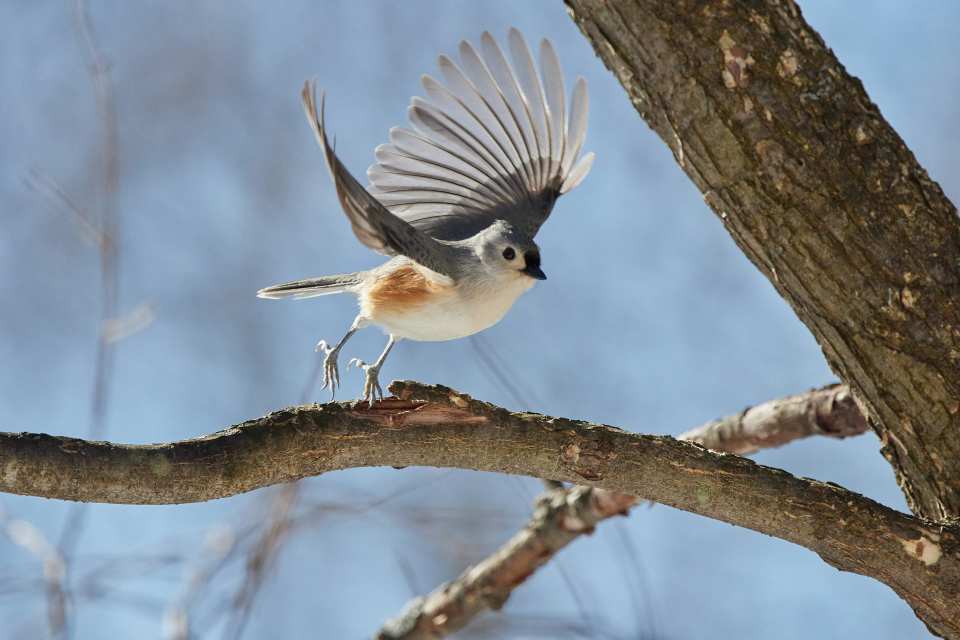
The crest is the dead giveaway. Tufted titmice are one of the only small gray birds east of the Rockies with a prominent pointed crest. When relaxed, the crest lies flat; when alert or excited, they raise it into a sharp point. It’s like a built-in mood indicator.
Their overall coloration is soft gray above with paler, almost white underparts. They show a distinct peachy-buff wash on their flanks (the sides below the wings), which is particularly noticeable in good light. The forehead is black, creating a subtle contrast with the gray crest and face.
Those eyes are unforgettable: large, round, and completely black, giving tufted titmice an almost cartoonish expression. Combined with their small black bill, they have a face that’s somehow both fierce and adorable.
Size-wise, tufted titmice are about 5.5-6.3 inches long with a wingspan of around 9-10 inches. They’re noticeably larger than chickadees but smaller than cardinals, roughly the size of a sparrow but stockier.
Their behavior is distinctive too. Titmice are active, constantly moving, and often hang upside-down or sideways while foraging. They’re bold at feeders, swooping in confidently, grabbing food, and departing quickly. Unlike chickadees who might linger or feed at the feeder, titmice almost always grab-and-go.
The voice is another reliable identification feature. Their song is a clear, whistled “peter-peter-peter” or “teacher-teacher-teacher” repeated multiple times. They also have various harsh scolding calls, including a buzzy “zeee-zeee-zeee” and a chickadee-like “dee-dee-dee.” Once you learn their calls, you’ll realize how vocal and common they are.
How to Feed Small Songbirds Without Attracting Pests
One challenge in how to feed small songbirds like tufted titmice is managing unwanted visitors: squirrels, grackles, starlings, and house sparrows that can dominate feeders and consume massive quantities of expensive seed.
Safflower seeds are your secret weapon. Tufted titmice love them, but squirrels, grackles, and starlings generally avoid them due to the slightly bitter taste. Switching some or all of your feeders to safflower significantly reduces pest pressure while maintaining titmouse traffic. It’s more expensive than black oil sunflower, but the reduction in waste often makes it cost-effective.
Feeder design matters enormously. Weight-activated feeders that close feeding ports when heavy birds or squirrels land work excellently for protecting seed while allowing titmice access. Cage feeders surrounded by wire mesh with 1.5-inch openings admit titmice, chickadees, and other small birds while excluding larger species and squirrels.
Upside-down suet feeders favor titmice and other clinging birds like woodpeckers and nuthatches while deterring starlings, who struggle to feed upside-down. This simple design change can dramatically improve the quality of birds at your suet feeders.
Pole baffles and squirrel baffles are essential if you have any squirrel pressure. Tufted titmice don’t care whether feeders are baffled; squirrels care a lot. A good baffle protects seed for the birds you actually want to attract.
Avoid mixed seed blends with millet, milo, wheat, or other cheap fillers. Tufted titmice will ignore these seeds, but pest species love them. You’ll end up with enormous piles of discarded seed under your feeders and a yard full of house sparrows and grackles. Stick to straight black oil sunflower, sunflower hearts, safflower, or quality no-waste blends.
Timing can help too. If your local grackle or starling population is unbearable during certain seasons (spring is typically worst), temporarily take down feeders for a few weeks. Tufted titmice are resourceful and will survive fine on natural food. The pest species will move on to easier food sources, and you can resume feeding once they’ve dispersed.
Attracting Winter Birds to Yard: Special Considerations for Titmice
Attracting winter birds to yard requires understanding the unique challenges birds face during cold weather and how tufted titmice specifically adapt to winter conditions.
Tufted titmice don’t migrate, so winter residents are your year-round neighbors. They face the challenge of finding enough calories to maintain body heat during long, cold nights. Research shows that small birds can lose up to 10% of their body weight overnight during extreme cold. Every calorie matters.
Consistent feeding becomes critical during winter. Titmice establish feeding territories and daily foraging routes that incorporate your feeders. If feeders run empty during cold snaps, birds waste precious energy searching for alternative food sources. Keep feeders consistently stocked from November through March.
High-fat foods are especially important for winter survival. Suet, peanuts, sunflower seeds, and peanut butter all provide the concentrated calories titmice need. During severe cold, I double my suet offerings and make sure feeders stay filled even in snow and ice.
Weather protection helps tremendously. Feeders with roofs keep seed dry and accessible during snow and rain. Titmice will visit feeders in any weather, but wet seed spoils quickly and freezes solid in extreme cold. Covered feeders extend the time between refills and reduce waste.
Water becomes critical during winter freezes. When natural water sources freeze solid, birds face genuine dehydration risk. A heated birdbath provides drinking water and surprisingly, bathing opportunities even in winter. I’ve watched tufted titmice bathe in my heated bath during single-digit temperatures. They understand that clean, well-maintained feathers provide better insulation. Learn more about how to attract birds during winter for comprehensive cold-weather strategies.
Roosting sites matter for winter survival. Tufted titmice roost in tree cavities, dense evergreens, or nest boxes on cold nights. Leaving nest boxes up year-round provides roosting sites that can shelter multiple birds during extreme cold. Dense evergreen trees or shrubs create windbreaks that protect roosting birds from wind chill.
Creating Long-Term Titmouse Habitat
If you want tufted titmice as permanent residents rather than occasional visitors, focus on creating quality long-term habitat rather than just providing feeders.
Plant native trees, particularly oaks, hickories, and beeches that produce nuts titmice cache and eat. These trees also attract the insects that form the bulk of titmice breeding-season diet. Mature trees take decades to develop, but planting now creates habitat for future generations of birds.
Maintain dead wood whenever safely possible. Standing snags, large dead limbs, and even brush piles provide foraging substrate where titmice hunt insects and cache food. The constant cycling of dead wood creates ongoing habitat as old snags fall and new ones develop.
Reduce or eliminate pesticide use. Titmice need abundant insect populations, particularly during breeding season when they’re feeding nestlings. Broad-spectrum insecticides decimate the food base that titmice require. Embrace a few bugs; the birds will help control problem species naturally.
Create vertical structure by maintaining trees and shrubs at various heights. Titmice use all levels of the forest canopy but prefer mature trees with significant height. A yard with only low shrubs won’t attract titmice as effectively as one with trees reaching 30-50 feet or more.
Provide year-round food through a combination of feeders and natural plantings. Berry-producing shrubs, nut-producing trees, seed-bearing native plants, and consistent feeder offerings create an environment where titmice can thrive through all seasons.
FYI, habitat creation is a long-term investment, but it pays dividends for decades. The tufted titmice in my yard now are likely descendants of birds I attracted fifteen years ago when I first started serious habitat work. Building relationships with bird families that span generations is deeply rewarding.
Conclusion
Attracting tufted titmice to your backyard isn’t mysterious or complicated. These charismatic little birds want what most forest birds want: mature trees, reliable food sources, clean water, and safe nesting sites. Provide those essentials, and titmice will reward you with year-round entertainment, pest control, and the satisfaction of supporting a native species.
Start simple: stock a feeder with black oil sunflower seeds or safflower, position it near trees, and wait. Tufted titmice are bold and curious; once they discover your offerings, they’ll become regular visitors. Add a nest box in late winter if you want breeding titmice. Provide water year-round, especially during winter freezes. Plant native trees and shrubs for long-term habitat improvement.
The real magic happens over time as titmice establish your yard as part of their territory. You’ll learn individual birds, recognize family groups, and watch young titmice learn to navigate feeders under their parents’ watchful eyes. You’ll hear their calls echo through your trees and watch them stuff their cheeks (okay, technically their throats) with seeds before vanishing to cache them in your trees.
Last week, I watched a tufted titmouse pull dog hair from my golden retriever’s back while she napped on the porch. The bird landed directly on her, selected choice hairs, and flew off with a beakful of fluff, presumably to line a nest. My dog woke up confused, I burst out laughing, and the titmouse made three more trips before deciding it had enough nesting material. These are the moments that make feeding birds worthwhile.
Get your feeders up, stock them with quality seed, and prepare for tufted titmice to become some of your favorite backyard companions. They’re waiting to discover what you have to offer, and once they do, they’ll stick around for years to come. Start today, and by next week, you’ll have those big black eyes staring at you from the feeder, deciding which seed to grab next.