
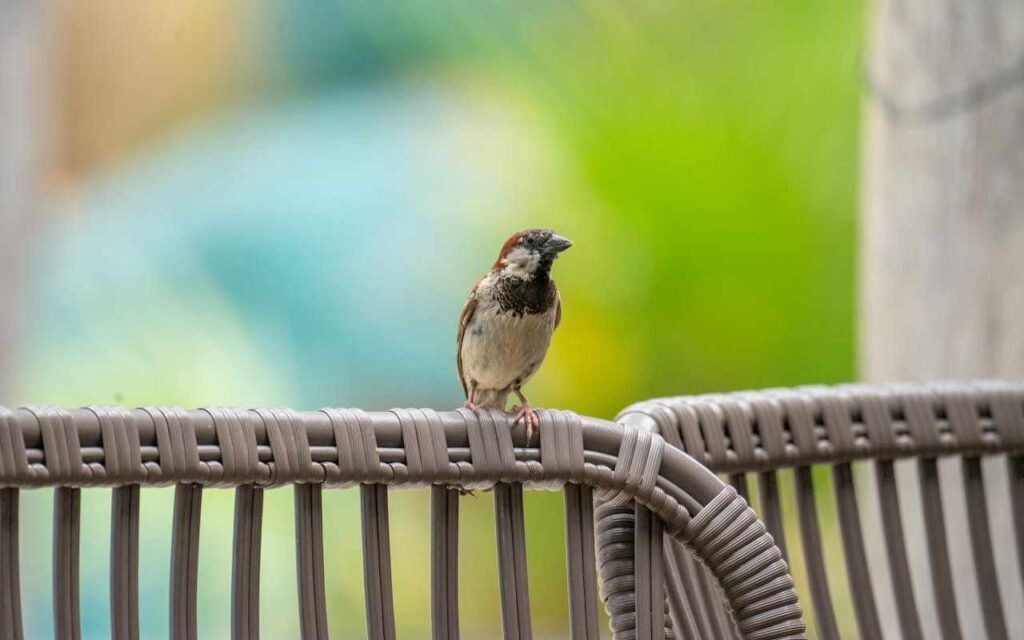
One morning, I walked outside with my fresh cup of coffee, ready to relax on my deck, only to find my expensive cushions completely covered in messy droppings. If you are trying to figure out how to keep birds away from patio furniture for good, you know the immense frustration of losing your clean outdoor seating overnight to a local flock.
In my own yard testing, by applying snug furniture covers, setting up an invisible fishing line grid, mounting blunt railing spikes, hanging flashing holographic tape, or moving seed stations to my property line perimeter, I have built an airtight defense system.
Combining these simple, non-toxic hardware modifications ensures your deck chairs stay pristine and ready for use. This comprehensive layout guide breaks down the exact spacing coordinates and physical assets you need to secure your favorite outdoor spaces permanently.
Most Effective Ways to Keep Birds Off Patio Furniture and Decks?
The single best solution is deploying snug, weather-resistant furniture covers whenever your outdoor seating is not in active use to eliminate perching opportunities entirely.
To secure your full deck, combine these textile guards with a monofilament fishing line grid, blunt bird spikes along railings, wind-driven holographic reflective tape, daily scent-scrubbing routines, and moving feeders 40 feet away.
| Defense Strategy | Success Rate | Expert Field Notes |
|---|---|---|
| Physical barriers | High | Reliably prevents birds landing or perching because mechanical limits do not wear out over time |
| Combined methods | High to Moderate | Mixing moving visual items with different scents reduces habituation and boosts success |
| Moving items alone | Moderate | Twisting holographic ribbons and moving objects work well until birds get used to them |
| Acoustic sound tools | Moderate to Low | Distress calls offer brief success but birds quickly learn the noises are harmless noise |
| Static fake decoys | Low | Plastic owls and sticky chemical gels fail completely once pests realize they do not move |
Step by Step Video Demonstration for Patio Control
Before diving into our advanced mechanical strategies, watch this quick video breakdown to see these exact hardware modifications in action. This brief explainer demonstrates real world equipment setups and surface cleaning steps needed to clear your property safely without gimmicks.
The Microclimate Shield and Why Birds Target Specific Chairs
Understanding why these pests target your specific patio furniture requires a close look at avian behavior and spatial awareness. Birds do not choose your furniture at random or to annoy you. They are driven by deep evolutionary biology.
Territorial birds see elevated surfaces like the backs of your patio chairs or table edges as perfect observation posts. These elevated platforms provide an unobstructed 360 degree view to watch for ground predators or scout for local food sources.
According to peer-reviewed zoological research published by the Royal Holloway University Pure Repository, a bird’s chosen perch height directly predicts its dominance rank within a flock, meaning the highest chair back will always be claimed by the most aggressive pest.
Furthermore, an extensive behavioral study available in ScienceDirect Applied Animal Behaviour Science proves that visual environmental cues directly dictate how pest birds select artificial structures for long term roosting. Concrete, brick, and heavy outdoor furniture absorb massive amounts of solar heat during peak daylight hours.
When the sun goes down, these structural materials slowly radiate that trapped warmth back into the surrounding air currents. This creates a microclimate shield that acts as a climate-controlled nursery, drawing nesting birds to covered overhead alcoves or umbrella frames during cold nights.
The Multi Layered Monofilament Grid Method
If you want an invisible solution that stops birds from landing without ruining the visual appeal of your deck, a monofilament fishing line grid is the ultimate defense. This mechanical approach exploits a bird’s natural survival instincts regarding flight navigation.
When a bird attempts to land on a chair back, its breast feathers or wings strike the highly taut, invisible wire. Because birds have incredibly sensitive nervous systems, hitting an unseen obstacle triggers instant spatial disorientation. They view the entire patio footprint as an unstable zone and avoid it permanently.
To build an airtight system, use 20 to 30 pound test monofilament fishing line rather than thin sewing thread. String the lines in a tight grid spaced exactly 6 to 8 inches apart, suspending the wire roughly 12 to 18 inches directly above your seating surfaces.
Secure the edges tightly to existing structural frames like your umbrella ribs, pergola beams, or deck posts to ensure the line does not sag.
Material Specific Damage and Acidic Surface Etching
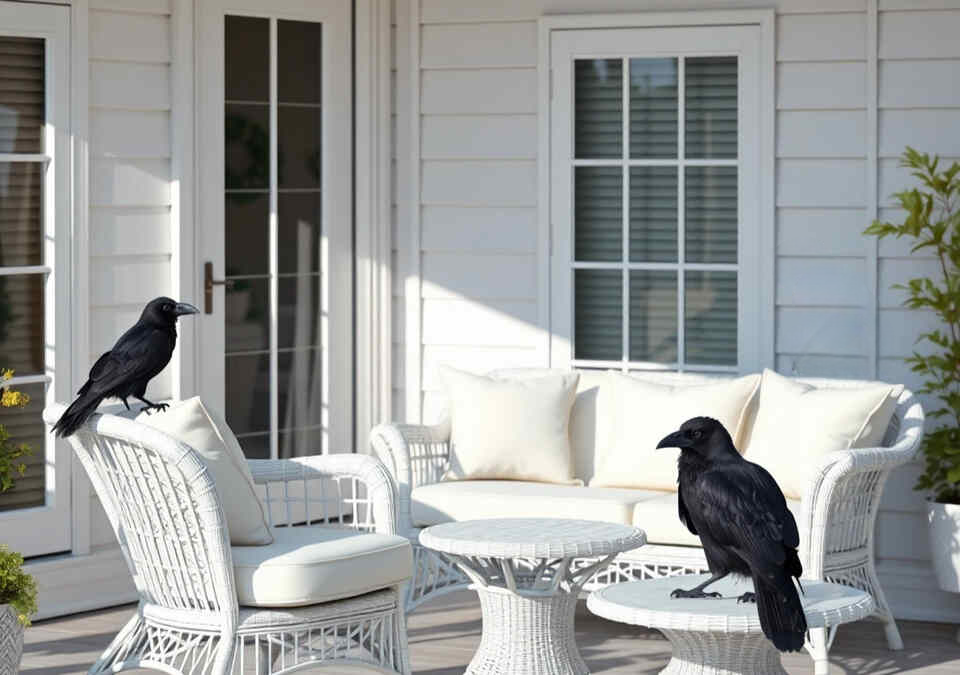
People assume that bird droppings are just an ugly cosmetic mess that can wait for a convenient weekend cleanup. In reality, letting organic waste accumulate on your outdoor assets is a slow motion chemical attack on your hardware. Avian waste contains highly concentrated uric acid that acts as a powerful organic solvent. If left sitting on exposed outdoor materials, this acidic slurry will eat directly through protective paint seals and fabric coatings in less than forty eight hours.
- Metal furniture pitting Acidic waste reacts aggressively with raw aluminum and wrought iron, causing the polished metal layers to pit, chalk, and rust.
- Wicker and rattan unravelling Birds love the woven texture of wicker for foot gripping, but drying droppings will rot the underlying fibers until they snap under weight.
- Vinyl discoloration The intense chemical heat generated by drying waste will permanently turn white vinyl frames a dull, unfixable yellow.
- Fabric clear coat destruction Uric acid melts standard fabric waterproofing seals, allowing moisture to seep deep inside cushion foams where black mold thrives.
The Shadow Effect and Why Fake Owls Fail Instantly
Almost every cheap blog on the internet tells you to buy a plastic owl or a hawk silhouette to scare birds away from your yard. This advice is completely useless because birds possess sharp vision and remarkable memory traits.
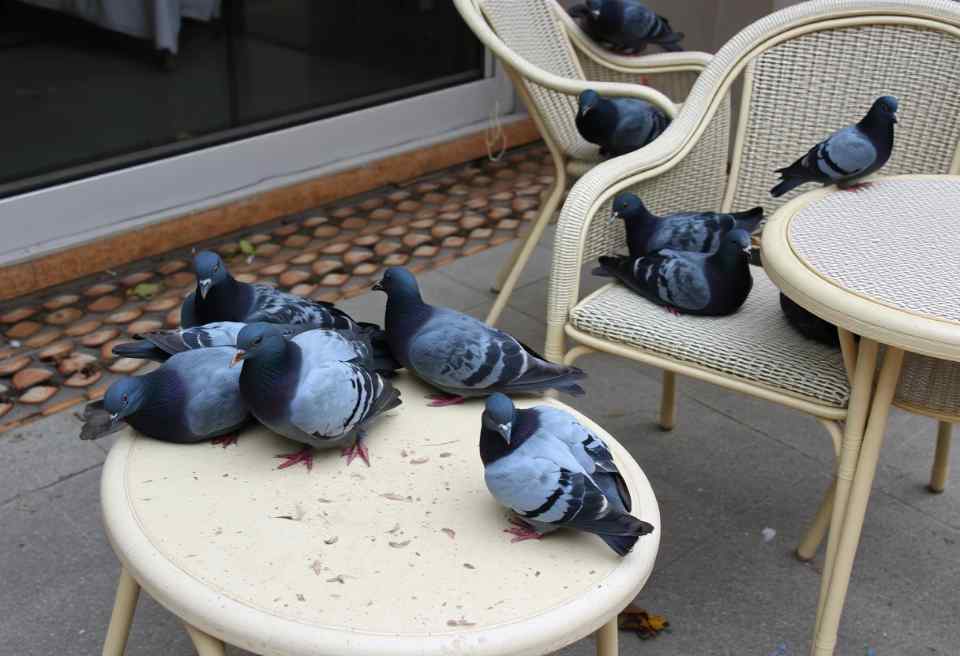
Pigeons, starlings, and sparrows will watch a fake owl from a safe distance for just two days. Once they notice the plastic predator does not move its head, cast a changing shadow, or make a sound, they lose all fear.
According to a long term review published on the Transport Canada Civil Aviation Repository, static predator models fail rapidly because birds habituate to fixed objects within forty eight hours.
If you leave a static plastic decoy in the exact same spot for a week, you will often find birds perched right on top of its head. If you must use visual items, use holographic ribbon that twists wildly and hums loudly in the wind to create unpredictable movement.
Rearranging Layout Geometries to Break Flight Patterns
Sometimes the most effective way to eliminate bird traffic costs absolutely nothing. Bird flight paths follow highly predictable aerodynamic patterns based on your yard layout and open sightlines.
Birds require a clear approach zone and a clean exit path to feel safe from predators when landing. By pushing your patio chairs closer together and angling tables so they do not provide flat, stable landing platforms, you disrupt their visual alignment.
Additionally, pay close attention to staging branches. Birds rarely fly directly from high trees down to ground level seating. They prefer to land on a nearby overhanging branch first to assess danger before dropping onto your cushions.
Trimming all low hanging branches within 15 feet of your patio deck will completely eliminate their approach route.
Safe Cleanup of Hazardous Avian Droppings
Reclaiming a contaminated outdoor living space requires extreme caution and a strict sanitation routine to protect your personal health. Dried bird feces harbor dangerous fungi and bacteria that can cause severe respiratory diseases in humans.
Never scrape dry droppings directly into the air, as this sends dangerous dust particles swirling straight toward your face. Always wear an N95 mask, heavy disposable gloves, and eye protection before beginning your maintenance routine.
Saturate the entire mess thoroughly with a commercial disinfectant or a hot 10 percent white vinegar mixture. Let it soak for 15 minutes to fully soften the debris, then gently lift the waste away with a disposable scraper instead of scrubbing.
Scrubbing fresh or dried waste drags abrasive grit across your furniture finishes, causing permanent clear coat scratching. For more advanced details on removing surface spots, check out our companion guide on how to clean up bird droppings.
Connecting Your Property Protection Strategies
Integrating a structural physical defense completely eliminates urban bird pressure across your property assets.
Protect Your Summer Bird Baths
Once you secure your private patio frames from roosting flocks, you should verify that aggressive birds aren’t dominating your open yard water elements. To establish a balanced, quiet environment for native songbirds, see our full guide on how to keep starlings away from bird baths.
Protect Your Yard Feeder Poles
As urban pest populations gather near building perimeters, invasive birds will naturally target your lower backyard feeding platforms. To safeguard your grain features from aggressive flocks, review our clean mechanical blueprint detailing how to keep house sparrows away from feeders.
Reclaiming Your Outdoor Living Space for Good
Keeping stubborn pests off your patio furniture requires combining effective physical exclusion barriers with consistent sanitation habits. While temporary visual scare tactics or chemical scent items might offer brief relief, birds adapt to those changes far too quickly. Investing your time into mounting secure netting systems, angled slopes, or stainless steel spikes provides an ongoing mechanical block that works indefinitely.
Start by targeting your highest priority ledge areas where birds cause the most frequent structural mess. Install your permanent hardware solutions there first, then expand your setup across the lower railing perimeters as your time and budget allows. Even blocking just your most problematic covered corners will dramatically reduce the overall local bird presence.
The true secret to success is maintaining daily persistence and relying strictly on proven mechanical methods rather than wasting money on gimmicky retail items. Do not let invasive flocks ruin your morning coffee or damage your expensive floor finishes any longer. Take action today, apply your physical defense layers, and reclaim your outdoor living space.
Frequently Asked Questions on Managing Balcony Birds
Will birds ever stop returning once they have claimed my patio chairs
Yes, birds will completely abandon a seating site once you maintain physical barriers consistently for three to six weeks. They are highly stubborn creatures of habit, but they will permanently relocate as soon as a spot becomes genuinely inhospitable to land on.
Are ultrasonic bird repellents safe to use around household pets
Most electronic ultrasonic plug-ins emit high-frequency sound waves that operate completely above the normal range of human hearing. However, these high pitches can cause severe ear irritation and stress for backyard dogs and cats, and data tracked by the Cornell Lab of Ornithology shows that avian species quickly ignore these noises anyway.
Can I legally remove an active bird nest from my deck railing
If the nest is empty or still being constructed out of loose twigs, you can safely clean it away immediately. However, once live eggs appear inside the clutch, the official U.S. Fish and Wildlife Service Migratory Bird Treaty Act Portal strictly restricts you from disturbing the site until the young chicks naturally fledge.