
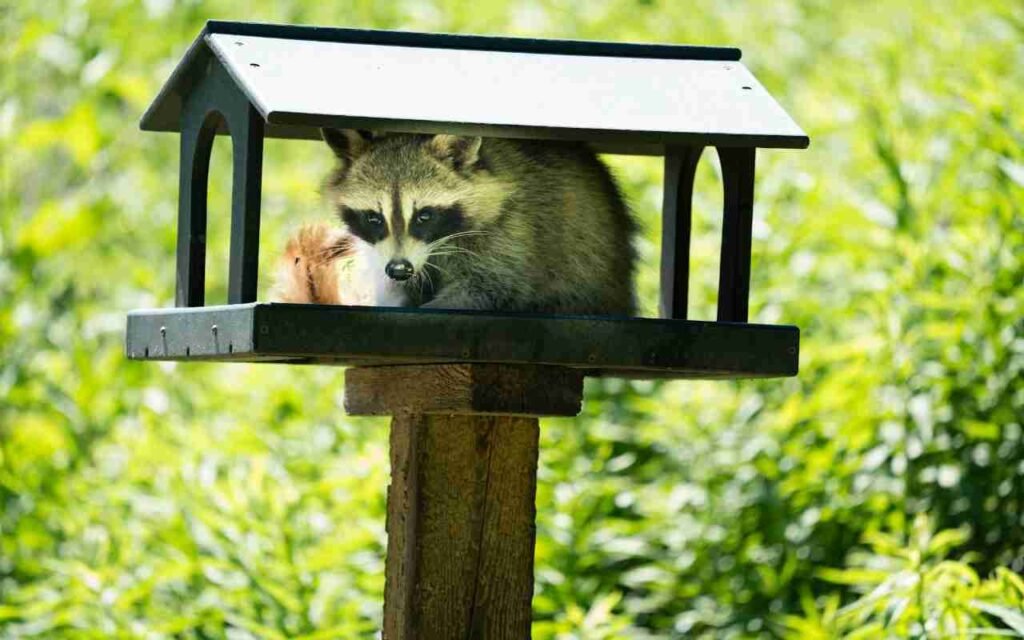
Picture this: You wake up Saturday morning, excited to watch cardinals and blue jays feast at your carefully positioned bird feeder. Instead, you find your expensive seed scattered everywhere and tiny paw prints all over your deck. Sound familiar? If you’re wondering how to keep raccoons away from bird feeders, you’re not alone, this is the eternal battle between backyard bird enthusiasts and those masked bandits we call raccoons.
I’ve been feeding birds for over a decade, and let me tell you, raccoons have turned my peaceful hobby into something resembling a strategic military operation. But here’s the thing, you can absolutely win this war without harming these clever critters. You just need to think like a raccoon (which, honestly, isn’t that hard once you realize they’re basically furry toddlers with opposable thumbs 😏.
- Raccoons are clever, persistent, and can reach most feeders.
- Place feeders at least 10 ft from climbable structures and 4 ft off the ground.
- Use pole-mounted, weight-activated, or caged feeders to block access.
- Install cone or cylinder baffles to prevent climbing.
- Feed birds during the day and remove seed at night to avoid nocturnal raids.
- Motion-activated sprinklers, scent deterrents, and hot-pepper seeds can help.
- Smart feeders, solar lights, and remote dispensing add extra protection.
- Maintain feeders, clean spills, and combine strategies for best results.
For a quick visual recap, check out our infographic at the bottom of this guide.
See These Raccoon-Proofing Tips in Action
Watch this quick video to get a step-by-step look at how to protect your bird feeders. You’ll see proper feeder placement, baffle setups, and raccoon-resistant feeder designs in real life, making it easier to keep your backyard birds safe.
Show Transcript
0:00
Okay, picture this. You’ve got your morning coffee, you’re ready to watch the birds at your feeder, and disaster strikes.
0:06
The feeder’s been completely ransacked overnight. There’s seed all over the ground. And you know exactly who the culprit is.
0:15
If that sounds familiar, you’re in the right place. Today we’re talking about how to reclaim your backyard from these masked bandits.
0:22
Believe me, you are not alone. This is a huge frustration for bird lovers everywhere. But don’t worry—we’ve got the complete battle plan to protect your feeders once and for all.
Know Your Opponent
0:37
Step one in any battle is knowing your opponent. This isn’t just a hungry animal—we’re dealing with a seriously intelligent, resourceful creature.
0:46
Think of it as a strategic challenge. Raccoons are clever problem solvers. Studies show they can figure out complex locks in under 10 tries.
0:57
They have dextrous paws to fiddle with latches and hooks. They’re persistent and work under cover of darkness.
1:10
And their memory? Excellent. Once they find your feeder, they’ll be back night after night.
Build Your Defenses
1:17
Knowing your opponent, it’s time to build defenses. This isn’t about brute force—it’s about smart design and strategy.
1:29
Look at basic plastic feeders. They’re basically an open invitation, especially if low or near a fence.
1:39
Solutions? Weight-activated feeders slam shut when a raccoon hops on. Cage designs let small birds in but keep raccoons out. Chew-proof metal is a must.
1:54
Investing in good hardware saves seed, money, and headaches.
Three-Step Plan
2:00
Here’s the simple three-step plan:
2:03
- Placement: At least a 10-ft radius from any launch point like a tree or fence, and at least 4 ft off the ground.
2:12
2) Upgrade the feeder: Weight-activated, cage-protected, chew-proof.
2:16
3) Install a baffle: A wide cone or spinning torpedo-style baffle 4–5 ft up the pole makes climbing impossible.
2:26
A multi-layered defense is even better—combining physical barriers with other tactics.
Outsmart Them
2:30
Now, let’s talk a bit of psychological warfare. One of the easiest strategies is the menu itself.
2:41
Raccoons love sunflower seeds and corn, but they usually ignore safflower and nyjer seeds—which birds like cardinals and finches adore.
2:52
Hot pepper-treated seed is a secret weapon. Birds don’t taste the heat, but mammals do. One taste is usually enough to send a raccoon elsewhere.
Extra Deterrents
3:04
Other options:
- Motion-activated sprinklers: Medium effort, very effective thanks to surprise.
- Cayenne pepper at pole base: Low effort, medium effectiveness; must reapply after rain.
- Nighttime security: Bring feeders inside. Low effort, high effectiveness.
3:34
For particularly clever raccoons, get creative:
- Window-mounted feeders are often impossible for them to reach.
- Diversion feeding: Set up an easy-access spot away from your prized feeders.
- Plant native food sources to reduce reliance on feeders.
Enjoy the Reward
3:58
After these barriers and deterrents are in place, you finally get to enjoy your peaceful, raccoon-free bird-watching space.
4:10
Watching a would-be thief slide harmlessly off a baffle—it’s proof the right strategy works.
4:25
The key? Layer your strategies. Combine physical barriers with smart seed choice and nighttime security. Be persistent, keep things clean, and adapt if raccoons try a new trick.
4:49
Are you ready to put this plan into action? With a good layered defense, you can outsmart these masked bandits and enjoy your morning coffee surrounded by happy, well-fed birds.
Understanding Your Masked Opponents
Before we dive into solutions, you need to understand what you’re dealing with. Raccoons are incredibly intelligent problem-solvers with dexterous paws that can manipulate almost anything. According to Skedaddle Wildlife, they’re one of the most adaptable urban mammals and can solve complex problems to get food and shelter.
They’re also persistent as heck and have excellent memories. If they’ve successfully raided your feeder once, they’ll keep coming back like that friend who always “forgets” their wallet at dinner.
These nocturnal bandits are drawn to bird feeders for obvious reasons, free food that’s easy to access. Your typical tube feeder or platform feeder might as well have a neon sign saying “All-You-Can-Eat Buffet: Open 24/7.” Raccoons can climb virtually anything, including smooth poles, and they’re strong enough to destroy most standard feeders.
The frustrating part? They don’t just eat the seed, they trash everything in sight. It’s like they’re throwing a house party every night and leaving you to clean up the mess.
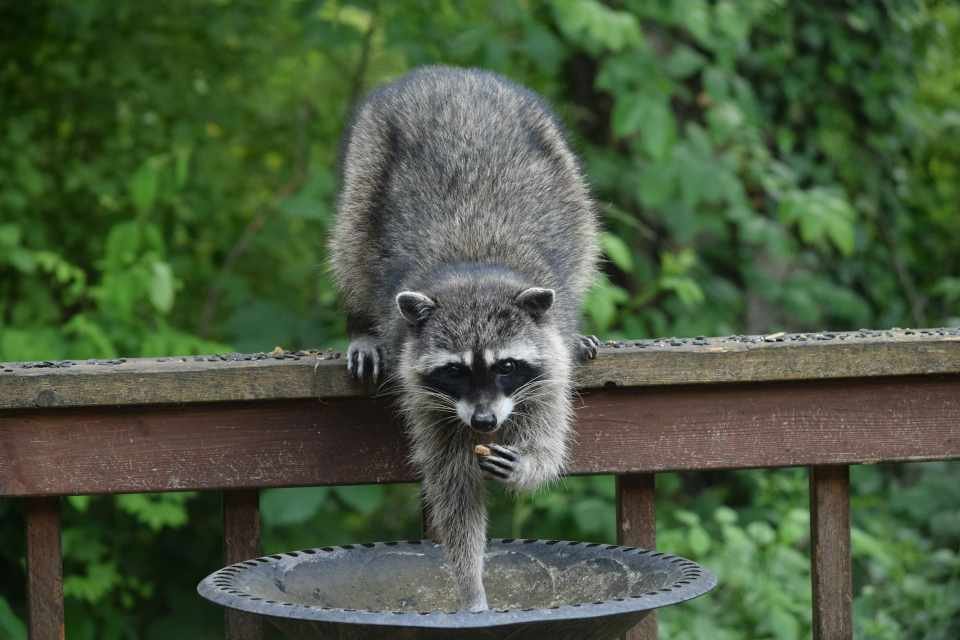
Strategic Feeder Placement: Location, Location, Location
Here’s where most people mess up: they think hanging a feeder from a tree branch is raccoon-proof. Wrong! Raccoons are excellent climbers, and that tree branch is basically a highway straight to your seed stash.
The magic numbers you need to remember are 10 and 4. Your feeder should be at least 10 feet away from any tree, fence, or structure that raccoons can climb, and at least 4 feet off the ground.
I learned this the hard way after watching a particularly athletic raccoon leap from my fence to my “strategically placed” feeder like some kind of trash panda ninja. According to Perky-Pet, proper feeder placement is one of the most effective non-lethal methods to reduce raccoon conflicts.
Consider using a pole-mounted system in an open area of your yard. Think of it as creating a no-man’s land around your feeder. Sure, it might look a bit stark at first, but your birds will still find it, and raccoons will have a much harder time reaching it.
Raccoon-Proof Feeder Designs That Actually Work
Not all bird feeders are created equal, and some are basically raccoon invitations wrapped in plastic. Weight-activated feeders are your best friend here.
According to Cornell Lab of Ornithology’s Project FeederWatch, weight-sensitive feeders significantly reduce visits from mammals without deterring most backyard bird species. Just as you can deter squirrels from your feeders, there are strategies to keep raccoons away too.
These clever devices use a raccoon’s own weight against them when something heavier than a bird lands on the perch, the seed ports close automatically.
I personally swear by caged bird feeders. These have wire cages around the feeding area that allow small birds in but keep larger animals (including squirrels, which are basically raccoon cousins) out. The Squirrel Buster series has saved my sanity more times than I can count.
Tube feeders with metal components tend to last longer than their plastic counterparts. Raccoons can and will chew through plastic, especially if they’re motivated enough. It’s like giving a determined toddler a juice box, they’re going to find a way in, no matter what.
The Great Baffle Solution
Pole baffles are game-changers, and I’m not being dramatic here. A good cone-shaped or cylinder baffle placed below your feeder creates an impassable obstacle for climbing raccoons. According to the National Wildlife Federation, baffles should be at least 18 inches wide and positioned 4–5 feet above the ground for maximum effectiveness.
The key is positioning, the baffle needs to be large enough and positioned correctly to prevent raccoons from reaching around or over it. I made the rookie mistake of buying a baffle that was too small initially. Watching a raccoon casually reach around my pathetic little baffle was both impressive and infuriating. Don’t be like me, invest in a baffle that’s at least 18 inches in diameter if you’re going with a cone design.
Torpedo-style baffles work differently but can be equally effective. These cylindrical baffles spin when a raccoon tries to climb past them, sending the bandit sliding back down the pole. It’s actually pretty entertaining to watch, though I’d never admit that to my neighbors 🙂
Timing Is Everything: Strategic Feeding Schedules
Here’s a pro tip that many people overlook: raccoons are primarily nocturnal. Winter feeding can attract raccoons if you’re not careful; learn how to keep feeders safe by adjusting your feeding schedule. They do most of their mischief between sunset and sunrise.
You can use this to your advantage by bringing feeders inside at night or using feeders with removable trays. According to wildlife management specialists at Penn State Extension, removing food sources at night is a key step in preventing raccoon problems.
I know, I know, it sounds like a pain. But trust me, spending two minutes each evening securing your feeders beats spending twenty minutes every morning cleaning up raccoon destruction. Plus, this approach has the added benefit of preventing other nighttime visitors like opossums and skunks.
Some folks use automatic feeder timers that dispense seed only during daylight hours. These work particularly well with platform feeders, though they’re a bit of an investment.
Natural Deterrents That Don’t Harm Wildlife
Before you start thinking about extreme measures, consider some natural deterrents that encourage raccoons to dine elsewhere without causing harm. Motion-activated sprinklers are surprisingly effective, raccoons hate getting unexpectedly soaked, and the surprise factor works wonders.
Scent deterrents can work, though results vary. Some people swear by sprinkling cayenne pepper around the base of feeder poles, while others use commercial raccoon repellent sprays. IMO, the effectiveness depends on how determined your particular raccoons are and whether you remember to reapply after rain.
Ultrasonic deterrents get mixed reviews. Some people love them, others say they’re useless. In my experience, raccoons are smart enough to figure out that the annoying noise doesn’t actually hurt them, so the effectiveness tends to diminish over time.
The Seed Selection Strategy
Not all bird seeds are created equal in raccoon eyes. Safflower seed is generally less appealing to raccoons while still attracting many bird species. Nyjer (thistle) seed is another option that raccoons typically ignore, though it primarily attracts finches and similar small birds.
Avoid corn-based mixes if raccoons are a serious problem, it’s like setting out raccoon candy. Sunflower seeds are bird favorites but also raccoon magnets, so you might need to compromise on seed selection until you get your raccoon situation under control.
Hot pepper-treated seeds are worth trying. Birds can’t taste capsaicin, but mammals sure can. Just be prepared for the possibility that you’re dealing with raccoons tough enough to power through the heat, some of these guys are basically the Navy SEALs of the animal kingdom.
Technology to the Rescue: Modern Solutions
Smart bird feeders are becoming more sophisticated, and some now include features specifically designed to deter unwanted visitors. Camera-equipped feeders let you monitor activity and adjust your strategies based on what’s actually happening rather than guessing.
Solar-powered deterrent lights create an uncomfortable environment for nocturnal raiders without bothering your human neighbors. These lights typically use motion sensors to activate when larger animals approach.
App-controlled feeders allow you to dispense seed remotely, meaning you can literally wait until you see birds approaching before activating the feeder. It’s probably overkill for most situations, but hey, we live in the future, might as well use the technology available.
When All Else Fails: Alternative Approaches
Sometimes you need to accept that certain locations just aren’t going to work for ground-level or low-hanging feeders. Window-mounted feeders can be excellent compromises, they’re accessible to birds, easy for you to refill and clean, and typically out of raccoon reach.
Consider creating a dedicated ground-feeding area away from your main feeders. Scatter some inexpensive seed in a remote corner of your yard to give raccoons an alternative food source. It’s not surrender, it’s strategic redirection.
Native plant landscaping that produces natural bird food can supplement or even replace traditional feeders. A well-designed backyard can help keep raccoons away while still attracting your favorite birds.
Plants like coneflowers, black-eyed Susans, and elderberry provide seeds that birds love while creating a more natural ecosystem that’s harder for raccoons to monopolize.
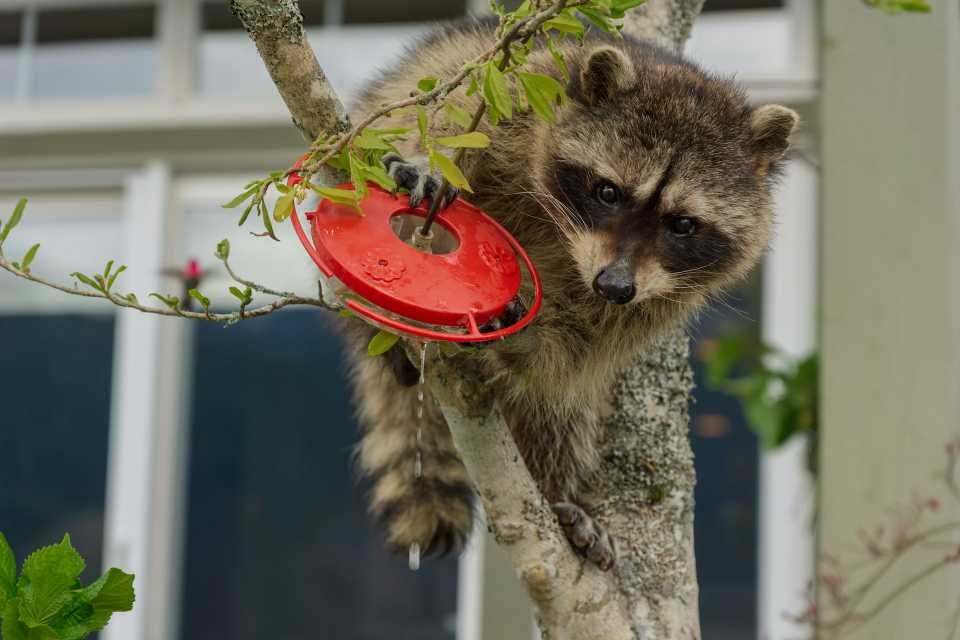
My Personal Raccoon War Story
Last summer, I dealt with a particularly persistent raccoon family that had apparently passed down my address through generations. These weren’t just casual snackers, they were professional seed thieves with apparently nothing better to do than outsmart my every defensive measure.
After losing three different feeders to their midnight raids (yes, they actually destroyed them, not just emptied them), I finally invested in a serious pole baffle system and weight-activated feeders. The first night after installation, I actually stayed up to watch through my kitchen window like some kind of bird feeder security guard.
Watching those raccoons slide repeatedly down the baffled pole was both satisfying and slightly guilt-inducing. But you know what? They eventually gave up and moved on to easier targets. Sometimes persistence pays off, and sometimes you just need better equipment.
Maintaining Your Defenses
Regular maintenance is crucial for long-term success. Check baffles for damage, clean feeders regularly (dirty feeders are more attractive to all kinds of unwanted visitors), and adjust your strategies based on what’s working and what isn’t. According to the SPCA of British Columbia, cleaning feeders weekly with a 10% bleach solution helps prevent the spread of salmonella among birds and other wildlife.
Keep an eye on the area around your feeders too. Accumulated seed hulls and spilled seed create additional attractants that can undermine your other efforts. After a raccoon raid, it’s a good idea to clean up bird droppings safely. Doing a quick weekly cleanup can prevent minor problems from becoming major infestations.
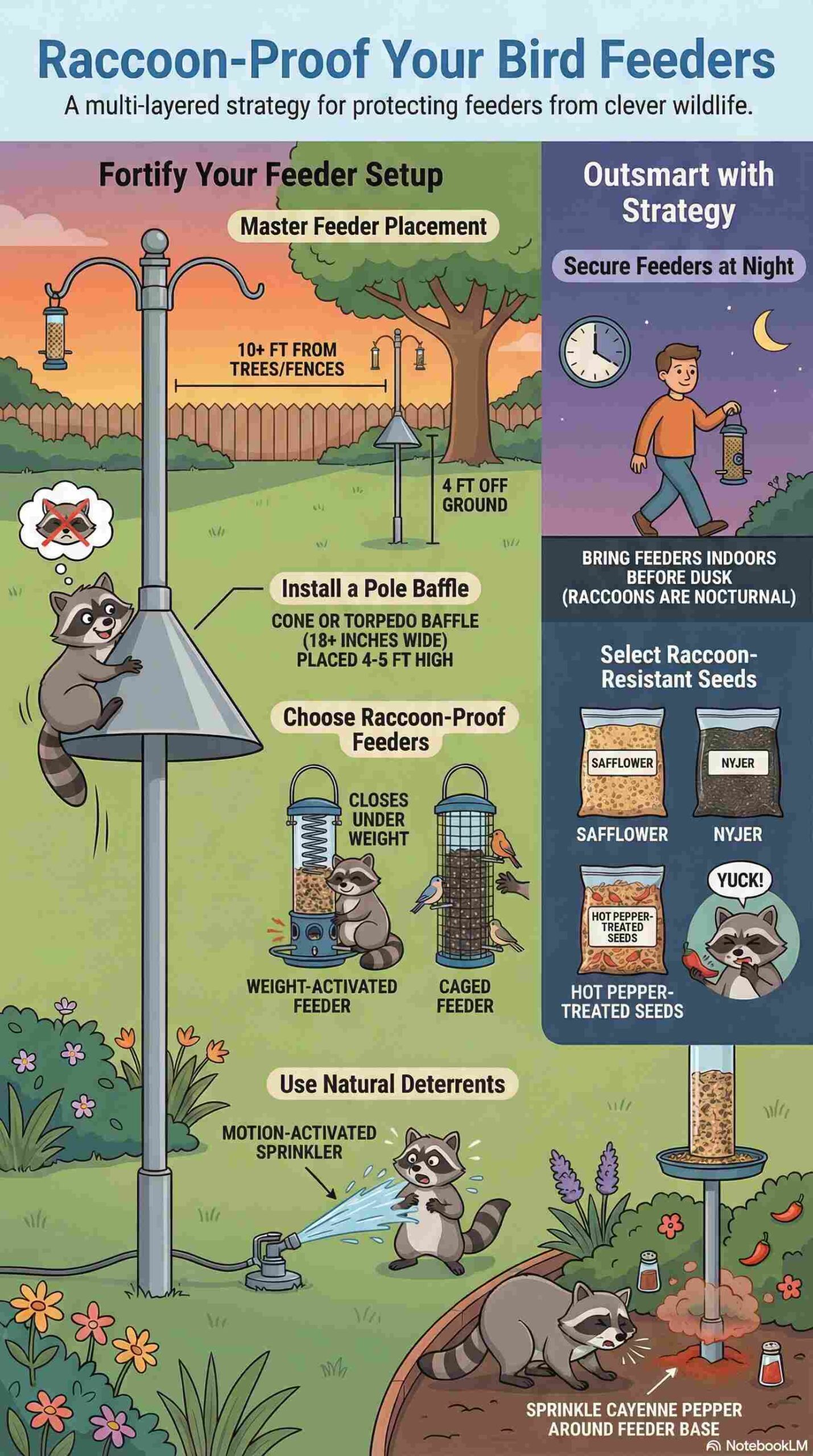
Quick Infographic: Keep Raccoons Away
This infographic summarizes the most effective strategies to protect your bird feeders from raccoons. It’s a handy visual reference that shows proper feeder placement, baffle types, and raccoon-proof feeder designs, perfect for a quick glance or sharing with fellow bird enthusiasts.
The Bottom Line: Persistence Pays Off
Fighting raccoons requires patience, strategy, and sometimes a willingness to invest in quality equipment. But here’s the thing, it’s totally worth it. There’s nothing quite like enjoying your morning coffee while watching a variety of birds peacefully enjoying their breakfast, knowing you’ve outsmarted some of nature’s cleverest troublemakers.
Remember, this isn’t about declaring war on wildlife, it’s about creating boundaries that work for everyone. Raccoons will find other food sources (trust me, they’re incredibly resourceful), and you’ll get to enjoy the bird-watching hobby you originally signed up for.
FYI, the most successful approach usually involves combining multiple strategies rather than relying on any single solution. Think of it as layered defense, the more obstacles you create, the more likely raccoons are to decide your neighbor’s unsecured garbage cans are an easier target.
Stay persistent, stay creative, and don’t let a few masked bandits rob you of the joy of backyard bird watching. You’ve got this!