
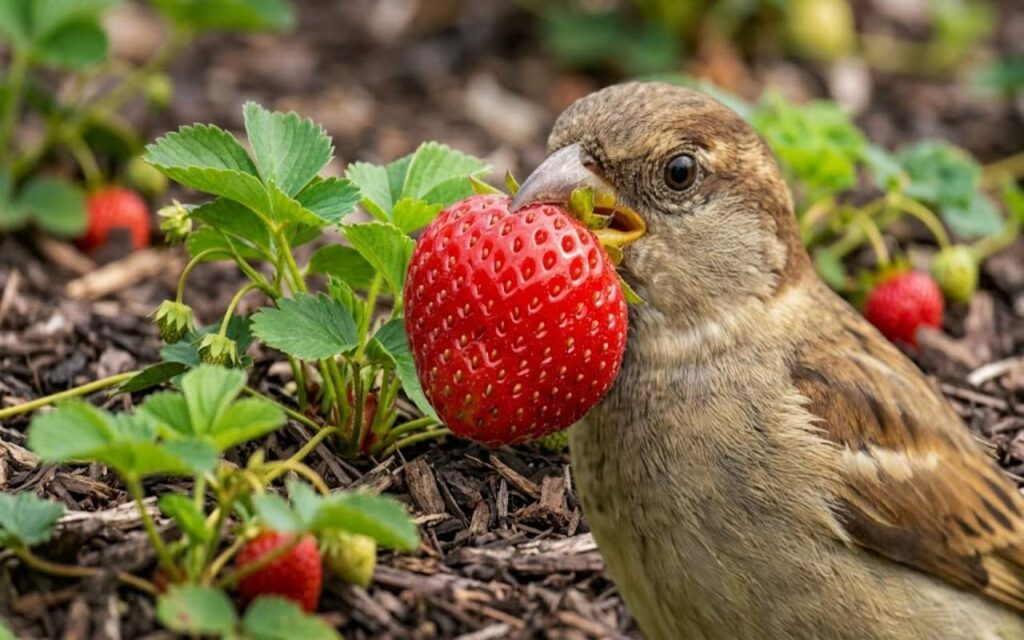
Discovering half-eaten berries and pecked stems right as they begin to ripen is incredibly frustrating for any gardener. If you are searching on how to stop birds from eating your strawberries, you know how quickly a flock can ruin your entire crop just before harvest. Birds are drawn to the bright red color of juicy fruit, but you can outsmart them before they destroy your hard work.
By dropping rigid wooden screen frames over your beds, placing flashing ribbon along your lawn borders, or setting up separate hydration and feeding areas, you can successfully protect your harvest. Here are three highly focused methods that keep destructive birds completely away from your strawberries.
Quick Answer: What are the most effective ways to stop birds from eating your strawberries?
The three best methods are dropping rigid wooden screen frames over your strawberry beds, placing flashing ribbon along your lawn borders, and setting up separate hydration and feeding areas on the opposite side of your landscape.
Combining a strict physical boundary with visual deterrents and alternative resource zones completely satisfies or redirects foraging pests, ensuring your berries mature safely.
Why Ground-Level Strawberry Patches Face Constant Bird Attacks
Standard draped netting wraps fail completely when applied to ground-hugging strawberry rows. Because your fruiting clusters sit flat against the dirt or straw layer, they face constant security breaches from walking yard pests. Successfully managing a ground-crop layout requires blocking three unique soil-line vulnerabilities:
- Birds Walking Beneath Loose Hems: Small sparrows, towhees, and thrashers rarely dive down onto strawberry patches from the sky. Instead, they land several feet away in your open lawn, fold their wings, and walk quietly into the rows, slipping directly beneath loose netting hems to feed while completely hidden by the upper leaves.
- The Fragrant Red Visual Signal: The rapid transition from hard green flower buttons to soft, fragrant red berries acts as an immediate environmental beacon for local wildlife, drawing hungry animals down to your garden floor from far away.
- Netting Weight Compressing Clusters: Heavy, loose plastic garden mesh laid directly over strawberry foliage crushes the delicate stems down into the damp soil. This creates a saggy web that allows birds to land right on top of your plants, using their body weight to press the leaves flat while pecking your berries cleanly through the square holes.
Cultivating a high-yield backyard garden successfully means moving past generic landscape assumptions. If you want to recognize different behavioral traits before selecting hardware, study our detailed Beginner Bird Identification Mistakes training manual.
To see how these ground-level crops fit into your comprehensive multi-row layout, combine your seasonal perimeter defenses using our foundational Keep Birds Out of Your Backyard Berries and Fruit Trees master hub guide.
Matching Defensive Tools to Your Strawberry Type
Use this quick growth-habit index to align your physical protective barriers with the exact strawberry varieties growing across your garden layout:
| Strawberry Variety Class | Dominant Soil Pests | Optimized Ground Shield | Critical Setup Timeline |
|---|---|---|---|
| June-Bearing (Jewel, Allstar) | American Robins, Eastern Chipmunks | Rigid cedar-framed hardware cloth boxes | The exact moment early white blossoms fall away |
| Ever-Bearing (Seascape, Albion) | Song Sparrows, Foraging Slugs | Low PVC conduit micro-tunnel rows | Continuous perimeter defense through autumn cycles |
| Day-Neutral (Tristar Types) | European Starlings, Pillbugs | Raised-bed drop-in wire screen frames | Onset of first translucent white fruit blush |
Three Ground-Crop Defense Methods
1. Dropping Rigid Wooden Screen Frames Over Your Beds
How cleanly your protective framework pins against the soil line completely dictates whether you harvest sweet fruit or empty, chewed stems.
- Building Four-Sided Box Frames: Assembling a simple rectangular box frame out of 2×2 cedar lumber creates a highly stable, self-supporting skeleton. Wrapping this rigid frame tightly with 1/4-inch metal hardware cloth keeps your protective screen suspended in the air, preventing pests from compressing your foliage.
- Sealing the Lower Rails Flat: You must use the flush frame box setup by placing the bottom wooden rails perfectly level against your raised bed timbers or compacted soil. Leaving any uneven gaps along the dirt creates an open entrance funnel that accidentally traps ground-hopping pests directly inside your fruit patch.
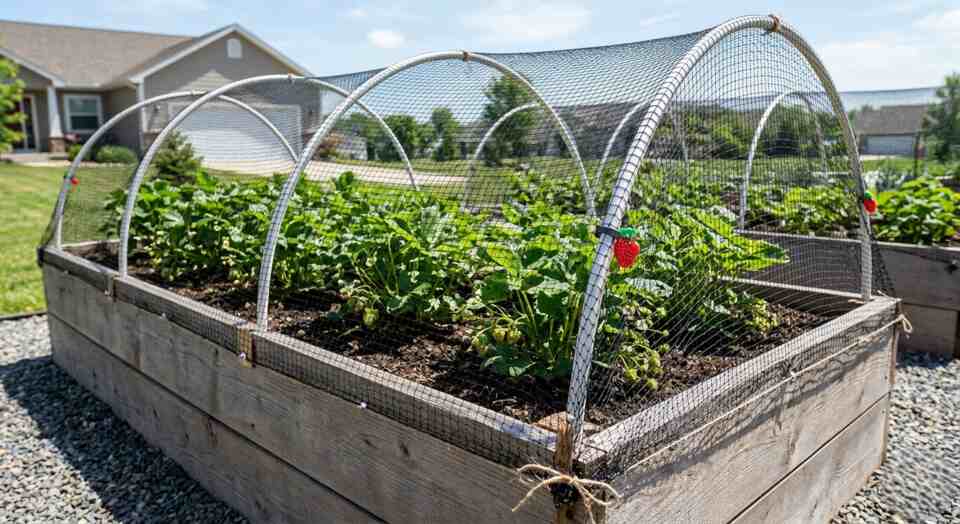
If you notice pests breaching your strawberry beds, look closely at where they enter. If they are running around inside the stems, your lower rail seals are uneven. If they are feeding from the outside, your mesh lacks a rigid wooden framework to keep it separated from the fruit.
2. Placing Flashing Ribbon Along Your Lawn Borders
Using erratic moving light reflections creates an active visual boundary that deters sharp-eyed pests before they crawl toward your garden beds.
- Staking Erratic Moving Ribbon: Tie long pieces of red-and-silver holographic Mylar flash tape directly to tall bamboo stakes driven into the soil at the corners of your strawberry beds. The slightest summer breeze causes these ribbons to spin and flash sharply, creating intense light bursts and metallic crinkling noises that disrupt flight and walking paths.
- Clearing the Shadow Lines: Border ribbons must be placed completely clear of fence line tree shadows so they catch the very first rays of early morning sunlight. This specific timing is critical because it matches the exact dawn hours when ground-foraging birds launch their heaviest daily feeding raids across your lawn grass.
3. Setting Up Separate Hydration and Feeding Areas
Providing alternative food and water zones on the opposite side of your landscape lowers seasonal feeding pressure on your primary high-value crops.
- Drawing Pests Away with Solar Fountains: Small yard birds frequently raid ripening summer strawberries purely as an environmental fluid source during dry heatwaves. Installing a clean bird bath equipped with a moving solar fountain pump on the far side of your property easily satisfies their thirst, steering them away from your juicy ground rows.
- Diverting Foragers with Seed Stations: Placing a high-volume bird feeder filled with black oil sunflower seeds on the other side of your property satisfies common species before they ever land near your fruit garden. To trace how specific visitors move through different structural elevations in your garden layout, cross-reference their choices with our Bird Identification by Shape Silhouette Guide.
How Ground-Level Strawberry Protection Differs from Other Crops
Securing a soil-line strawberry patch requires an entirely separate set of physical structural boundaries than managing mid-stature berry bushes. If your landscape includes woody shrubs alongside your ground rows, using low drop-on box screens will fail because taller plants need vertical expansion space for their stems.
To properly lock down your mid-stature fruit investments from silent, foliage-dwelling pests this summer, check out our companion guide on How to Stop Birds From Eating Your Blueberries.
Suspending high-clearance netting frameworks around a tall stone-fruit orchard canopy also requires an entirely different physical setup than shielding compact fruit rows along the ground.
If your home landscape includes tall cherry trees alongside your low strawberries, using flat ground screens will fail because high-altitude canopy pests require vertical exclusion boundaries to block branch perching.
To properly lock down your upper orchard investments from aggressive treetop raids this summer, check out our companion guide on How to Stop Birds From Eating Your Cherries to lock down your upper perimeters correctly.
Three Major Mistakes Beginners Make With Ground Crops
Failing to calibrate your layout for soil-line environment shifts will ruin your summer yield. Watch out for these three original ground-crop blindspots to keep your strawberries safe:
Allowing Netting Hems to Bunch Loosely: Leaving extra net mesh loosely bunched up on top of your lawn clippings creates a folded opening that ground birds can easily push through. Once a robin slips beneath a loose fold, it can walk your entire row completely hidden from view.
The FIX: Throw away loose, unanchored mesh netting. Always pin your perimeters down tightly using heavy-duty metal landscape staples spaced every 12 inches, or build a solid wooden perimeter frame that weights the fabric down flush against the soil line.
Letting Mesh Rest Directly on the Leaves: Laying lightweight netting right on top of your strawberry plants allows small finches and sparrows to land directly on the leaves. They will use their body weight to push the clusters down into the dirt, pecking the red berries easily through the holes.
The FIX: Ensure your protective mesh functions as a self-supporting wall that stays separated from your plants. Always maintain a minimum 4-inch clearance envelope between your mesh screen and your outermost strawberry leaves.
Leaving Old Winter Mulch Matched to Early Rows: Leaving thick layers of matted winter straw tightly packed around the base of your plants creates a damp, dark micro-climate that perfectly matches the nesting and hiding preferences of slugs and pillbugs.
The FIX: Pull back heavy winter mulch layers early in spring to expose the soil line to natural sunlight. Clear out dead leaf debris to eliminate hidden breeding zones before your early green fruit buttons form.
The Science and Research Behind Protecting Ground Crops
Successful soil-line crop defense relies on matching your protective steps to the distinct feeding habits, pressure thresholds, and agricultural limits of ground-foraging pests:
Ground Patch Loss Variables: Comprehensive field trials archived through the official Penn State Extension Fruit Directory prove that the high value of small ground crops like strawberries creates immense potential for sizable profit, but also leaves them heavily exposed to serious pest problems.
Because ground-hugging fruit rows offer an easily accessible food and moisture source right at the grass line, nearby boundaries act as active staging areas that require rigid physical barriers to block walking pests before fruit sugars peak.
Fungal Macroclimate Management: Commercial cultivation guidelines published in the official Ontario Ministry of Agriculture, Food and Rural Affairs Index demonstrate that the specific choice of protective layout cover changes the temperature and relative humidity thresholds of ground-level fruit clusters.
While solid plastic wraps trap morning condensation and escalate your exposure to gray mold development, porous mesh frameworks maintain airflow balances so leaves dry naturally while completely blocking entry losses.
Deterrent Habituation Velocities: Avian visual field research published through the Purdue University Department of Biological Sciences demonstrates that ground-foraging sparrows and finches possess exceptionally wide binocular and lateral visual fields.
Because these unique eye configurations allow ground pests to maintain anti-predator vigilance even while their heads are down feeding, floor-level birds adapt to stationary visual scare tactics significantly faster than treetop flyers.
Shifting your flashing ribbon stakes to different corners of your raised beds every 48 hours is critical to prevent these highly vigilant residential flocks from mapping out safe feeding lanes across your mulch lines.
Frequently Asked Questions About Keeping Pests Off Strawberries
Will Hanging CD Discs Save My Strawberry Beds Permanently?
No. Ground-foraging birds will avoid a hanging disc for 24 to 48 hours due to the unfamiliar flashing reflections. However, once they see the objects stay completely still, they will walk right past them to feed. Consumer field data cataloged on the official All About Birds resource hub confirms that residential yard birds adapt to static visual scare tactics remarkably fast when a highly concentrated, ground-level food resource is available.
What Wire Mesh Size Stops Small Ground Finches?
You must use a strict 1/4-inch or 1/2-inch wire hardware cloth or knitted mesh size. This tiny spacing prevents small sparrows and finches from squeezing their heads through the gaps, blocking pests cleanly without causing dangerous neck trapping.
Can I Use Organza Mesh Fabric Bags on Individual Strawberry Clusters?
Yes, this works exceptionally well on small dwarf rows or container-grown plants. Wrapping individual fruiting clusters in breathable nylon organza bags blocks all pest birds and crawling insects completely while letting sunlight and air through for perfect ripening.
Summary Checklist for a Pest-Free Strawberry Harvest
Setting up your strawberry protection in layers creates a reliable shield that handles changing bird habits easily. Your wooden box frames, ground anchors, and reflective Mylar flash ribbons stay useful through intense summer sun, sudden morning dew, and active migrations.
Stay consistent with your setup order each season. Build your rigid drop-on perimeter box frames first, pin down your lower mesh soil-anchors second, and rotate your flash ribbons third. Dropping your wood-framed boxes flush against the dirt ensures ground-foraging species can never slip underneath to steal your low-hanging backyard berries.