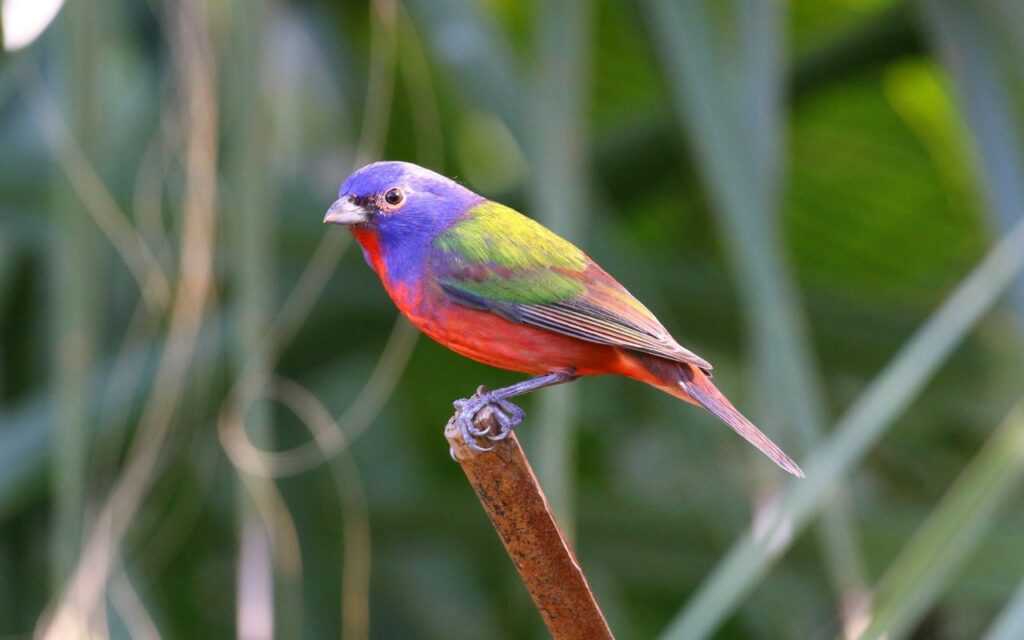
An adult male Painted Bunting displaying vivid blue, green, and red plumage perched cleanly on a natural branch.

How to Identify Birds by Color: A Beginner’s Plumage Guide

Learning how to identify birds by color while decoding plumage chromatics across changing lighting environments is the ultimate way to master your field craft. Novice observers routinely fail their first season by treating feather pigments as fixed markers rather than dynamic visual variables that shift with changing sunlight and seasonal molt states.

Relying on basic color matching without adjusting for ambient light wavelengths creates cascading errors down your daily tracking sheets. Shifting your observational discipline to prioritize structural contours before filtering for broad color fields creates an indestructible baseline that holds across every lighting condition.

Mastering these color traps transforms morning property counts from casual guesswork into a rigorous, replicable citizen science auditing routine. The complete four-pillar framework connecting plumage assessment to size baselines is documented inside our master backyard bird identification guide, which serves as the primary reference hub for this entire beginner series.

Plumage and Shifting Sunlight: Real-Time Color Guide

Show Transcript:

0:00
Okay, let’s dive right in. Have you ever looked out at your backyard, logged a bird with absolute certainty, and then second-guessed yourself an hour later?

0:07
Well, welcome to this explainer where I’m going to share how my own frustratingly inaccurate daily bird tracking logs forced me to completely rethink how I observe nature right

0:16
outside my own window. I was basically treating my backyard like a simple paint-by-numbers canvas. And honestly, as a result, I was completely failing my

0:24
first season as a citizen scientist. I remember just sitting on my porch scratching my head. I would watch a raspberry red house finch land on my

0:32
feeder, right? But in the deep tree shadow, it looked completely dull brown and then it would hop down into the direct sunlight and suddenly appear

0:41
brilliantly scarlet. It was the exact same bird. But my tracking sheets were filled with cascading errors because I kept treating it like three different

0:49
species. So I eventually figured out my biggest rookie mistake. I was treating feather colors like uniform flat paint

0:56
applied to a wall. I was completely forgetting the actual physics of the environment. I wasn’t accounting for shifting sunlight, the angle of the

1:03
afternoon sun, or how ambient light wavelengths constantly alter the way incoming photons bounce off microscopic feather matrices. I honestly thought my

1:11
eyes were failing me. But really, my observation method was just deeply, deeply flawed. Which brings us to the science of color and what was really my

1:19
big aha moment. I realized I had to hit the books to figure out why I was messing up so badly. And reading about the biological origins of plumage

1:26
completely shattered my understanding of what I was actually seeing. What I found was completely fascinating. There’s this distinct biological division. On one

1:35
side, you have carotenoid pigments like the reds and yellows of cardinals and goldfinches. These colors actually absorb specific wavelengths based on the

1:42
dietary pigments the bird eats. But then on the other side, you have structural colors like the blues of blue jays and eastern bluebirds. And these aren’t

1:49
pigments at all. They’re created purely by nanoscale air pocket arrays in the feather barbs that just scatter light.

1:55
Let’s define this clearly because learning this changed everything for me.

1:59
Structural color is perceived color produced by physical nanostructures that scatter short wavelength light rather than by a pigment absorbing light. When

2:08
I read the landmark 2003 bio-optical research by Prum and his team, my mind was absolutely blown to discover how these

2:16
microscopic air-filled matrices operate inside the feather. Think about this for a second. Prum’s electron microscopy

2:23
testing verified that there is zero blue pigment present anywhere in the feather tissue of a bluebird. Zero. This

2:30
perfectly explained why the structurally blue birds in my yard looked so dull and grayish blue under the overcast multi-directional light of a cloudy day,

2:39
but suddenly flashed electric blue when they stepped into a direct beam of sun.

2:43
And if that wasn’t crazy enough, another study by Shawkey and Hill in 2006 confirmed my frustrations by proving that a structural feather’s dominant

2:50
wavelength peak can actually shift by up to 80 nanometers. And you know what the craziest part is? That shift happens simply based on the angle of the light source relative to where I was standing.

3:01
The color was literally changing based on my geometry of observation. No wonder I was confused. So, let’s look at the three traps I fell into. Armed with this

3:10
new biological science, I looked back at my chaotic, messy field logs, and I realized my color-first strategy had trapped me in three distinct optical

3:18
illusions that absolutely no standard field guide had ever warned me about.

3:22
Mapping out my specific failures showed me exactly where I went wrong. First, there was the backlighting trap where the blazing morning sun erased all chest

3:31
pigments and left just a flat black silhouette. My fix there was to learn to assess proportions first. Second, the shaded iridescence trap, which required

3:39
me to just be patient and wait for the bird to move into different light. And third, the transitional molt trap, where late summer molting made familiar

3:47
residents look like alien species. I quickly learned I needed a structural correction for every single color trap.

3:53
Take the shaded iridescent trap for example. I was constantly misidentifying European starlings as uniform generic blackbirds whenever they were hiding in

4:02
canopy shadow. I was completely missing their beautiful bronze green sheen. Why?

4:07
Because, as Doucet’s 2006 research showed, iridescent plumage shifts its reflectance peak by more than 100 nanometers across just a 90° viewing

4:16
angle. I wasn’t seeing a different bird at all. I was just seeing a physically accurate optical response to low-angle diffused light. Now, the molt trap was honestly just as bad for my confidence.

4:28
Reading Hill’s 1991 research helped me understand that two male house finches visiting my feeder at the exact same time can have dramatically different red

4:36
saturation simply based on their individual dietary access to carotenoids during feather synthesis. Add in the fact that American goldfinches

4:43
completely shift from brilliant lemon yellow to a dull olive brown in the winter and I finally realized color intensity alone was a terrible primary

4:51
identification tool. That brings us to scanning zones instead of colors. To fix my daily logs once and for all, I had to

4:59
completely retrain my brain. I had to learn to prioritize structural physical contours over broad color impressions.

5:06
This is a systematic method known in field ornithology as zone scanning. Here is how I built this into a highly practical routine that you can use right

5:14
now. Instead of staring blankly at a bird’s whole torso, which just causes your brain to average all the tones into one useless color impression, I taught

5:23
my eyes to sequentially check exact localized plumage boundaries. One, supercilium check. Two, throat bib.

5:30
Three, crown stripe. Four, wing bars. I learned to do this entire sequence in about 3 seconds flat. I realized that if

5:38
I could isolate these seven specific facial micro-zones like the supercilium above the eye, the malar stripe, the eye

5:45
ring, and so on, I could confidently separate native sparrows from house sparrows. It completely removed the guesswork of whether their brown tones

5:52
looked warm or cool in the hazy morning light. Those physical boundaries remain exactly the same no matter what the weather is doing. I also started paying intense attention to wing bar topology.

6:03
I would count the number of visible wing bars and measure their width relative to the covert panel. You know, that overlapping group of feathers they

6:11
cross. Honestly, treating wing bars as fixed anatomical constants rather than lighting-dependent variables gave me far more accurate identification data

6:19
for my logs than the bird’s entire back and breast color ever did. So, let’s talk about applying the zone scan in my

6:26
backyard. Theory is great and all, but to really show you how powerful this structural framework is, let’s look at how I finally solved the absolute most

6:34
frustrating misidentifications at my own feeders. I used to literally pull my hair out trying to separate female

6:41
house finches from purple finches. I would obsess over their overall red intensity. But then I stopped looking at color entirely and started checking

6:49
boundary geometry. I checked the flank zone. Did it have clean parallel brown streaks on white or a diffuse raspberry wash? Then I checked the culmen line.

6:59
Was the upper mandible curved or was it a straight angular ridge? These structural traits stayed perfectly readable even in deep shade. The

7:07
northern cardinal was another huge test of this system for me. While the bright red adult male cardinal is impossible to miss with his black facial mask, the

7:15
female is this warm buff tan. I had to use strict zone scan discipline on her to separate her from all the other brown

7:22
birds in the yard. But by specifically checking the physical structure of her pointed crest and her conical orange-red bill, I could lock in the identification

7:31
with complete confidence without second-guessing her body color for a single moment. Now, at first, this top-to-tail structural routine felt incredibly

7:39
slow. But by forcing myself to check structure first before allowing my brain to process color, my deliberate, clunky 3-second assessments slowly transformed.

7:48
Over a season, they became sub-second gestalt reads. I was finally achieving that rapid perceptual automaticity, instantaneous, accurate species

7:57
recognition that didn’t break down just because a cloud passed overhead. Once I stopped letting my eyes lie to me through shifting pigments and nanoscale

8:05
light scattering and started mapping out fixed structural boundaries, my morning property counts changed forever. The

8:12
data was finally rock solid. So I have to ask you, when you grab your coffee and look out your window tomorrow morning, will you prioritize the color

8:19
your brain wants to see or the structure that is actually there?


Why Can Identifying Birds by Color Be Misleading?

Identifying birds by color can be misleading because ambient light wavelengths, angles of view, and seasonal molting cycles constantly distort how feather pigments look to the human eye. Shifting sunlight and deep canopy shadows constantly alter how incoming photons bounce off microscopic feather matrices, meaning a vibrant species can easily appear as a flat gray, brown, or black silhouette in poor lighting.

Ambient light wavelengths, feather wear, viewing angle, and seasonal molting cycles constantly alter how a bird’s plumage appears to the human eye. These environmental shifts make color the least stable and most frequently misleading primary identification tool available to a backyard observer.

A bird identified confidently by its color at 7:00 a.m. under overcast skies can appear to be an entirely different species when viewed at 10:00 a.m. under direct sunlight. This optical illusion happens from a different angle with no change in the bird’s actual plumage whatsoever.

Novice eyes often treat feather colors like flat paint tones applied uniformly to a surface, forgetting that avian coloration relies heavily on microscopic structural feather matrices. These intricate physical layers interact with incoming photons in fundamentally different ways than simple pigment absorption does.

Pigment-based colors like the carotenoid reds and yellows of cardinals and goldfinches absorb specific light wavelengths and reflect others safely down your viewing columns. Conversely, structural colors like the blues of Blue Jays and bluebirds are produced entirely by nanoscale air pocket arrays in feather barbs that scatter short-wavelength light rather than relying on any pigment at all.

Landmark bio-optical research published in the Journal of Experimental Biology by Prum et al. (2003) demonstrated through electron microscopy that structural blue coloration is produced entirely by nanostructural arrays of air-filled matrices within feather barbs. Their physical testing verified that there is zero blue pigment present anywhere in the feather tissue.

This structural origin means that the perceived color changes completely depending on cloud cover because overcast skies produce diffuse, multidirectional illumination. This diffuse light activates the nanostructural scattering arrays differently than the directional beam of direct sunlight, causing structurally blue birds to appear dull grayish-blue in shade and brilliant electric blue in full sun.

A supporting study published in the Proceedings of the Royal Society B by Shawkey and Hill (2006) quantified this viewing-angle dependency by measuring the reflectance spectra of structurally colored feathers across multiple illumination angles. Their data confirmed that iridescent plumage tones change their dominant wavelength peak by up to 80 nanometers depending on the light source angle relative to the observer.

This biological volatility of structural color stands in direct contrast to the absolute stability of fixed anatomical contours like bill depth, tail-to-torso ratio, and facial zone topology. These physical metrics produce the exact same identification information regardless of sun angle, cloud cover, or seasonal plumage state.

The Cornell Lab of Ornithology’s AllAboutBirds species identification resources explicitly address this color instability by training observers to treat color as a secondary confirmation step applied after structural assessment. Decades of field ornithology research confirm that color-first strategies produce systematically lower identification accuracy than structure-first approaches.

The most common consequences of color-first tracking, including the misidentification of female House Finches as sparrows, are documented with their specific diagnostic fixes inside our master Beginner Bird Identification Mistakes guide. Reviewing this comprehensive archive maps each color trap to its corresponding structural correction to keep your daily counts entirely error-free.

Studying these changing feather tones on a video canvas gives you an immediate environmental filter before examining our anatomical chapters below. This color-focused plumage tracking tutorial demonstrates exactly how moving clouds and bright sun alter a bird’s look in real time to help you completely eliminate data logging errors.

How Do You Isolate Color Patches Using the Face and Wing Maps?

You isolate color patches by scanning for localized plumage boundaries situated on fixed anatomical zones, specifically facial micro-zones and wing bar lines, rather than assessing a bird’s overall body color. This topography filter isolates structural landmarks that remain in the exact same physical location on every individual of a given species regardless of outdoor lighting shifts.

Blankly staring at a bird’s entire torso causes your brain to average all visible tones into a single dominant color impression. This perceptual shortcut systematically overlooks the specific structural borders where two adjacent color fields meet at crisp, diagnostically significant boundaries.

Training your eyes to scan head topography first delivers more identification data in three seconds than a full-body color impression generates in fifteen. You must check sequentially for a distinct supercilium stripe above the eye, a throat bib marking below the lower mandible, and a crown stripe running along the midline of the cap.

The seven facial zones that carry the highest diagnostic density are the supercilium, the eye line, the malar stripe, the crown stripe, the median crown stripe, the eye ring, and the loral region. Learning to isolate these micro-zones ensures your tracking logs remain completely error-free across all changing weather variations.

A bird that shows a bold white supercilium paired with an unmarked pale gray breast belongs to a narrow candidate set of native sparrow species. In contrast, a bird that shows zero supercilium with a heavy black bib belongs to the House Sparrow guild regardless of whether its brown tones appear warm or cool under the current lighting conditions.

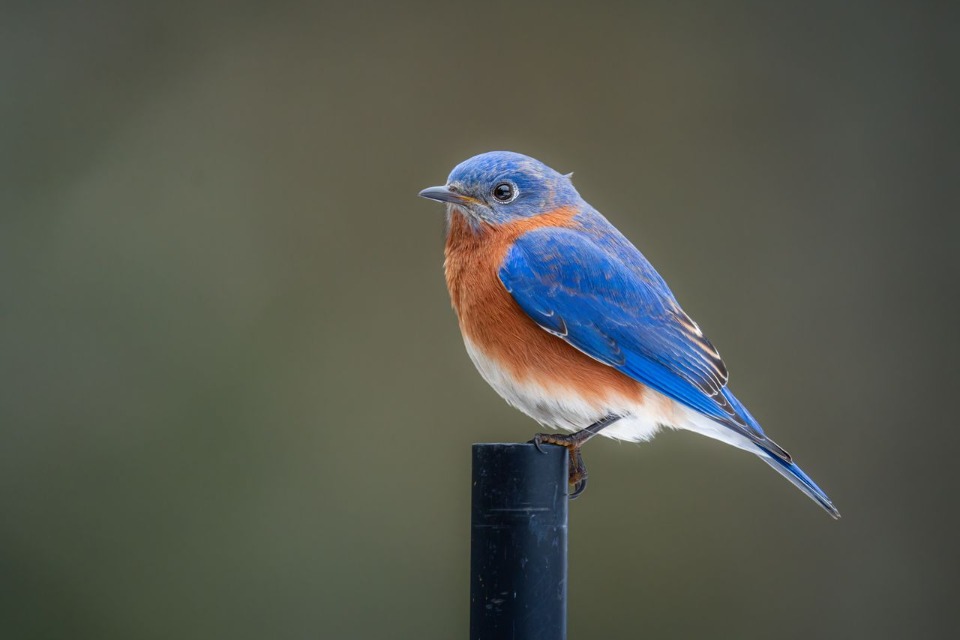
An adult male Eastern Bluebird with a vibrant blue back and rusty brick-red breast perched on a metal post.
Structural Topography: Pinpointing micro-patches like colored eye rings or clean wing panels allows observers to confidently split look-alike species within three seconds. Photo by Brian Forsyth on Pexels; layout configuration by Feathered Guru.

Wing bar topology adds a critical second scanning zone that operates independently of body plumage color assessment. The number of visible wing bars, their width relative to the secondary covert panel they cross, and their color contrast against the surrounding wing field collectively provide massive species-resolution data.

This localized data delivers more value than the bird’s entire back and breast color combined. This accuracy holds firm because wing bar presence and position function as fixed anatomical constants rather than lighting-dependent variables.

The field identification training resources published by the Audubon Society consistently teach observers to look past broad plumage tones during the first seconds of an encounter. Their educational guidelines recommend mapping structural landmarks in a fixed sequence rather than forming a loose, single color impression that breaks down under shifting outdoor light.

Learning this top-to-tail structural routine and connecting it to the broader four-pillar diagnostic framework ensures morning yard counts remain accurate without relying on variable feather tones. The complete framework connecting size assessment to color zone scanning is available inside our master guide on how to identify birds by size.

Applying the Zone-Scan Routine at Common Feeder Species

The zone-scan routine produces immediate results when applied to the most frequently misidentified color pairs in North American backyards. The House Finch and Purple Finch confusion pair resolves entirely on two color zone assessments rather than on overall red intensity.

  • The Flank Zone: Reveals clean, parallel brown streaks on white in the House Finch versus a diffuse raspberry wash with no clean background in the Purple Finch.
  • The Culmen Line: Discloses a continuously curved upper mandible in the House Finch versus a nearly straight, angular ridge in the Purple Finch.

Both of these separating features remain readable under overcast skies, in moderate shade, and at typical feeder distances. They remain durable precisely because they rely on boundary geometry rather than on color intensity or saturation that shifts with ambient light.

The complete zone-by-zone separation protocol for this challenging pair is fully documented inside our House Finch vs. Purple Finch guide. Reviewing this structural breakdown walks you through the complex female plumage comparisons that many observers find incredibly challenging.

The male and female Northern Cardinal comparison provides a second instructive example of zone-scan application across sexually dimorphic plumage. The adult male’s entirely red body plumage paired with a black facial mask and an orange-red conical bill creates a field mark combination with zero ambiguity under any lighting condition.

Conversely, the female’s warm buff-tan body with reddish tinges on the crest, wings, and tail requires zone-specific assessment focused on the orange-red bill color and prominent pointed crest. Prioritizing these physical landmarks allows you to easily separate her from similarly-sized brown birds visiting the same property stations.

The full male and female cardinal plumage comparison is available inside our male vs. female cardinal guide. This core resource breaks down the seasonal variations that affect color saturation between summer and winter plumage states.

Applying this same zone-scan discipline to every species on your yard checklist builds rapid perceptual automaticity over time. This disciplined approach transforms deliberate three-second assessments into the sub-second gestalt reads that experienced field observers describe as instantaneous species recognition.

What Are the Most Common Color Pitfalls for Beginner Birders?

The most common bird color pitfalls include the backlighting silhouette trap, the shaded iridescence trap, and the transitional molt trap. These distinct optical and biological scenarios distort raw plumage tones, causing beginning birdwatchers to routinely misidentify familiar resident species during brief passing glances.

The primary color pitfalls that corrupt beginner identification logs are the backlighting silhouette trap, the shaded iridescence trap, and the transitional molt trap. These three distinct optical scenarios each produce a different category of plumage misread that no basic field guide illustration prepares observers to handle.

Each of these three pitfalls has a specific structural correction that resolves the identification without requiring any color assessment at all. This structural focus is precisely why structure-first routines eliminate these errors while color-first strategies do not.

A bird viewed directly against a blazing morning sunrise appears as a solid, flat black outline down your viewing columns. All chest pigments, facial field marks, and wing bar boundaries are completely erased by the intense backlight overwhelming the observer’s contrast perception.

The structural correction for this backlighting scenario is to assess silhouette proportions only during the backlit observation. Observers must read tail-to-torso ratios, bill lengths relative to head depth, and overall body size relative to the House Sparrow benchmark before waiting for the bird to shift its position relative to the light source.

  • Pitfall 1 (The Backlighting Trap): High-contrast morning sun erases chest pigments, turning a colorful bird into a flat black silhouette that reveals only structural proportions.
  • Pitfall 2 (The Shaded Iridescence Trap): Dark canopy shadows convert vibrant structural blues and iridescent greens into dull, generic dark browns or blacks that provide no family-level color information.
  • Pitfall 3 (The Transitional Molt Trap): Patchy, mottled feathers during late-summer molting cycles produce a plumage state that matches no standard breeding-season field illustrations.

The shaded iridescence trap is particularly consequential because it consistently causes observers to misidentify European Starlings as uniform black birds during canopy shadow observations. This mistake causes beginners to miss the diagnostic bronze-green iridescent sheen that covers the entire body in fresh breeding plumage and provides the primary color-based confirmation of the species.

Landmark research on starling biophotonics published in Frontiers in Ecology and Evolution by Freyer et al. (2021) demonstrated that the bird’s iridescent colors are determined by a thin keratin cortex layer covering solid, rod-shaped melanosomes.

Their imaging scatterometry and spectrophotometry testing verified that these micro-structures create a broad continuum of shifting reflectance peaks across different viewing and illumination angles, proving that a starling appearing uniformly dark in shade is exhibiting a normal optical response to low-angle diffuse light rather than displaying atypical plumage.

The transitional molt trap catches even moderately experienced observers because field guides universally depict breeding plumage adults. This editorial bias creates a reference image library that does not represent what those same species look like for the five to six months of each year spent in non-breeding or transitional plumage states.

Classic research on plumage variation published in Nature by Hill (1991) established that carotenoid-based feather coloration in male House Finches is a direct function of individual dietary intake. His field data proved that this fluctuating nutrient access causes extreme coloration differences among individual males within the same backyard population, creating an enormous spectrum of red, orange, and yellow plumage states.

This wild dietary color variation means that color shades alone cannot reliably separate individuals within a species or isolate closely related species from each other during feeder counts. This unreliability further reinforces the structural boundary assessment approach as the only identification method that holds across all individuals, all seasons, and all lighting conditions.

The seasonal plumage transition that most consistently generates misidentification errors is the complete shift of the American Goldfinch from brilliant lemon-yellow summer plumage to dull olive-brown winter dress. This dramatic seasonal shift is covered in full mechanistic detail inside our companion guide on why do goldfinches change color.

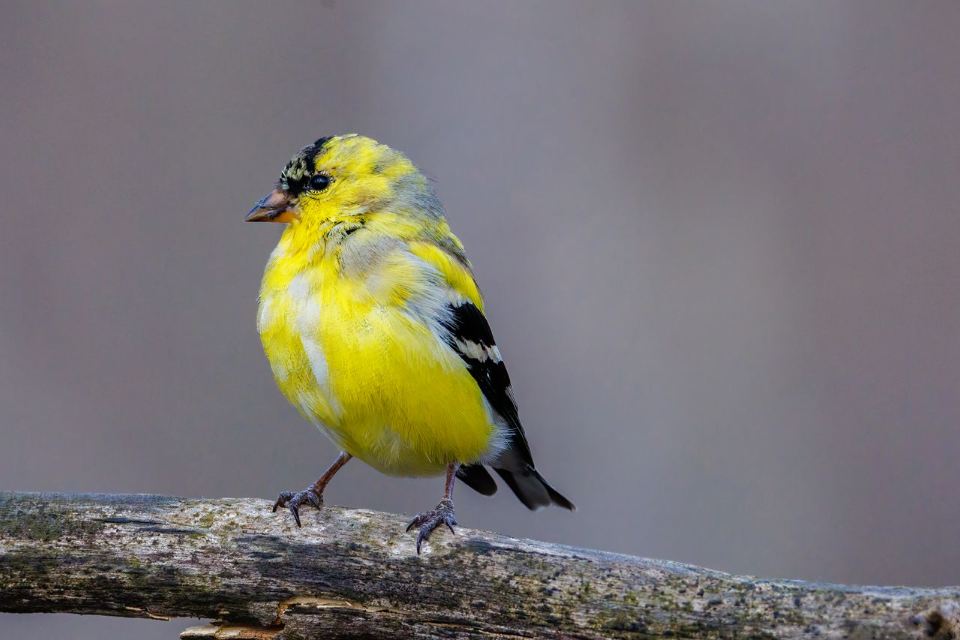
A male American Goldfinch showing patchy, molting yellow and olive-brown feathers on a winter branch.
Seasonal Plumage Transitions: Late-summer and autumn molting cycles produce patchy, mottled feather states that routinely trick the eye and compromise beginner logs. Photo by Aaron J Hill on Pexels; layout configuration by Feathered Guru.

The Carotenoid Versus Structural Color Distinction in Field Practice

The difference between carotenoid and structural colors determines whether a bird’s plumage retains a constant hue or shifts dynamically across changing lighting environments. Organic carotenoid pigments absorb and reflect specific light wavelengths uniformly, while structural feather elements alter their apparent hue by 30 to 80 nanometers based entirely on the alignment of the light source and the observer.

Understanding which species carry carotenoid-based pigment colors versus which carry structural colors fundamentally changes how an observer interprets the color shifts they see across different lighting conditions. This foundational awareness allows you to separate real plumage variations from environmental illusions down your property logs.

Carotenoid colors like the red of Northern Cardinals, the yellow of American Goldfinches, and the orange of Baltimore Orioles are produced by dietary pigments deposited into feather keratin during synthesis. They shift in apparent intensity with lighting but do not change their dominant hue the way structural colors do.

Structural colors like the blue of Eastern Bluebirds, the iridescence of Ruby-throated Hummingbirds, and the blue wing patches of Blue Jays are produced by physical nanostructures in the feather barbs. They can shift their apparent hue by 30 to 80 nanometers across different viewing angles, causing the same feather to appear sky-blue, dark grayish-blue, or nearly colorless depending on the precise geometry of observation.

The Cornell Lab’s comprehensive Bird Academy documentation on bird feather optics explains this distinction between pigment-based and structure-based coloration in accessible terms. Reviewing their digital lessons directly translates to practical field observation improvements across your daily tracking sheets.

The practical implication is that structural-color species like Blue Jays, bluebirds, and iridescent hummingbirds require the observer to assess color only when the bird is facing into the light source at a favorable angle. Conversely, pigment-color species like cardinals and goldfinches provide more consistent color information across a wider range of lighting scenarios.

Applying this two-category awareness before attempting any color zone assessment prevents the specific identification errors that arise when observers try to read structural colors under poor lighting conditions. These adverse environments physically cannot produce the expected wavelength output from the feather nanostructure, making structural contour checking your only reliable alternative.

Plumage Reference Guide: Comparative Color Grid

This comparative color grid condenses our full structural guide into a single scannable canvas to help you instantly adjust for ambient lighting variations and filter backyard bird species by their true plumage zones rather than their apparent overall color impression.
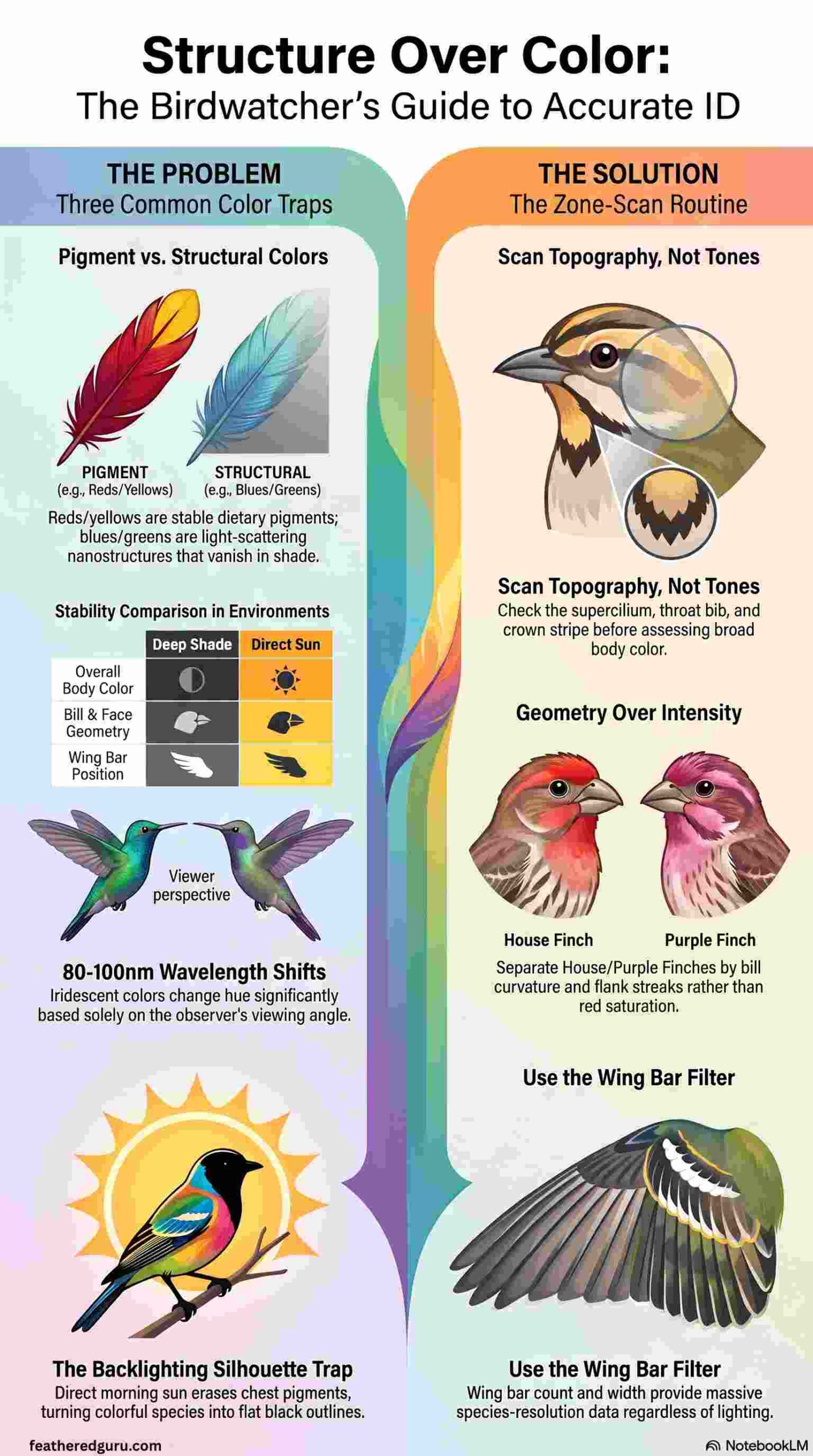
How to Identify Birds by Color Infographic

Conclusion: Mastering Your Plumage Routine

Integrating a structure-first routine before filtering for broad color fields permanently eliminates the primary cause of inaccurate yard counts. Structural boundaries at specific anatomical zones remain readable across all lighting conditions, seasonal plumage states, and individual color variation scenarios that make whole-body color assessment unreliable.

Building genuine field-craft confidence in plumage assessment requires committing to a disciplined zone-scan sequence. Observers must check the supercilium, throat bib, crown stripe, wing bars, and rump patch in that fixed order before assigning any color-based identification until the routine becomes automatic.

Pairing this structured plumage assessment routine with our complete backyard birds checklist creates an airtight daily diagnostic habit. This practice generates highly accurate species counts from your first morning observation through your final evening sweep.

Relying on that structured tracking baseline as a permanent reference ensures that every morning count builds your real-world precision. Maintaining this discipline prevents you from repeating the same color-trap errors that compromise beginner identification logs across all four seasons of the year.

Frequently Asked Questions: Bird Identification by Color

What is the most common mistake when identifying birds by color?

The most common mistake is assuming that a bird’s plumage colors look identical across all types of outdoor environments and weather conditions. Beginning observers routinely fail to realize that shifting sunlight and deep canopy shade can turn a vibrant blue, purple, or red species into a completely flat brown or black silhouette during quick passing glances.

How do you accurately tell apart birds that have similar colors?

You can tell them apart with complete accuracy by focusing on localized plumage boundaries inside fixed anatomical zones instead of looking at the overall body color. Scanning head topography for micro-patches like supercilium eye stripes, throat bibs, or precise wing bar layouts allows you to confidently split look-alike species within three seconds.

Why do bird colors look completely different in the winter compared to summer?

Avian plumage colors change dramatically due to seasonal molting cycles that replace bright breeding-season feathers with dull, well-camouflaged winter coats. Additionally, birds voluntarily fluff up their contour feathers to trap warm air against their skin on freezing mornings, creating an optical illusion that inflates their perceived size by up to 50 percent.

Can you identify a bird if the bright sun completely erases its chest colors?

Yes, you can confidently identify a backlit bird by ignoring color fields completely and tracking its fixed silhouette proportions instead. Measuring structural anchors like its bill depth relative to its head width or its tail-to-torso ratio allows you to pin down the correct taxonomic family before the bird ever flies into better lighting.

Author

  • Vince Santacroce Main Photo

    Vince S is the founder and author of Feathered Guru, bringing over 20 years of birding experience. His work has been featured in reputable publications such as The GuardianWikiHowAP NewsAOL, and HuffPost. He offers clear, practical advice to help birdwatchers of all levels enjoy their time outside.

Consent Preferences
Scroll to Top