
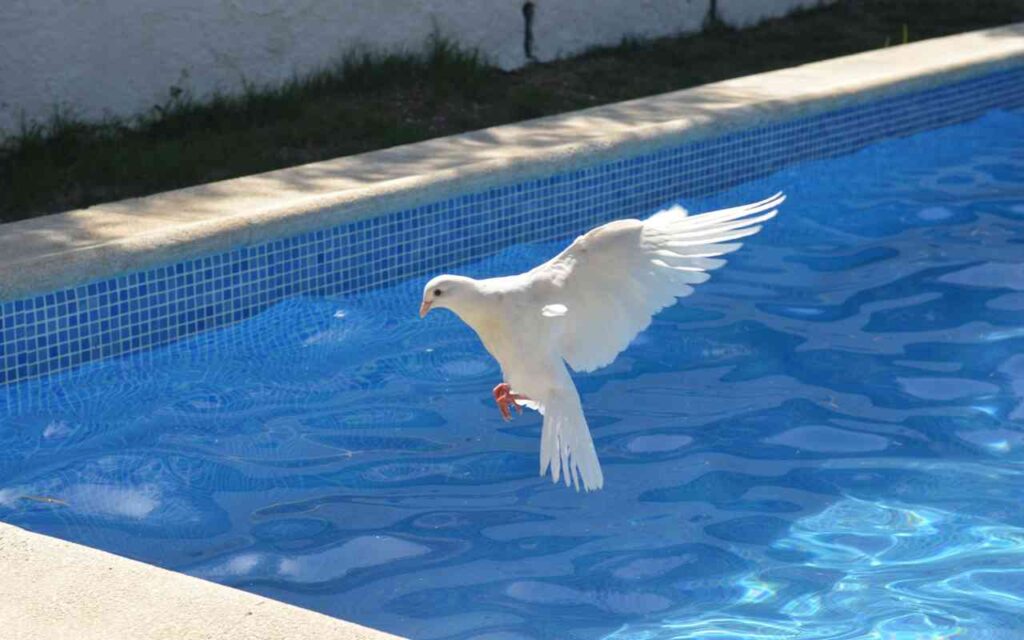
Knowing how to keep birds away from swimming pools requires more than temporary scare tactics. Because pools provide birds with easy access to water for drinking and bathing, local flocks will often return to the exact same location again and again.
This guide covers practical, humane methods that reduce bird activity around your pool and help you maintain a cleaner outdoor swimming area. Deploying alternative hydration stations and low-profile visual barriers ensures you can safely protect your water line from messy droppings without hurting the birds.
Quick Answer: What is the most effective way to protect your swimming pool area?
The single most effective strategy is layering your defenses: install realistic predator decoys and steel bird spikes along ledger rails, apply taut UV-resistant surface netting, and deploy infrared motion-activated sprinklers to trigger unexpected water jets.
To completely break persistent roosting habits, combine these hardware solutions with wind-driven holographic reflective tape, light essential oil scent barriers on deck furniture, and a dedicated freshwater redirection fountain placed 50 feet away.
Watch: How to Keep Birds Away From Your Pool
Want to see these bird deterrent strategies in action? This short video walks you through the easiest and most effective ways to keep your pool clean, safe, and bird-free. From pool covers to motion-activated sprinklers, netting, and alternative water sources, you’ll get a clear visual guide to protecting your backyard oasis without harming the birds.
Show Transcript
0:00
So, are you just tired of your beautiful backyard oasis turning into, well, the local bird bath? If you’re ready to finally take your pool back from all those unwanted feathered guests, then you’ve come to the right place. Let’s dive right in.
0:12
You know the scene, right? You head out for a nice, relaxing swim, and what do you see? Feathers everywhere floating on the surface. Droppings all over the deck. It’s like your personal pool has been claimed as the neighborhood bird spa.
0:25
And yeah, it’s super frustrating. But don’t worry. We’re absolutely going to figure out how to put a stop to this, and do it safely and effectively.
0:34
Okay, so to really solve this problem, we’ve got to understand it first. It all boils down to one simple question: why are the birds even showing up to begin with?
0:42
Once you figure out what’s attracting them, that’s when you can start building a really solid defense.
0:47
So let’s think like a bird for a second. How do they see your pool?
0:51
To them, that big, sparkling body of water isn’t just a place to cool off. It’s a total safe zone. It’s a reliable, predator-free oasis.
1:01
You’ve got sparrows taking a bath, pigeons stopping by for a drink, and even those really smart crows that memorize it as a daily pit stop. Your pool is basically a five-star resort for birds.
1:13
So do any of these signs look familiar? The droppings and feathers are the obvious giveaways.
1:19
But you should also be listening for constant bird noise. If you start seeing little nests popping up nearby, scratched patio furniture, or knocked-over pool floats, you can be pretty sure you’ve got regular, uninvited guests.
1:34
Alright, time to get strategic. Our first layer of defense is all about prevention.
1:38
We’re going to make your pool area as unappealing to birds as possible right from the start.
1:44
Let’s begin with three foundational steps.
1:46
First, cover your pool. Birds hate obstacles, and even a simple cover can be a huge deterrent.
1:53
Second, trim any overhanging branches. This removes their convenient perching spots right above the water.
1:58
And third, remove other attractions, like berry-producing plants or small puddles of standing water. This makes the entire area far less inviting.
2:10
With prevention in place, let’s build our second layer of defense: active deterrence.
2:14
These are tools and tactics that scare birds away the moment they get too close.
2:23
You’ve got two main approaches here. One option is physically blocking access with things like netting.
2:32
The other option is using scare tactics. These rely on surprise, like flashes from reflective tape, the silhouette of a fake owl, or sudden bursts of water.
2:47
And speaking of surprises, let’s talk about a real game changer: the motion-activated sprinkler.
2:52
A bird lands nearby, triggers the sensor, and gets hit with a quick jet of water. Birds absolutely hate it, and it works without harming them at all.
3:05
Now this part is critical. Birds are smart.
3:12
If you leave a decoy owl in the same spot for weeks, they’ll quickly figure out it’s not a threat.
3:20
You need to layer your methods and move things around. Rotate decoys. Change the placement of reflective tape. Keep that element of surprise alive.
3:32
For another layer of protection, let’s talk about scent.
3:35
Birds have a sensitive sense of smell, and strong scents like peppermint or eucalyptus really irritate them.
3:43
Lightly spray essential oils on furniture and deck edges. Never spray them in the water. This is a simple, non-toxic way to signal that the area is off limits.
3:55
Now let’s shift gears and talk about pool hygiene.
3:57
This isn’t just about keeping birds away. It’s about protecting the health and safety of everyone who uses your pool.
4:08
Bird droppings aren’t just messy. They can carry harmful pathogens like salmonella and E. coli.
4:17
That creates real health risks for your family, your pets, and anyone who swims in the pool.
4:26
If you find droppings, follow this safety protocol.
4:28
Always wear gloves. Gently wet the droppings before cleaning them to prevent particles from becoming airborne.
4:41
Dispose of the waste properly, then follow up with a chlorine shock to fully sanitize the water.
4:48
The bottom line is simple. A clean, well-maintained pool is less attractive to birds.
4:54
Daily skimming, brushing the edges, and keeping proper chlorine levels make your pool safer for swimmers and less appealing to birds.
5:08
So we’ve covered prevention, active deterrence, and maintenance.
5:13
Now let’s talk about winning the long-term battle.
5:17
The key word here is consistency. Your strategy also needs to change with the seasons.
5:25
In spring, focus on removing nesting materials. In summer, make sure all deterrents are active and working. In winter, keeping the pool covered is your best defense.
5:40
Here’s a powerful long-term strategy that creates peaceful coexistence: redirect the birds.
5:47
Instead of just fighting them off, place a bird bath or water source somewhere far away from the pool.
5:54
You give them what they need, and they stay out of your swimming area. It’s a win-win.
6:02
Long-term success isn’t about one magic trick. It’s about layered, sustainable methods.
6:11
Cover your pool. Maintain landscaping. Rotate deterrents. Provide an alternative water source.
6:22
Do all of that, and you create a system where birds get what they need, and you get your pool back.
6:25
So are you ready to reclaim your oasis?
6:27
You’ve got the blueprint now. With these strategies in hand, you can enjoy a clean, peaceful, bird-free pool again.
6:35
Now go get them.
Why Birds Are Attracted to Your Pool
Understanding why your pool water source attracts birds is step one in solving the problem. Backyard birds need water for both drinking and bathing, and your pool looks like the world’s most reliable oasis from their perspective.
Wildlife behavior around water is instinctive. Research published by the Connecticut Audubon Society found that birds actively seek out standing water sources, especially during hot weather or drought conditions. Your pool isn’t just convenient, it’s potentially the only accessible water for blocks around.
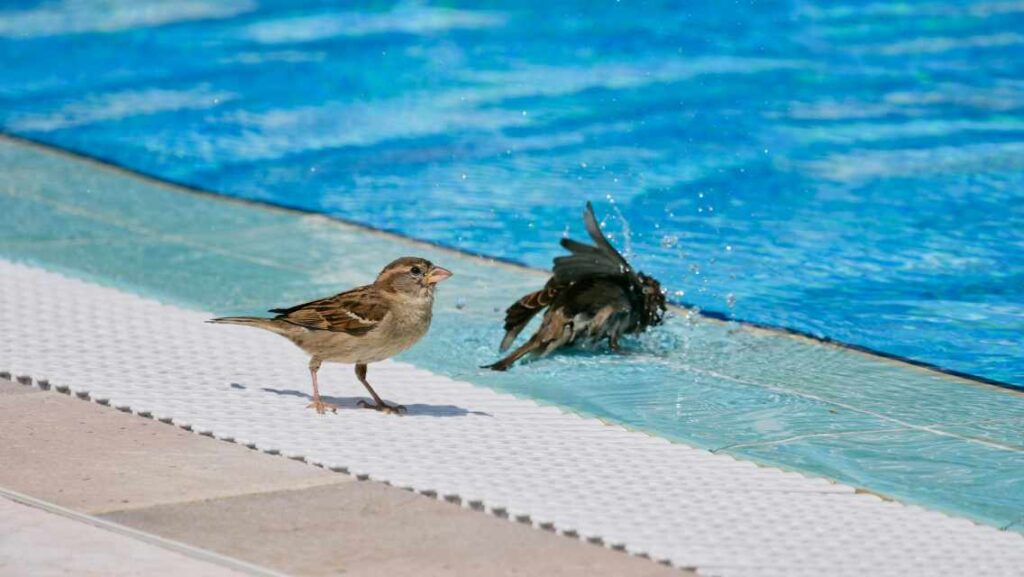
Different species have different motivations. Sparrows, pigeons, crows, these are your typical pool visitors. Sparrows love shallow edges for bathing. Pigeons are bold and persistent, treating your pool like their personal drinking fountain. Crows are smart enough to figure out that pools provide consistent water even during dry spells, and they’ll return daily once they’ve established the pattern.
The open water surface looks safe to birds. Unlike dense vegetation where predators might hide, pools offer clear visibility in all directions. Birds can see threats coming, which makes them feel secure enough to linger. Your pool’s cleanliness actually works against you here, sparkling water signals “fresh, safe drinking source” to passing birds.
Signs Birds Are Visiting Your Pool Regularly
How do you know if birds are regular visitors or just passing through? Bird droppings around the pool edge are the most obvious sign. If you’re finding fresh droppings every morning, you’ve got regulars who’ve incorporated your pool into their daily routine.
Feathers floating in the water or scattered around the deck indicate bathing behavior. Birds don’t just drink, they actually bathe in pools, splashing around and preening afterward. Bird noise is another giveaway. If you hear chirping, cooing, or squawking around your pool area consistently, especially at dawn or dusk, birds have established a routine.
Nesting attempts near the pool area signal serious problems. Birds building nests in nearby trees, under eaves, or in pool equipment boxes plan to stick around long-term. Pool furniture damage often shows up as scratches on cushions, displaced items, or even pecking damage on wooden or plastic surfaces.
Bird activity leaves traces beyond the obvious. Seeds scattered around the area suggest birds are perching nearby and eating, using your pool as their post-meal water source. Disturbed pool equipment, knocked-over bottles, or moved pool toys all indicate birds have been exploring your space. I once found a crow had systematically knocked every single float into the water, apparently just for fun :/
Preventive Pool Design and Environmental Adjustments
Let’s talk about prevention because it’s way easier than constantly fighting birds after they’ve established patterns. Pool covers are your first and most effective defense. Retractable covers that completely block access work beautifully when you’re not using the pool.
Keep your pool covered when not in use. This isn’t just good advice for bird deterrence, according to the Centers for Disease Control and Prevention, promptly dealing with bird droppings and other contaminants helps keep pool water safe and germ-free. When birds can’t access the water, they usually move on within a few days.
Landscaping matters more than you’d think. Perches within 20 feet of your pool create staging areas where birds land before flying down to the water. Birds rarely fly directly to ground-level water, they assess from nearby branches first. Remove those branches, disrupt their approach pattern. Trim back overhanging tree limbs and eliminate obvious landing spots.
Flowering plants near pools can actually increase bird activity by attracting insects, which attract insect-eating birds. These birds then discover your convenient water source. Create a buffer zone of less bird-attractive landscaping immediately around your pool area. Opt for plants that don’t produce berries or seeds that might draw birds closer.
Natural repellents in your pool area management strategy include plants birds tend to avoid, such as marigolds or certain strongly-scented herbs like rosemary. While not foolproof, they add another layer of deterrence to your overall strategy.
Physical Deterrents to Keep Birds Away
Sometimes prevention isn’t enough and you need active deterrents.
Bird netting stretched over your pool creates a physical barrier that’s highly effective. Use UV-resistant netting rated for outdoor use and ensure it’s taut, sagging netting can trap birds, which defeats the humane purpose.
Mesh barriers work similarly but with smaller openings. These are particularly effective against smaller birds like sparrows that can squeeze through larger netting. The downside? They require proper installation and consistent maintenance to remain effective.
Bird spikes on pool edges, furniture, and nearby fences prevent landing without causing harm. These look aggressive but don’t actually hurt birds, they just make surfaces uncomfortable to perch on. I installed them on my pool fence posts, and sparrow visits dropped by about 60% within two weeks.
Reflective tape and similar visual deterrents create chaotic flashes of light and unpredictable movement that birds tend to avoid, and research on visual scare devices shows these effects can reduce bird landings when properly positioned and actively moving. The key is keeping them in motion, wind-activated movement prevents habituation.
Predator decoys like realistic owl or hawk figures can work short-term. But remember: birds are smart. Move these every 2-3 days or birds figure out they’re fake. I rotate between an owl, a hawk, and a rubber snake, keeping birds guessing about what predator threat might be real.
Motion-activated sprinklers are brilliant for pool areas. Install them near the pool perimeter so they trigger when birds approach. Birds hate unexpected water jets, and the surprise factor prevents habituation better than static deterrents. These work incredibly well and provide entertainment value when they occasionally catch unsuspecting delivery people 🙂
Chemical and Non-Toxic Repellents for Pools
Let’s address chemical options carefully because you’re dealing with a pool people swim in. Pool-safe deterrents are your only option—never use anything that could contaminate water or harm swimmers. Essential oils like peppermint or eucalyptus applied to surfaces around (not in) the pool can deter birds through scent.
Mix about 15–20 drops of essential oil per cup of water in a spray bottle. Apply to pool furniture, edges, and surrounding areas, reapplying after rain or every 3–4 days. According to a scientific review of avian olfaction, birds possess a functional sense of smell and may respond to chemical cues, though effectiveness varies by species.
Humane bird control means never using anything toxic or harmful. The goal is making your pool unappealing, not poisoning birds. Avoid any product not specifically labeled as safe for use around pools and swimmers.
Commercial bird repellent gels designed for pool areas exist, but read labels carefully. These should be applied only to surfaces where birds land (fence posts, furniture edges), never anywhere that touches pool water or where children might come in contact with them.
Pool Maintenance Habits That Discourage Birds
Here’s something most people don’t realize: pool maintenance directly affects bird attraction. Skimming water daily removes debris before it decomposes or creates attractive conditions for birds. I skim my pool every morning during peak bird season, which takes maybe five minutes but prevents birds from finding anything interesting.
Clean edges where birds typically land are crucial. Bird droppings and feathers can actually attract more birds because they signal “other birds have been here safely.” Wash down pool edges weekly with a hose to eliminate these chemical markers.
Chlorination at proper levels keeps water crystal clear, which ironically looks less appealing to some bird species who prefer murky, natural-looking water for bathing. Maintain your pool’s chemical balance not just for swimmer safety but as a bird deterrent. Research shows that animals frequent artificial water sources, indicating that neglected pools may attract more wildlife than well-maintained ones.
Algae control is essential. Algae growth makes water look more “natural” to birds, inviting bathing behavior. Keep your pool sparkling clean through regular shocking, brushing, and proper filtration. Trash management around the pool area matters too, food waste attracts birds, who then discover your convenient water source.
Standing water removal from planters, pool toys, and furniture eliminates alternative water sources that keep birds lingering in the area. If water collects anywhere near your pool, birds will investigate and likely discover your main pool in the process.
Seasonal Strategies for Bird Control
Bird migration patterns mean your pool faces different pressures throughout the year. Summer activity peaks because birds are desperate for water during hot weather. This is when you need maximum deterrents active, covers, sprinklers, reflective tape, the whole arsenal.
Nesting season typically runs March through July, varying by species and location. During this period, birds defend territories aggressively and visit water sources frequently to support their young. According to the Xinjiang Ground‑jay study, birds in arid regions often build nests closer to water, ensuring reliable resources for raising their young.
Spring brings increased bird activity as they prepare for breeding season. This is the time to establish deterrents before patterns form. Once birds incorporate your pool into their territory, breaking that pattern requires weeks of consistent effort. Backyard wildlife patterns shift seasonally, migratory species come and go, while resident species adjust behaviors based on resource availability.
Winter activity drops in most regions, but don’t ignore your pool entirely. In areas with mild winters, birds still need water, and your heated pool might be the only unfrozen option around. Maintain basic deterrents even during cooler months to prevent establishing winter patterns.
Addressing Persistent or Problem Birds
Some birds are just stubborn. Pest birds like starlings are particularly notorious for persistence and aggression. Stubborn birds that refuse to leave despite your deterrent efforts require escalated strategies, combine multiple methods simultaneously rather than trying one at a time.
If reflective tape alone isn’t working, add motion-activated sprinklers AND predator decoys AND habitat modifications. Stack your defenses until birds decide your pool isn’t worth the hassle. I’ve found that the combination of three different deterrent types finally convinced my persistent crow population to move on.
Professional bird control becomes necessary when you’re dealing with large flocks, aggressive territorial birds during nesting season, or birds that have established such strong patterns that DIY methods fail for weeks. Urban wildlife management professionals have access to methods and equipment homeowners don’t, plus they understand local regulations about bird deterrence.
When considering professional help, get multiple quotes and verify licenses. Expect to pay $200-600 for initial assessment and basic deterrent installation, more for comprehensive solutions like full pool netting systems. FYI, pros often combine exclusion methods with behavioral conditioning for maximum long-term effectiveness.
Health and Safety Considerations Around Pools
Let’s talk about why this isn’t just an aesthetic issue. Bird droppings carry serious health risks including salmonella, E. coli, histoplasmosis, and other zoonotic diseases that transfer from animals to humans. These aren’t paranoid concerns—they’re real threats, especially to children, elderly people, and those with compromised immune systems.
Research from CDC documented multiple pathogens present in bird droppings that can contaminate water sources. Cryptococcus, histoplasmosis, and various bacterial infections are all possible contaminants. Pool safety means treating any bird contamination seriously. If birds have defecated in your pool, raise chlorine levels and run the filter according to CDC guidelines.
Don’t let anyone swim until the water has been properly shocked and tested. Children and pets are particularly vulnerable to waterborne illnesses from bird waste because they’re more likely to accidentally ingest pool water.
Clean droppings immediately when you find them. Wear gloves, wet the droppings first to prevent airborne particles, and dispose of waste properly. Never pressure-wash dried droppings without wetting them first, the aerosolized particles can cause respiratory infections.
Long-Term Strategies for a Bird-Free Pool
Bird-proofing your pool isn’t a one-time fix, it’s an ongoing commitment to maintaining conditions that discourage bird visits. Sustainable deterrents means methods you can maintain indefinitely without exhausting yourself or your budget.
Environmental changes form your foundation. Keep the pool covered when not in use, maintain proper landscaping buffers, and eliminate nearby perching spots. These permanent modifications require minimal ongoing effort once established.
Backyard wildlife management doesn’t mean eliminating all birds from your property. Consider installing an alternative water source far from your pool, a bird bath or fountain at least 50 feet away gives birds what they need while keeping them away from your swimming area. This satisfies their needs while protecting your pool.
Layer physical deterrents that you rotate regularly. Reflective tape one week, predator decoys the next, motion-activated sprinklers throughout. This rotation prevents habituation while maintaining consistent pressure on birds to find easier water sources. According to integrative damage management research from the National Academies, using multiple bird deterrent methods, such as visual, auditory, and habitat modification techniques, can be more effective than relying on a single deterrent alone.
Monitor and adjust your strategy seasonally. What works in spring might not work in fall. What deters sparrows might not faze crows. Stay flexible, observe patterns, and modify your approach based on results. Keep a simple log of what works and when, this information becomes invaluable over multiple seasons.
Quick Visual Reference: Bird-Proofing Your Pool
This visual guide summarizes the most effective ways to keep birds from using your pool as a drinking and bathing spot. It’s designed for quick scanning if you want the key ideas without rereading the full article.
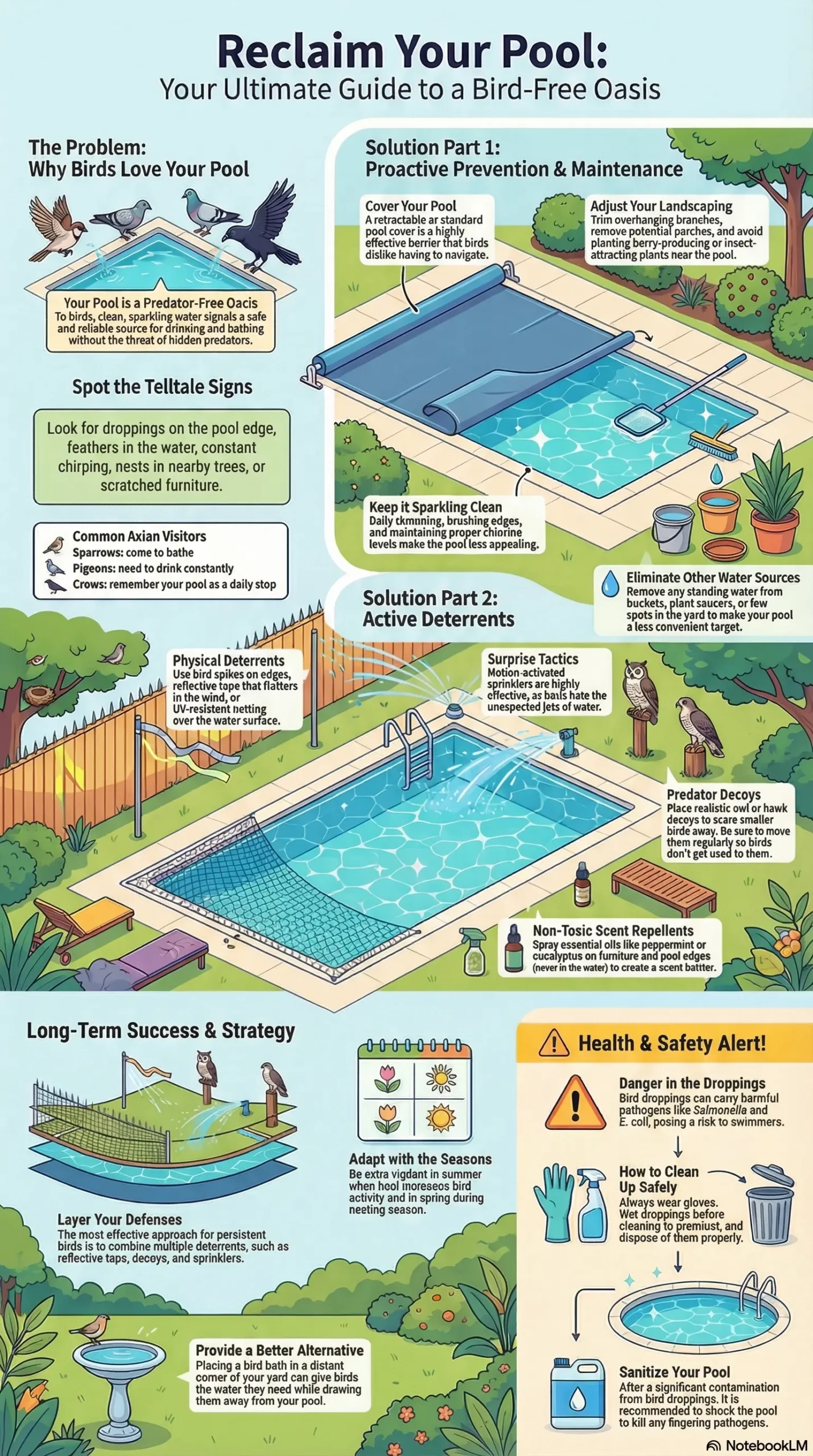
Tip: Tap to zoom or open in a new tab for easier reading.
Summary Checklist for a Bird-Free Swimming Pool
Setting up your pool protection in layers creates a reliable shield that handles changing bird habits easily. Your moving predator models, steel landing spikes, surface safety netting, automated sprinklers, and remote freshwater diversions stay useful through peak July heatwaves, breeding territory seasons, and active migrations.
Once your pool lines are secure, you can easily deploy specialized adjustments across the rest of your outdoor furniture and layout assets. Learn how to make natural bird repellents using essential oils to safeguard your decks, review our mechanical frameworks for keeping birds away from patio furniture, and check our strategic parameters for discouraging crows from your yard to maintain a spotless backyard sanctuary all season long.
Stay consistent with your maintenance routine each season. Relocate your perimeter silhouettes every 48 hours, ensure your safety mesh stays stretched taut without sagging, and maintain your alternative hydration stations on the far edge of the lawn. Shifting your perimeter visual silhouettes frequently while maintaining alternative hydration zones completely breaks the daily bathing routines of local pest flocks.