
Mounting a backyard nesting box in the middle of spring practically guarantees an empty box all summer. Homeowners often ask themselves: when should you put up a bird house to maximize seasonal occupancy? The key is timing your installation well before the first spring migratory wave hits. Fitting your placement coordinates into this natural timeline is the only way to prevent frustrating vacancies.
By weathering raw lumber during winter freezes, timing setups ahead of early regional scouting flights, and preserving spaces for later migratory insectivores, you can maximize occupancy. Here is how to map your properties to hit the exact scheduling targets of your favorite local birds.
When Is the Best Month to Put Up a Birdhouse?
The absolute best window to put up a birdhouse is during late winter to early spring, specifically between late January and early March, well before spring migration peaks.
Installing your mounting posts during this freezing stretch gives non-migratory resident scouts plenty of time to discover the site, while allowing raw cedar or pine siding to weather naturally and shed human scents.
1. The Winter Weathering Strategy: Eliminating Human Scents
Many beginners assume that a clean, fresh, straight-out-of-the-box birdhouse is highly appealing to wild songbirds. In reality, newly cut lumber and treated store-bought houses carry sharp wood treatment odours, adhesive chemical scents, and human skin oil residues that can scare off sensitive avian scouts. To eliminate these chemical blockages, you should use the winter weathering strategy.
Mounting your nesting structures during late autumn or early winter allows the cedar panels to sit through multiple freezing cycles, heavy snowfall patterns, and winter rain. This environmental exposure naturally strips away human scents, dulls glaring bright wood grain finishes into a muted grey tone, and bleeds out organic wood oils.
By the time the early birds begin mapping out territories, the structure looks and smells like an ancient, weathered tree trunk, drastically lowering their caution thresholds. For a detailed breakdown of how to prepare wood frames to hold up through these harsh winter weathering periods, check our master birdhouse guide for beginners.
2. Tracking the Resident Early Bird Scouting Window
While many backyard birders wait for the spectacular spring arrival of migratory songbirds, your non-migratory resident species are already locking down prime housing properties. Hardy, year-round residents like the Black-capped Chickadee, Tufted Titmouse, White-breasted Nuthatch, and various Downy Woodpeckers never leave their home turf.
In regional backyard habitats, these resident cavity-nesting species actively form breeding pairs and scan local properties during February and March. They aggressively claim premium houses, get familiar with the surrounding yard layout, and defend the entrance portal from later arrivals.
Once they locate a safe house, they will defend it fiercely from other birds and become accustomed to it, making them far more likely to nest there. If your mounting pole is not secured in the dirt by late January, you miss out on these early-season occupants, leaving your structures open to takeover by aggressive, non-native house sparrows.
3. Catching the Migratory Arrival Peak
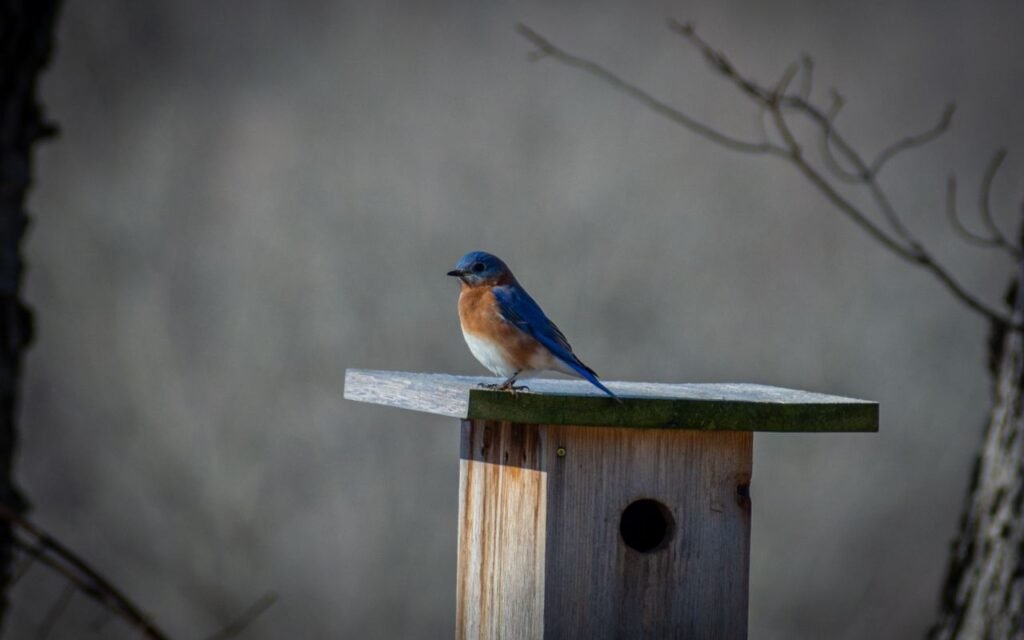
Once the ground fully thaws and early spring insect populations begin hatching, the massive wave of long-distance migratory birds sweeps north. This migratory window targets iconic species like the Eastern Bluebird, Tree Swallow, and Purple Martin, which travel thousands of miles to reclaim their traditional nesting territories.
The Mid-March Bluebird Push
Eastern Bluebirds are among the earliest long-distance arrivals, often reaching northern lawn clearings by mid-to-late March. They are highly focused on food security and will immediately claim open-meadow houses that offer vast sightlines. Ensure your box heights are set at the ideal meadow elevation before their flight arrival by matching your specs to our verified birdhouse height guide.
The April Swallow and Martin Rush
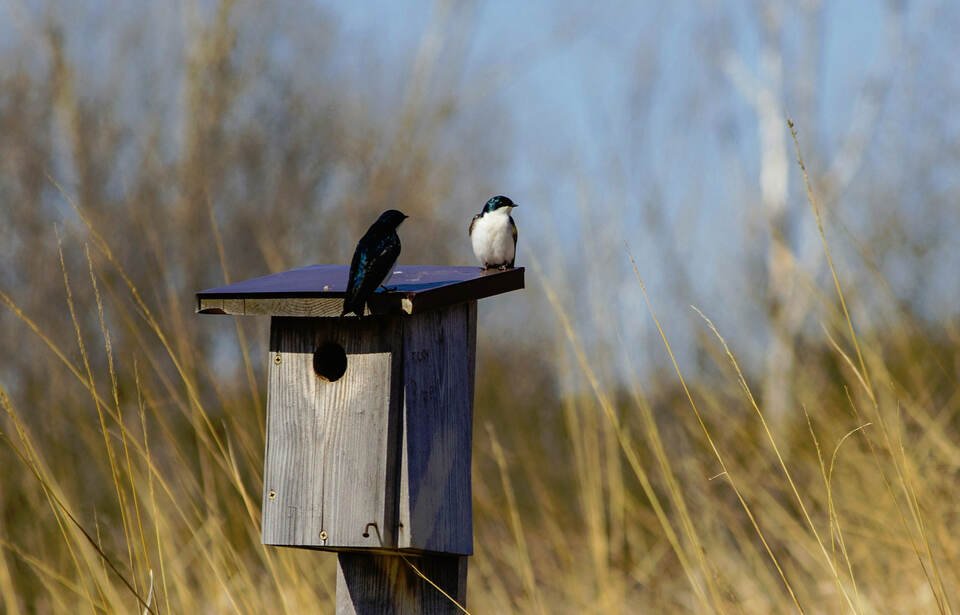
Tree Swallows and Purple Martins follow closely behind, peaking in April across most North American zones. Because these species rely on catching flying insects mid-air, they wait until regional temperatures stay consistently warm enough to support bug hatches. If you are deploying houses specifically tailored to these late-season aerial hunters, installing hardware in late March gives the structures just enough time to settle without allowing earlier wrens to claim them.
4. Overwintering Utility: Transitioning Nest Boxes to Roost Boxes
A nesting box should not sit uselessly through the freezing dark months of November, December, and January. According to a specialized seasonal guide published by the Cornell Lab of Ornithology NestWatch Program, backyard birders can easily repurpose spring birdhouses into critical winter shelters to protect cavity-dwelling birds from extreme temperatures, precipitation, and predators.
During sub-zero winter nights, small birds will even crowd together inside a single box when food is scarce to conserve vital body heat.
⚠️ CRITICAL ROOSTING CONVERSION: Seal Ventilation Slots
Standard summer nesting boxes feature intentional side gaps to let heat escape. According to NestWatch protocols, you must temporarily seal ventilation and drainage holes with foam weatherstripping or clean rags to trap hot air inside, while facing the door away from prevailing winds. Always remove these insulating seals when March arrives to prevent dangerous summer overheating.
Converting your setup into a cold-weather sanctuary ensures local birds return to your property line when spring breeding begins. Birds that safely spend freezing winter nights inside your insulated box become highly attached to that specific location, making them much more likely to choose it for their spring broods.
5. Latitudinal Shift Dynamics: The Macro-Timing Map
You cannot rely on a single date across a giant continent; the best day to secure your hardware shifts dynamically based on your precise latitude. Spring moves north across the landscape in waves, driven by temperature lines and insect hatches. Avian conservationists rely on standard geographical windows to ensure their boxes are upright before local flights land.
Southern Climates (Hardiness Zones 8–10)
In southern states like Texas, Florida, and Georgia, cavity nesters begin scouting properties as early as mid-to-late January. Bluebirds in these regions can easily hatch their first brood by early April, meaning your installation deadline is firmly set at New Year’s Day.
Central Zones (Hardiness Zones 6–7)
Across central regions like Missouri, Virginia, and Ohio, the optimal timeline settles between mid-February and early March. This window catches the early resident chickadees while remaining completely ahead of the major bluebird pushes.
Northern Ecosystems (Hardiness Zones 3–5)
For far northern landscapes, including New England, Michigan, and Canada, your window stretches from mid-March to mid-April. Deep freezes keep insects down later, meaning you can safely mount hardware later into the spring season without risking vacancy.
6. The Autumn Pre-Settlement Installation Window
While late winter is the primary target window for most backyard enthusiasts, installing your birdhouses during the early autumn months (September and October) provides an unheralded conservation advantage. This strategy exploits the post-breeding dispersal phase of local bird populations.
Once the summer nesting rush completely concludes, juvenile birds leave their parents’ immediate territories and wander across the surrounding neighborhood to map out winter shelters. At the same time, resident adult birds take mental notes on alternative cavities for the following spring.
Hanging a fresh wood box in October means it will sit through fall rain, winter snow, and heavy frosts, allowing it to become completely weathered and part of the landscape long before February arrivals. This approach essentially creates a zero-day layout priority for your property when the next spring rush begins.
7. Managing Late-Season Successive Broods
Do not give up hope if your birdhouse sits empty through March, April, and May. A common mistake people make is taking down their mounting posts in June under the assumption that the year’s nesting window has closed. Many native songbirds, particularly Eastern Bluebirds and House Wrens, are multi-brood nesting species.
A single healthy bluebird pair will routinely raise two, and sometimes even three, successive broods in a single spring and summer stretch. Once their first round of fledglings leaves the nest in late May, the parent birds immediately start searching for a clean, parasite-free box to lay their next clutch of eggs.
Keeping your birdhouse clean, lowering it to clear out old straw nesting materials, and keeping it active through July ensures you capture these second-wave nesting pairs looking for a fresh layout.
8. The Danger of Mid-Summer Installations
While early winter installations offer massive strategic advantages, hanging a new wooden box in the dead of summer (July and August) can create a dangerous thermal environment. Mid-summer sun angles put immense heat stress on enclosed wooden spaces, especially if the structure has not had time to weather naturally.
An un-weathered, dark wood birdhouse mounted in July can reach interior air temperatures exceeding 105°F (40.5°C) within a few hours of direct afternoon sun exposure. If an inexperienced bird attempts to construct a late-season nest inside that unventilated space, the eggs can easily fail due to heat exhaustion.
If you must install a box late in the summer, ensure the mounting pole is placed underneath a deep tree canopy shade line, and check that your entry portal points away from western sun arcs. Match these layout configurations with our comprehensive coordinates guide on best birdhouse placement.