
Reader Transparency: This birding guide contains paid affiliate links. If you click a link and make a purchase, I may receive a small commission at no extra cost to you. As an Amazon Associate, I earn from qualifying purchases. Your support helps keep Feathered Guru flying!
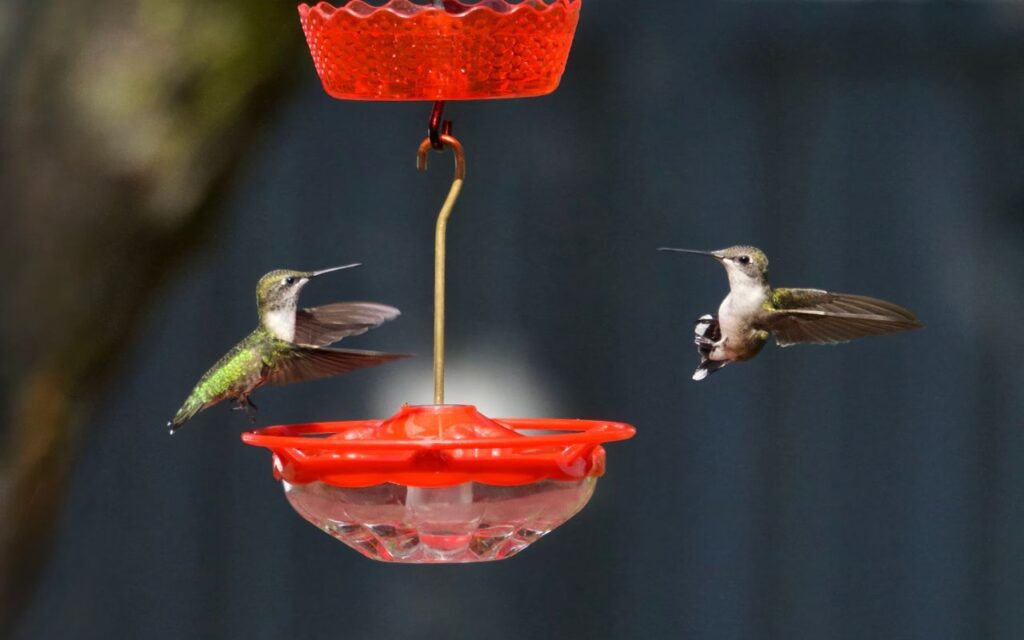
You know that frustrating feeling when a single aggressive bully dive-bombs every visitor trying to take a sip from your fresh sugar-water station? If you want to stop hummingbirds fighting over feeder ports from ruining your garden oasis, realizing that these birds are driven by extreme territorial survival instincts can completely change your strategy.
The truth is that you do not have to watch them exhaust themselves in endless aerial warfare. Hummingbirds are protective of localized sugar caches, but you can easily exploit their flight patterns and line-of-sight boundaries to trick dominant bullies and create a highly efficient multi-bird sanctuary.
How Do You Stop Hummingbirds Fighting Over a Feeder?
To stop aggressive hummer battles, implement a 30-foot spatial sightline isolation strategy. Instead of clustering multiple sugar-water stations close together, place secondary feeders around corners or behind thick bushes out of the dominant bird’s direct line of sight.
- Sightline Blockades: Move secondary hanging stations behind buildings to block visual control.
- The Swarm Approach: Place high-volume multi-port dishes in the open to saturate territory bosses.
The Evolutionary Driver: Why Nectar Dominance is Biological
To permanently fix aggressive backyard behavior, you must look at the unique survival mechanics that govern these tiny birds. Hummingbirds have an incredibly high mass-specific metabolic rate, demanding nearly constant sugar intake to avoid entering life-threatening starvation states overnight.
Upgrading your yard layout to a leak-proof Aspects HummZinger HighView Feeder is the easiest way to give smaller, subordinate birds a steady resource map. Because wild flower nectar sources bloom sporadically, these birds treat a filled artificial station as an elite, high-value resource worth defending at all costs.
According to behavioral ecology research published by The National Audubon Society, their high metabolic demands force them to treat backyard stations like localized wild flower clusters that must be aggressively guarded from rivals.
The second a traveling bird attempts to land on a port, the territory boss drops into a steep dive-bomb, utilizing high-speed territorial vocalizations to drive the intruder away. Trying to stop this instinct using a single clustered hanging array is impossible, forcing you to adjust your physical layout.

• Dish saucer design completely eliminates dripping leaks
• HighView perch ring elevates birds for clear viewing
• Four feeding ports accommodate multiple visiting migrants
• Built-in central moat blocks crawling ant invasions
Preventing Heat-Driven Aggression With Fresh Nectar Protocols
While territorial instincts are hardwired, summer heat can make hummingbird warfare drastically worse. In warm climates or intense summer weather, sugar water can begin to ferment and grow harmful mold in as little as 24 to 48 hours.
This spoilage risks serious fungal infections, but forum communities also note that it causes birds to become far more frenzied, frantic, and aggressive around the ports.
To protect your birds and keep tempers cool, implement a strict two-day fill rule. Instead of filling your nectar bottles to the brim, only pour in enough sugar water to last your backyard birds for about 48 hours. Keep the rest of your large batch stored safely in the refrigerator.
By swapping out the fluid on a tight schedule, you stop fermentation before it starts. This keeps birds from wasting energy fighting over a questionable, spoiling resource.
Use this simple temperature schedule to keep your backyard nectar safe and peaceful:
Outdoor Temperature How Often to Change Nectar Below 21°C (70°F) Change every 5 to 7 days 21°C to 26°C (70°F – 80°F) Change every 3 days 27°C to 32°C (81°F – 90°F) Change every 2 days Above 32°C (90°F+) Change daily
Avoiding Feeder Designs That Intensify Territorial Warfare
Selecting the right hardware is just as important as choosing the right location. A common complaint among backyard birders in online forums is that highly decorative, “cute” glass bottle feeders actually make bird fighting worse.
Models with crowded plastic flower ports, tight cluster designs, and zero perch room force multiple incoming birds into a single, cramped approach path. This makes it incredibly easy for a bully to body-check and chase rivals away.
Furthermore, feeders that are entirely bright red act like a giant visual beacon from long distances, drawing in territorial scouts from blocks away. To reduce mid-air collisions and turf wars, look for simple dish saucer designs where the feeding ports are spaced widely apart.
This gives multiple birds ample room to sit and drink concurrently with a clear line of sight. Avoid models that force birds to hover in a tight, frantic circle around a single focal point, and favor muted accents over bright red bodies to keep your station from becoming a hyper-visible dominance hotspot.
The 30-Foot Spatial Sightline Isolation Strategy
If your backyard stations are locked down by a single aggressive bully, you must deploy the “30-foot spatial sightline isolation strategy.” Homeowners commonly make the mistake of hanging two or three beautiful glass bottles from the exact same porch bracket, thinking that extra ports will accommodate more birds.
According to field management overviews updated by the Cornell Lab of Ornithology, this clustered arrangement actually works against you because it triggers intense territoriality. Spreading your ports entirely out of a single bird’s field of view is the single most effective way to accommodate wider flocks without triggering constant territory defenses.
To permanently break this visual control loop in tight spaces, deploy a proprietary “Specular Blindness Polarization Hack.” Territory bosses track intruders by spotting the sharp, high-contrast sun glints reflecting off the glass or plastic nectar reservoirs of competing feeders.
Wrap the upper nectar bottles of your secondary stations in a single layer of matte, non-reflective black cohesive grip tape, leaving only the bottom feeding ports exposed. This eliminates the artificial sun-flash signals completely.
Because the hidden ports no longer broadcast light tracking reflections across your yard sitemap, the dominant bird will fail to notice the station from a distance, allowing subordinate hummers to feed in complete safety.
- Step 1: Leave your primary hanging station on your porch hook, allowing the dominant bird to focus its energy on guarding that single point.
- Step 2: Walk at least thirty feet away and hang a secondary unit completely out of sight, such as around the corner of your garage, behind a garden shed, or on the opposite side of a dense hedge wall.
- Step 3: Light traveling hummers will quickly discover the hidden, unguarded secondary port while the territory boss is distracted defending the main porch bottle.
This simple layout adjustment fragments the bully’s visual control zone. Because the aggressive bird cannot be in two places at once or see through physical building structures, it will eventually stop trying to defend the hidden station, immediately allowing smaller, subordinate birds to feed in complete safety.
Vertical Zoning: Using Feeder Height to Fragment Micro-Territories
When mapping out your backyard station layout, remember that hummingbird territories aren’t just flat maps. Territory bosses usually choose a preferred lookout perch elevation and flight path. You can exploit this behavior by setting your secondary feeders at completely different heights to create separate micro-zones, a 3D layout strategy that works brilliantly in small gardens where a 30-foot horizontal separation is impossible.
To split up a bully’s visual control loop, deploy a three-tiered vertical framework:
- The High Tier: Hang your primary feeder high up and fully exposed (such as from a porch hook). Your neighborhood bully will naturally claim this top-tier spot and waste its energy guarding it.
- The Mid Tier: Place a secondary feeder at chest height, partially hidden near tree branches or decorative patio plants.
- The Low Tier: Position a third feeder low to the ground, tucked closely into thick garden shrubs.
Shy females and younger juveniles will easily utilize the lower, shaded stations out of sight, while the dominant male patrols the high-profile porch bottle from above.
Swarming Tactics: Using High-Volume Port Saturation
When high seasonal migration waves hit your region, you can pivot from isolation tactics to an advanced alternative method known as “high-volume port saturation.” Territorial boss birds can comfortably defend a station against one, two, or even three intruders over the course of an hour.
However, their mechanical defensive strategy completely falls apart when they are faced with an absolute swarm of twenty or thirty birds arriving at the exact same moment.
You can create this defensive overload by setting out fresh Kaytee ElectroNectar Liquid sugar food directly inside an open garden clearing. As long-distance migrants swarm the station from all angles, the dominant bird will attempt to chase one away, only for three more to immediately land the second its back is turned.
Within a few hours of relentless swarm pressure, the territory boss will realize that defending the zone is completely exhausting its body fats without yielding any personal reward.
The bully will give up its lookout perch and sit down to feed peacefully alongside the group. This saturation framework works brilliantly at reviving traffic lines, a management technique that mirrors the food-volume adjustments required when birds are not coming to a new bird feeder due to high backyard baseline stress levels.
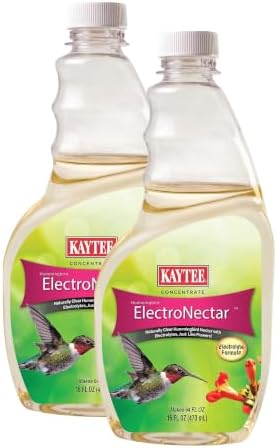
• Ready-to-use blend requires no mixing or boiling
• Clear formula contains zero artificial red dyes
• Added electrolytes hydrate high-energy traveling migrants
• 100% pure sucrose mimics natural wild flower nectar
Eliminating High Altitude Visual Lookouts
Hummingbird bullies do not patrol their territory while flying. Instead, they conserve critical caloric energy by sitting on elevated, bare dead branches or clotheslines that provide an unobstructed, 360-degree view of the sugar ports. If you remove these convenient lookout points, you radically reduce their ability to ambush visiting birds.
Examine the ten-foot radius around your current hanger brackets and look for thin, bare twigs or exposed wires that sit higher than the port lines. Use pruning shears to trim back these dead lookouts or move your hangers under a dense, leafy canopy where high-altitude visual spotting is impossible.
If you cannot physically cut down a preferred high-altitude metal wire or structure line, implement a proprietary perch diameter friction trap. Slide a thick, smooth split-foam pipe insulation tube measuring one inch or wider in diameter over the bully’s favorite wire lookout lines.
Hummingbirds belong to the biological order Apodiformes, characterizing birds with highly regressed, exceptionally small leg muscles and feet. Their anatomy is evolutionary engineered strictly for passive perching on micro-diameter twigs between 1.5mm and 3mm, completely lacking the robust flexor tendons found in heavy perching birds.
When the foam cylinder forces their delicate toes open past their physical gripping threshold, they cannot clamp down to stabilize their lightweight bodies against gravity. This physical barrier forces the aggressive bird to abandon the high vantage point and drop down to a lower, hidden branch, which completely ruins its tactical line-of-sight advantage.
This environmental change pairs perfectly with the physical balance adjustments required to stop bird feeder swinging issues during high autumn wind patterns.
Transitioning From Clustered Arrays to Evergreen Shrub Barriers
If you manage a smaller suburban garden property where achieving a full thirty feet of open spatial separation is impossible, you can use tactical landscaping choices to block sightlines. Planting high-density native shrubs like highbush blueberry or elderberry directly between your hanger setups allows you to place stations surprisingly close together without triggering fights.
The thick, leafy barrier acts as a natural room divider, providing a safe visual shelter for traveling species. Shifting your physical landscape styles to block line-of-sight triggers allows multiple families to forage concurrently, a design principle covered across our guide on bird-friendly garden design.
To maximize this setup’s efficiency in tight spaces, deploy an advanced community workaround known as the visual horizon break. Backyard birders on BirdForum.net document that aggressive territorial males select high, exposed lookout twigs that align perfectly with the prominent red caps of standard feeders.
To disrupt this targeting vector safely, install a vertical privacy lattice panel or hang a dense hanging basket filled with trailing fuchsia directly between the two stations. This physical partition acts as a permanent visual block that fragments the yard into separate foraging zones.
While subordinate females and juveniles easily track the hidden port using low-altitude approach flights, the territory boss remains completely blinded from its high perch, allowing multiple birds to feed simultaneously without conflict.
Maintaining these distinct spatial feeding blocks keeps your layout operating efficiently. This protective yard routine supports the healthy backyard habitats outlined across our complete guide on birds are not coming to a new bird feeder to help you manage initial station stress levels.