
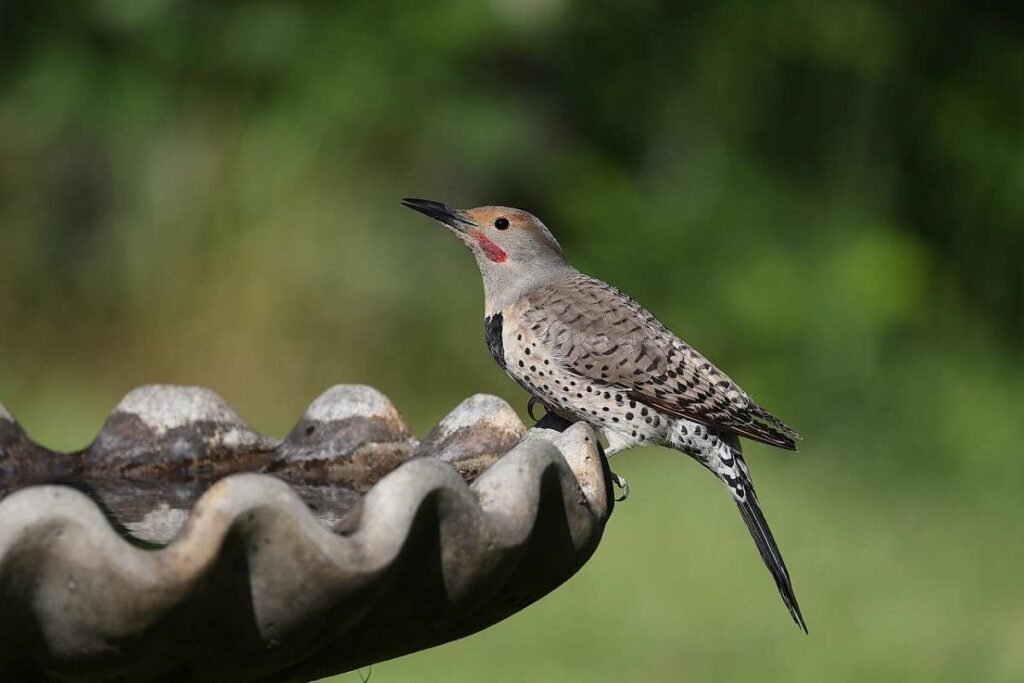
Whenever a Northern Flicker lands in my yard, I always stop to watch because they break every single rule in the woodpecker playbook. Instead of clinging vertically to tree trunks like their cousins, these beautiful birds spend most of their time hopping around on my open grass.
Sharing some lesser-known fun facts about the Northern Flicker is one of my favorite topics because their lifestyle is so bizarre. From their crazy ground-hunting habits to their specialized tools, they have completely mastered survival in our neighborhood spaces
What is the Most Unique Fact About the Northern Flicker?
The most unique fact is that they spend more time foraging on open soil than any other North American woodpecker to satisfy a massive five-thousand-bug daily ant addiction.
To support this lifestyle, their bodies feature an evolutionary two-inch coiling tongue mechanism that wraps entirely around their braincase for safe storage between hunts.
Practical Video Tips for Spotting Ground Woodpeckers
Watch this short explainer video to see how easy it is to manage your backyard spacing properties. Learning about these spotted rebels helps you optimize your platform viewing angles and seasonal hardware choices cleanly.
The Sonic Amplification Science of Rhythmic Drumming
Flickers do not limit their hammering to soft decaying wood when it comes to long-distance neighborhood communication. During the spring breeding season, they actively seek out the most resonant, high-vibration human structures available.
They select hollow metal chimneys, commercial street signs, and residential utility boxes to amplify their mating calls. This intentional surface picking acts like an organic megaphone, transforming short skull strikes into a loud acoustic broadcast.
The fast drum rolls travel over a quarter-mile away to signal territorial dominance to rivals. This sonic fingerprint allows nearby birds to identify specific individuals based purely on the unique rhythm of the strikes.
If their loud morning territorial calls begin causing issues along your home siding panels, implement our protective adjustments on how to prevent woodpecker damage to secure your building materials safely.
These humane adjustments redirect the territorial adults away from your structural trims without harming the birds.
The Hybrid Mixing Zone of the Great Plains
Flickers display a brilliant geographic color split that originally convinced early ornithologists they were looking at two entirely separate species. The eastern yellow-shafted population carries bright yellow feather shafts, while the western red-shafted group displays rich salmon-pink tones.
The true evolutionary magic occurs across the wide mixing zone of the Great Plains. In this central region, the two distinct color populations meet and breed freely with zero reproductive barriers.
Genetic tracking data published in the Royal Society Publishing Journal Archive confirms that this regional interbreeding creates gorgeous mixed individuals featuring asymmetric patches of both colors on a single body. A single bird can display yellow primary feathers alongside red secondary feathers.
This zone serves as a real-time classroom example of ongoing genetic evolution. It shows how rapidly wild bird populations can exchange physical traits when geographic barriers shift.
Male Red-shafted Flicker
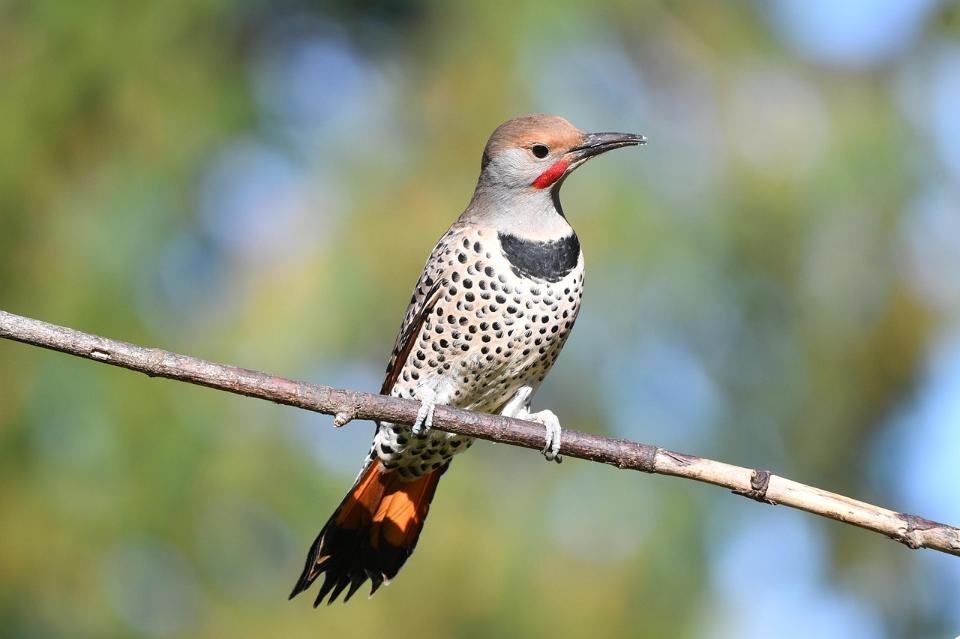
Male Yellow-shafted Flicker
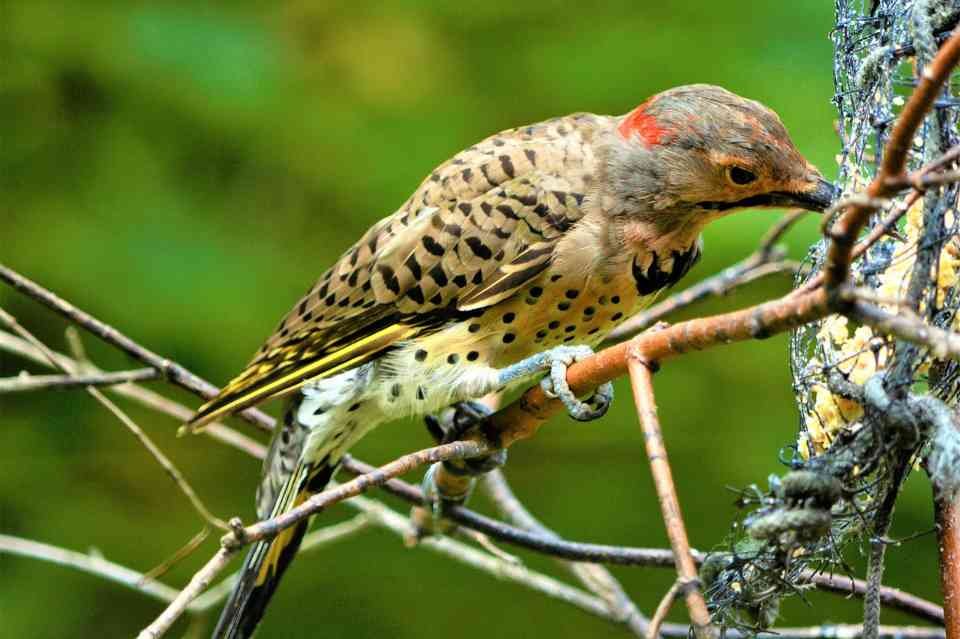
Subsurface Listening and Pressure Sensitive Nerve Layers
Flickers do not just randomly dig into lawns hoping to strike a subterranean colony by pure luck. They hop slowly across open grass fields with their heads tilted downward to scan for subtle ground vibrations.
Their ears can detect the faint rustling sounds of thousands of ants moving inside compact dirt tunnels. Once they isolate a hidden tunnel system, they drive their reinforced bill into the soil to open a breach point.
The tip of their tongue holds highly specialized, pressure-sensitive nerve endings that feel for movement in total darkness. This tactile sensing allows them to locate moving insects by touch alone without wasting energy on blind digging loops.
Biochemical Ant Harvesting and Sticky Gland Chemistry
Satisfying a massive daily appetite requires an efficient harvesting tool that acts like an organic fishing line. The tongue of a flicker is coated in a thick layer of sticky saliva produced by enlarged salivary glands sitting under the jaw.
This specialized fluid uses a highly sticky chemical composition that instantly glues insect bodies to the tongue on contact. Scientific baseline data tracked across the Wikipedia Northern Flicker Monograph reveals that this intense feeding pattern provides a vital natural control force for balancing yard insect numbers.
Backward-facing barbs lining the tip of the tongue hook slippery prey so they cannot break free during rapid retraction. This chemical harvest system allows a single bird to vacuum up five thousand insects in one afternoon.
Tree Cavity Modification and Alternative Nesting Flexibility
While most woodpeckers stick strictly to carving out fresh holes inside standard rotting tree trunks, flickers display highly flexible nesting choices. They will easily excavate deep interior chambers inside wooden fence posts, old utility poles, and large residential birdhouses.
They use their heavy curved bills to carve smooth interior chambers that stretch roughly thirteen to sixteen inches deep into dead wood panels. On rare occasions when local timber resources are completely absent across prairie terrains, they have even been documented nesting inside abandoned earthen burrows left behind by bank swallows.
This tight, enclosed chamber design protects their glossy white eggs from tree-climbing predators like raccoons and climbing snakes. This flexible architecture ensures they can raise successful broods across wide, open landscapes.
Carotenoid Dietary Ingestion and Molting Shifts
The brilliant yellow and red wing colors displayed by adult flickers are directly controlled by the specific types of foods they ingest. Because their bodies cannot manufacture these bright hues internally, they must extract natural organic compounds called carotenoids from wild ingredients.
During the active autumn molting window, their systems process wild berries to deliver these pigments directly into the hollow shafts of their newly forming flight feathers. If an individual consumes non-native honeysuckle berries during this growth phase, the foreign chemical compounds can interfere with their internal liver enzymes.
This dietary disruption causes an unusual color shift, turning eastern yellow-shafted feathers into a deep orange shade. Once the feathers fully grow out, this color matrix is permanently locked into the dead keratin tissue until the next yearly molt cycle activates.
Dual Parent Incubation Shifts and Shared Care
Flickers break standard woodpecker social patterns by operating as a highly coordinated team during the intensive nesting phase. Once the female lays her clutch of five to eight glossy white eggs, both parents share daily incubation duties equally.
They establish strict changing shifts that rotate every few hours all day long to ensure the eggs never face exposure. The parents use soft vocal communication sounds to signal changeovers cleanly without drawing the attention of hawks.
This equal sharing of physical strain allows both adults to maintain higher energy reserves for the incoming hunting phases. It ensures the chicks receive a continuous food stream the moment they hatch.
Seasonal Diet Swapping and Lipid Energy Storage
Flickers completely change their digestive focus as the warm summer months fade into freezing winter weather. Their summer menu relies almost entirely on hunting ground ants to secure high protein values for growing chicks.
As frost seals the topsoil and pushes insect colonies deep underground, their systems swap over to process wild berries and tree seeds. They target high-fat dogwood berries, sumac, and wild cherries to build thick layers of subcutaneous fat ahead of autumn migration flights.
This lipid storage acts as an internal energy cell that fuels their travel paths across urban areas. It allows the birds to survive sudden winter temperature drops when backyard insects are completely out of reach.
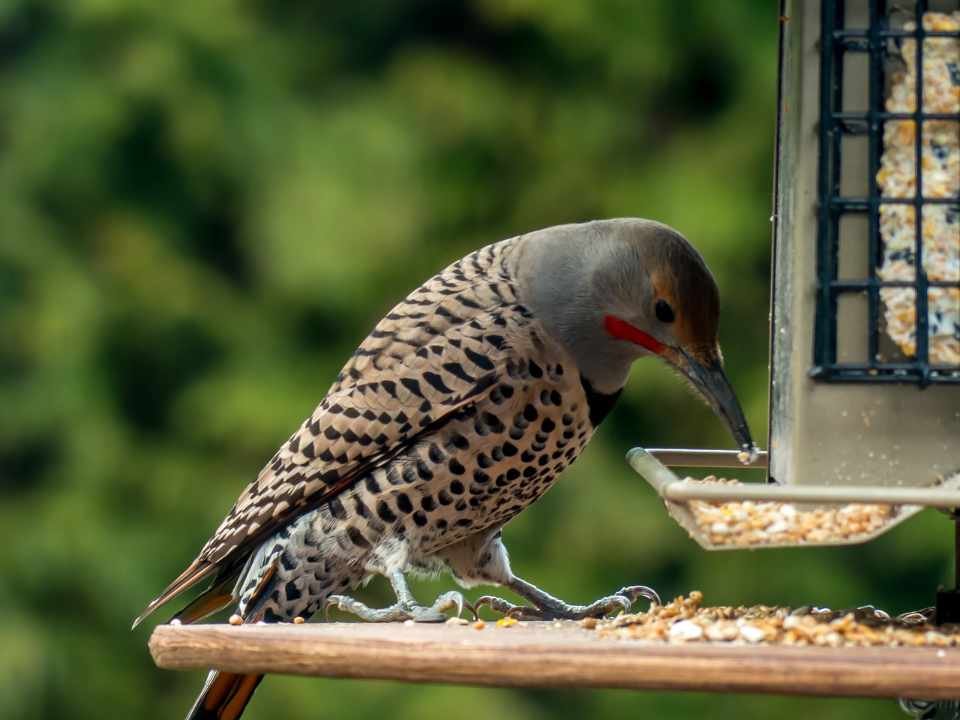
Dynamic Vocal Dialects and Urban Sound Scaping
Flickers carry a highly sophisticated vocal system that includes over a dozen distinct calls to manage group behaviors. Their primary long-distance contact call is a loud, ringing sound that echoes across neighborhoods.
Field data archived in the National Audubon Society Flicker Behavioral Overview shows that populations living inside noisy city environments actively alter the pitch of these calls. Urban flickers use higher-frequency notes to cut through the heavy background rumble of car traffic and construction equipment.
This vocal adjustment is passed down directly from parents to listening juveniles, creating distinct regional dialects across different cities. This communication flexibility allows the species to maintain tight territory boundaries inside developed environments.
Micro Climate Urban Heat Islands and Winter Survival
The rapid expansion of concrete cities represents a deadly threat to most native forest birds, but flickers have adapted beautifully to suburban spaces. They actively utilize urban heat islands to extend their ground-hunting seasons deep into the winter months.
The high concentration of concrete sidewalks, asphalt streets, and heated building foundations keeps surrounding lawn soils from freezing solid. This artificial warmth allows local ant colonies to stay active right below the surface all winter long.
Flickers exploit these micro-climates to maintain their ground-foraging habits while their forest-dwelling cousins are forced to migrate south. This behavioral flexibility proves how successfully they can adapt alongside human developments.
Reclaiming Your Yard for Native Wildlife
Supporting a healthy flicker lifecycle requires moving past standard birding templates and looking at the overall health of your local landscape. Ditching chemical yard sprays protects the natural insect colonies thriving across your grass perimeters.
To support these birds when natural winter food resources drop, learn how to choose the right bird feeder to offer high-fat suet blocks securely. Providing clean water stations, protecting dead tree snags, and setting up proper backyard hardware ensures these rule-breakers can raise their families safely.
If you find wild waste material building up along your wooden property fences during these peak feeding windows, consult our sterilization checklist on how to clean up bird droppings to refresh your landscaping lines safely.