
Reader Transparency: This birding guide contains paid affiliate links. If you click a link and make a purchase, I may receive a small commission at no extra cost to you. As an Amazon Associate, I earn from qualifying purchases. Your support helps keep Feathered Guru flying!
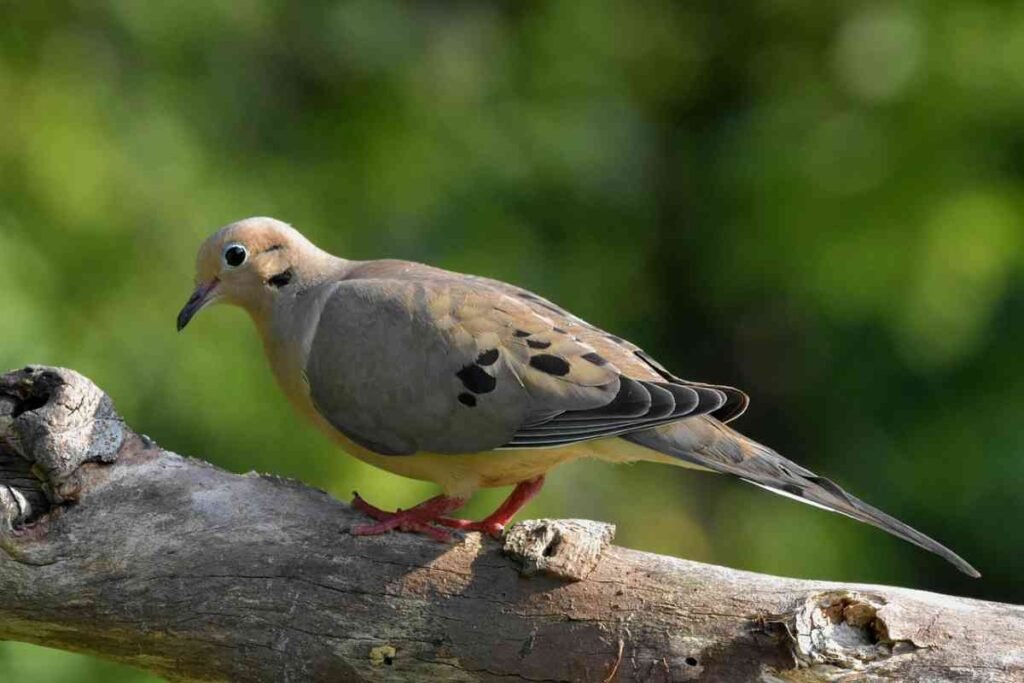
Sitting on an open porch during a quiet sunrise and hearing a soft, haunting melody float through the air is a classic suburban experience. If you are wondering why do mourning doves coo so frequently, you are listening to a highly complex acoustic communication system.
These gentle, low-frequency vocalizations are far from random backyard background noise. Instead, these birds engage in deliberate, targeted messaging that dictates their survival and social structures.
Relying on surface level explanations will not give you the full story behind these birds. By decoding the underlying biological mechanisms, environmental influences, and evolutionary behaviors, you can understand exactly what these unique birds are discussing right outside your window.
What is the Main Reason Mourning Doves Coo?
Mourning doves coo primarily as a vital communication tool where males claim nesting territories, warn rivals, and aggressively attract females during the spring mating season.
Once paired, doves switch to softer nesting calls to coordinate family duties, though they also rely on distinct alarm calls and aerodynamic wing whistles to signal immediate danger to the flock.
Step by Step Video Demonstration of Mourning Dove Communication
Before exploring the advanced biological science behind these sounds, watch this quick video breakdown to hear these exact acoustic shifts in real time. This brief explainer demonstrates true vocal differences, pitch variations, and physical postures that help you identify distinct flock behaviors cleanly without any guesswork.
Biological Mechanics of the Avian Voice Box
To truly comprehend why these birds sound so distinctive, you must look directly at their internal vocal anatomy. Unlike humans who rely on vocal cords inside a larynx, birds generate sound using a specialized organ called a syrinx.
The syrinx sits incredibly deep inside the avian chest cavity right where the trachea splits into the two main bronchial tubes. This strategic biological placement allows mourning doves to control airflow from both lungs independently with extreme precision.
By contracting specialized syringeal muscles, the bird manipulates internal membranes to alter pitch, rhythm, and volume seamlessly. Laboratory data published in the Acoustical Society of America JASA Journal Archive confirms that doves use specialized vocal tract filtering to amplify low frequencies while suppressing higher harmonic tones.
The physical structure acts as an internal acoustic amplifier. It turns simple exhaled air into a highly sophisticated language that carries across massive distances without exhausting the bird’s limited energy reserves.
Territory Claims and Auditory Border Patrol
Male mourning doves rely heavily on their vocal presence to act as a sonic fence around their chosen real estate. Real-world field guidelines managed by the Illinois Department of Natural Resources establish that early spring vocal sequences are aggressive proclamations of territorial home ranges.
A single male will claim an elevated perch like a tall oak branch or an open roofline early in the morning. From this high observation post, he blasts a loud, unmistakable public service announcement across the entire yard area.
This persistent vocal loop tells every rival male that the tree, grass perimeter, and nearby seed resources are fully occupied. This vocal boundary setting prevents dangerous physical fights between competing males.
If a rival bird ignores the warning and lands within the zone, the territory holder instantly increases his tempo and volume. He will blast the intruder with intense, rapid variations until the wandering bird moves along.

Strategic Acoustic Advertising for Mate Selection
During the peak spring breeding season, the male’s vocalizations switch from strict property defense to active courtship display. Female mourning doves evaluate potential life partners based entirely on their cooing performance and physical stamina.
A strong, highly consistent vocal routine tells the female that the male possesses excellent lung capacity, genetic health, and a premium nesting location.
Scoring the Vocal Performance
A steady cadence proves the male is calm, healthy, and completely free of debilitating parasites. Singing for hours without a break demonstrates massive physical stamina and energy reserves.
Choosing the highest available branches shows the male can protect a family from ground-based predators. The females are highly critical judges during this process.
They will listen to multiple competing males across a neighborhood before selecting a partner. This rigorous vocal fitness test ensures that only the strongest genetics pass down to the next generation of chicks.
To listen to high-fidelity audio catalog clips of these specific mate selection tracks, review the Cornell Lab of Ornithology All About Birds Sound Guide to hear the tone structures clearly.
Intimate Private Conversations of Mated Pairs
Once a pair completes the courtship process and mates for life, their vocal behavior changes completely. They entirely abandon the loud, aggressive public announcements to save their energy.
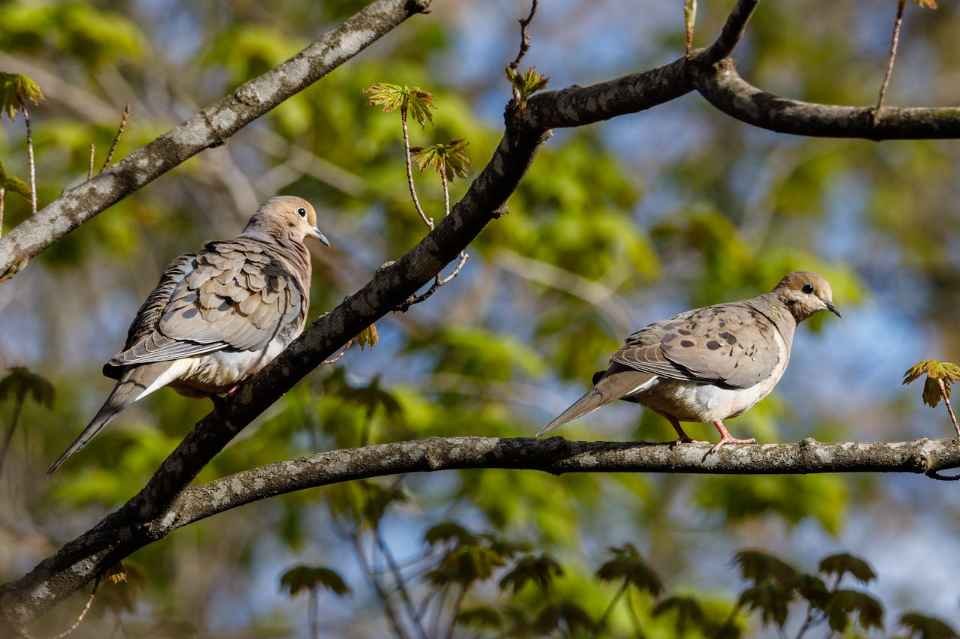
Instead, the bonded pair relies on ultra-soft, low-volume private chats that carry only a few feet. These intimate exchanges are used to coordinate daily household and nesting responsibilities seamlessly.
When it is time to switch incubation duties on the eggs, the arriving bird will land nearby and emit a short, gentle phrase. The bird currently sitting on the nest will reply with a soft whisper to confirm the transition is clear.
This continuous conversational loop maintains their emotional connection and keeps the nest operating safely. It serves as a constant, comforting reassurance that both parents are present to protect the hidden clutch.
Seasonal Rhythms and Energy Preservation
Avian communication shifts dramatically as the calendar moves through the year. Homeowners often notice that their yards grow incredibly loud in the spring and go completely silent in the winter.
Field tracking reports shared by Naturally Curious with Mary Holland document that spring marks the absolute competitive peak of local flock communication. March through June represents the peak period because courtship rivalries and territory construction demand non-stop messaging.
Once chicks arrive in mid-summer, parent birds lower their volume significantly to avoid drawing hawks or outdoor cats to their active nests. Cold weather in the fall and winter forces birds to save every ounce of energy for basic survival.
During the freezing winter months, birds form quiet, cooperative flocks focused purely on finding grain resources. Communication drops to a bare minimum because wasting energy on loud territory arguments during a food shortage can prove fatal.
If you want to experience these seasonal changes firsthand in your yard, consult our comprehensive beginner blueprint on spring birdwatching tips to optimize your seasonal field observations.
The Science of Low Frequency Morning Travel
Have you ever wondered why these birds are so incredibly active during the first few hours after sunrise? The timing is a brilliant adaptation based on microclimate atmospheric physics.
Early morning air is naturally cool, heavy, and completely still. This dense, uniform air mass allows low-frequency sound waves to travel massive distances without getting broken up by hot, rising thermal currents.
By singing at dawn, the mourning dove ensures his voice cuts through the neighborhood with maximum clarity. Furthermore, most competing insect populations and mechanical human noises are quiet at sunrise.
This open audio window lets their low notes roll across yards cleanly. It allows them to map their entire territory footprint using a fraction of the physical effort required at noon.
Advanced Urban Frequency Adaptation
Mourning doves possess remarkable problem-solving intelligence when adapting to human environments. City life presents a massive problem for low-frequency birds, as roaring traffic, construction, and sirens create a wall of low-pitched background noise.
If city birds sang like their country cousins, their messages would get completely drowned out by local concrete noise. To overcome this, urban mourning doves have physically evolved their communication frequencies.
Behavioral data indexed in ScienceDirect Behavioural Processes demonstrates that birds actively alter the amplitude and frequency of their calls when navigating high noise environments. City populations contract their syringeal muscles tighter to raise the baseline pitch and volume of their calls.
This simple vocal shift allows their songs to pierce through the heavy rumble of city traffic cleanly. This rapid, real-time adaptation proves that bird language is a flexible, learned skill that shapes itself to survive modern landscape changes.
Common Misconceptions About Dove Cooing
Many historical myths surround these birds due to the sad tone of their voices. Historical data compiled by the National Audubon Society Profile Archives clears up these old myths.
The name mourning dove comes entirely from the melancholic sound of their call, not because they are sad or experiencing grief. These birds are perfectly happy and healthy when singing.
Furthermore, every single dove possesses a slightly unique vocal signature, meaning you can distinguish individual birds once you learn to track their unique rhythms.
To see a close-up visual display of this vocal mechanics and body posture, check out this real-world Mourning Dove Field Video on Instagram to watch the throat patterns adjust.
Building a Safe Backyard Habitat Matrix
If you want to enjoy these peaceful morning melodies outside your window, you can implement specific landscaping habits to draw flocks closer to your observation stations. Setting up low platform grids encourages cooperative behavior across local families.
Scent Fields and Property Perimeters
As you welcome peaceful ground-foraging birds to your grass zones, you must verify that aggressive pest birds aren’t ruining your living spaces. If nesting flocks begin causing extensive surface mess, review our master recipe guide detailing how to make natural bird repellents to establish a clean scent line.
Safeguarding Your Exterior Furniture Lines
When high-density mourning dove populations gather near your feeding sites, their heavy droppings can quickly damage structural wood seals. To protect your outdoor seating areas from permanent clear coat etching, consult our physical layout guide on how to keep birds away from patio furniture to block landing perches safely.
Protecting Open Garden Yields
While morning doves limit their feeding strictly to scattered grain on flat dirt, other backyard bird species will aggressively raid your summer plants. To shield your ornamental blooms and vegetable beds from pest intrusion, explore our modern layout outline on how to keep birds out of the garden to mount humane physical mesh guards.
Optimizing Household Feeder Placements
Providing fresh, continuous water resources is the absolute fastest way to sustain local avian activity all season long. Because these specific ground-foraging species drink massive fluid volumes daily, selecting the correct placement for your hardware keeps local wildlife safe.
For long-lasting outdoor performance, suspending a commercial holographic bird scare tape along your nearby window panes provides an excellent combination of double-sided reflection, bright flash technology, and metallic crackling sounds that birds avoid instinctively. This prevents flying doves from crashing into clear glass panels when leaving your yard.
For exposed property areas, hanging weather-resistant aluminum wind chimes near distant building eaves provides a reliable way to sustain these dual deterrent signals, ensuring birds don’t nest inside deep structural cracks. For continuous visual protection across wide open dirt beds, spacing holographic garden pinwheels at six-foot intervals provides excellent coverage.
Since these large birds prefer ground-level puddles for active drinking routines, matching your hardware to their evolutionary traits ensures maximum property engagement. Providing water inside a dedicated low-profile ceramic birdbath mimics natural rainwater collections perfectly, keeping your flock safely clear of open pool surfaces.
Frequently Asked Questions on Managing Property Birds
Why do mourning doves coo so much during the day
Mourning doves repeat their long five-note sequences to reinforce territory claims and attract mates during active breeding windows. The more often a male coos, the more he signals physical strength and endurance to both neighborhood rivals and potential partners.
Are ultrasonic bird repellents safe to use around household pets
Most electronic ultrasonic plug-ins emit high-frequency sound waves that operate completely above the normal range of human hearing. However, these high pitches can cause severe ear irritation and stress for backyard dogs and cats, and data tracked by the Cornell Lab of Ornithology shows that avian species quickly ignore these noises anyway.
Can I legally remove an active bird nest from my window ledge
If the nest is empty or still being constructed out of loose twigs, you can safely clean it away immediately. However, once live eggs appear inside the clutch, the U.S. Fish and Wildlife Service Migratory Bird Treaty Act strictly restricts you from disturbing the site until the young chicks naturally fledge.
If you need to safely clear alternative structural surfaces, consult our legal walkthrough covering defensive window ledge protection setups to mount sloped panels without breaking conservation laws.