Species Comparisons

Side-by-side comparisons of different bird species to help you quickly spot the differences in appearance, behavior, and calls.

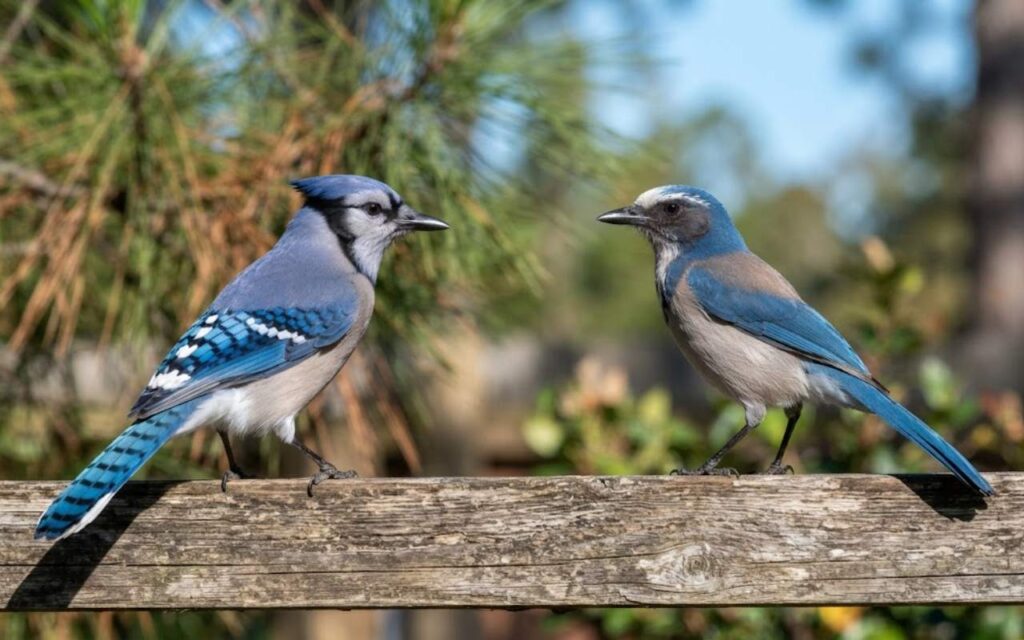
A raw, unedited birding photo showing a crested Blue Jay with patterned wings perched next to a flat-headed, gray-backed Florida Scrub-Jay on a rustic rail.

Blue Jay vs. Florida Scrub-Jay: The Complete Identification Guide

Distinguishing a Blue Jay vs. Florida Scrub-Jay in the field comes down to recognizing structural head shape, plumage contrast, and strict regional habitat limitations. While both belong to the Corvidae family, their silhouettes, social structures, and habitat dependencies could not be more distinct. Misidentifications routinely occur in the central Florida peninsula where their ranges overlap.

Blue Jay vs. Florida Scrub-Jay: The Complete Identification Guide Read More »
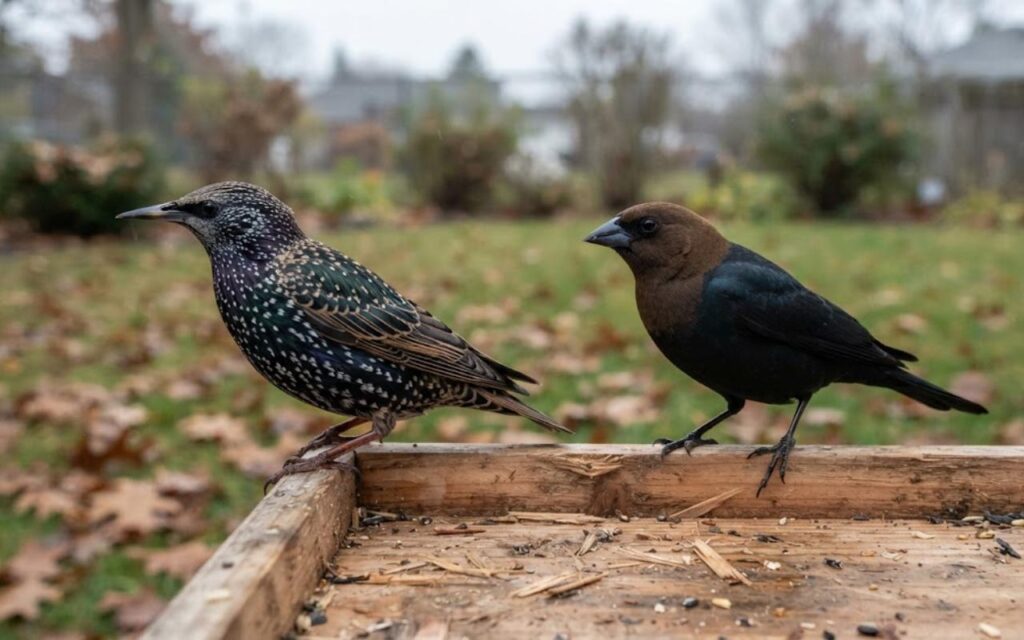
A raw, unedited birding photo showing a speckled European Starling standing next to a brown-headed cowbird on a cedar platform feeder on a cloudy morning.

European Starling vs. Brown-headed Cowbird: Complete Identification Guide

Mastering a reliable European Starling vs. Brown-headed Cowbird identification guide is essential for backyard naturalists seeking to manage aggressive flocking dynamics at feeding stations. While both species share a dark silhouette and a reputation for overwhelming residential yards, they belong to entirely distinct avian families with vastly different anatomical traits. Misidentification runs rampant in late

European Starling vs. Brown-headed Cowbird: Complete Identification Guide Read More »
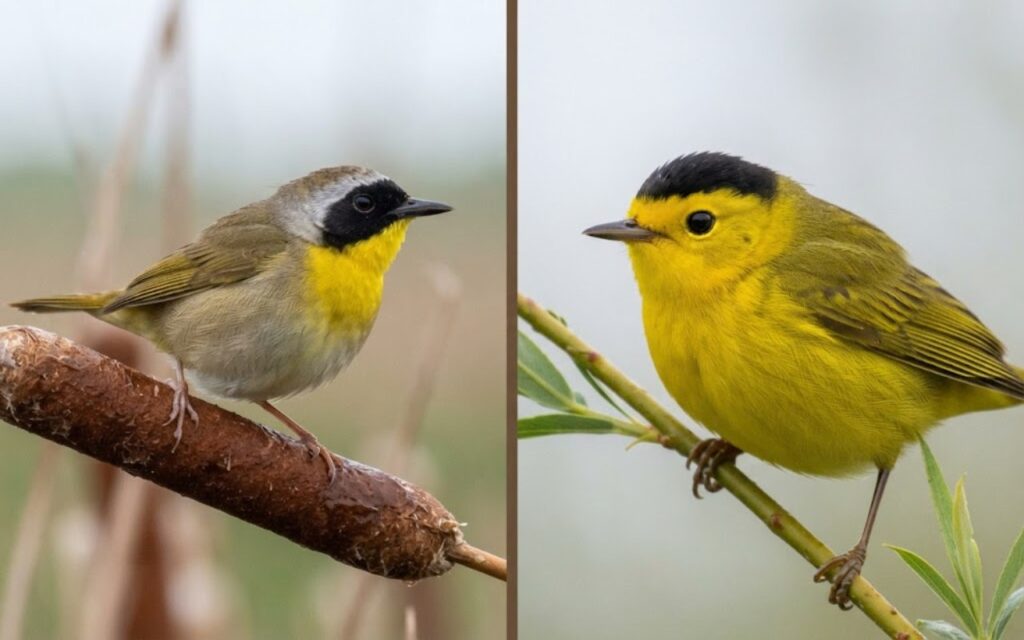
A raw split-screen photo showing a black-masked Common Yellowthroat on a cattail reed on the left and a black-capped male Wilson's Warbler on a green branch on the right.

Common Yellowthroat vs Wilson’s Warbler: How to Spot the Differences

Distinguishing between a Common Yellowthroat vs Wilson’s Warbler presents one of the most classic identification puzzles for field birders across North American migration corridors and breeding territories. While adult breeding males display starkly contrasting head markings, female and immature fall plumages frequently leave observers struggling to make a definitive call in thick vegetation. Field observers

Common Yellowthroat vs Wilson’s Warbler: How to Spot the Differences Read More »

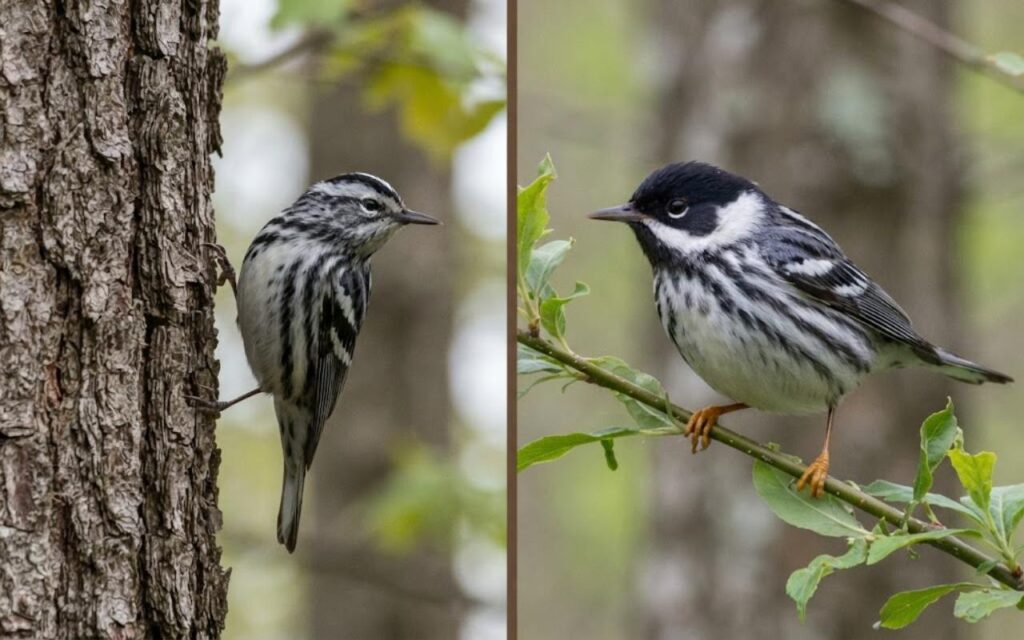
A raw split-screen photo showing a trunk-creeping Black-and-White Warbler with a striped crown on the left and a branch-perched male Blackpoll Warbler with a solid black cap and orange legs on the right.

Black-and-White Warbler vs Blackpoll Warbler: The Complete Identification Guide

Tackling a Black-and-white Warbler vs Blackpoll Warbler identification in the field requires separating subtle plumage contrasts from rapid arboreal feeding behaviors. While spring breeding males share a monochrome palette of stark black, white, and heavy streaking, their anatomical structure and environmental niches diverge completely. Birders frequently misjudge these two parulids when catching fragmented views through

Black-and-White Warbler vs Blackpoll Warbler: The Complete Identification Guide Read More »
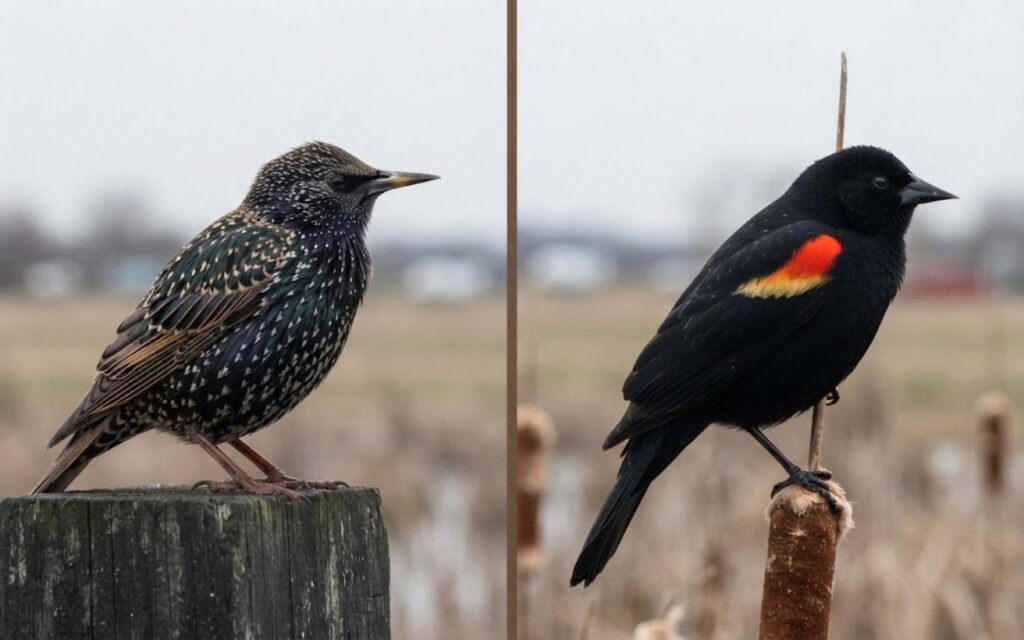
A raw split-screen photo showing a heavily speckled iridescent European Starling on the left and a glossy black male Red-winged Blackbird with a red shoulder patch on the right.

European Starling vs. Red-winged Blackbird: Key Differences and Identification Guide

Mastering the European starling vs. red-winged blackbird identification challenge requires looking past superficial dark feathers and recognizing critical differences in body structure, seasonal molts, and flight behavior. Backyard birders frequently confuse these two widespread species across North American yards and wetlands. Distinct evolutionary adaptations produce entirely different silhouettes, bill shapes, and foraging strategies once you

European Starling vs. Red-winged Blackbird: Key Differences and Identification Guide Read More »

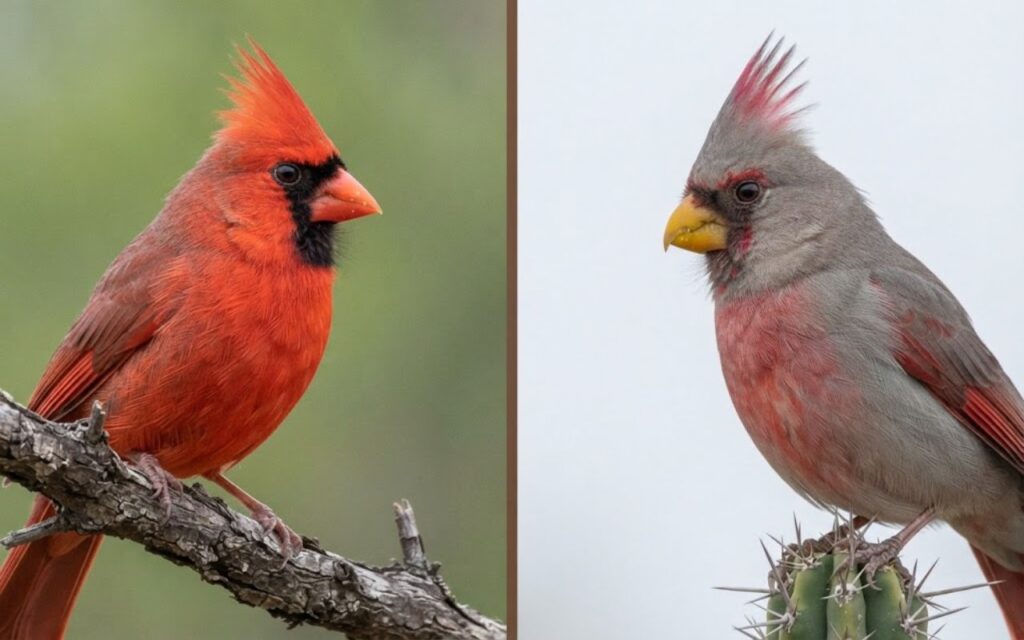
A raw split-screen photo showing a brilliant crimson Northern Cardinal with an orange beak on the left and a slate-gray Pyrrhuloxia with a curved yellow beak on the right.

Northern Cardinal vs. Pyrrhuloxia: How to Tell These Birds Apart

Mastering the Northern Cardinal vs. Pyrrhuloxia identification challenge requires looking past superficial crest shapes and zeroing in on distinct anatomical adaptations. While these two closely related species share territories across the arid scrub of the American Southwest and Northern Mexico, their evolutionary pathways have produced starkly different physical and ecological markers. Birders frequently struggle to

Northern Cardinal vs. Pyrrhuloxia: How to Tell These Birds Apart Read More »

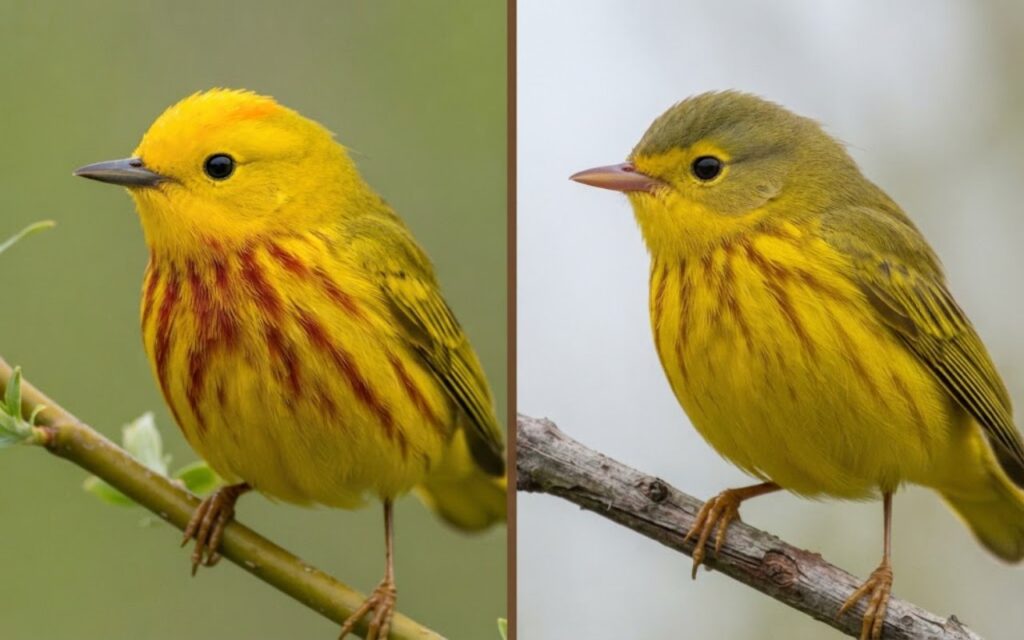
A raw split-screen photo showing a brilliant golden-crowned Yellow Warbler with thick chest streaks on the left and an olive-crowned Northern Yellow Warbler with fine streaks on the right.

Yellow Warbler vs Northern Yellow Warbler: The Complete Identification Guide

Navigating the field separation of the yellow warbler vs northern yellow warbler requires untangling a newly updated taxonomic framework and subtle regional plumage variations. Following major global checklists, field ornithologists and taxonomy committees officially treat these birds as two entirely distinct species rather than mere subspecies groups within a single complex. Understanding this distinction clarifies

Yellow Warbler vs Northern Yellow Warbler: The Complete Identification Guide Read More »
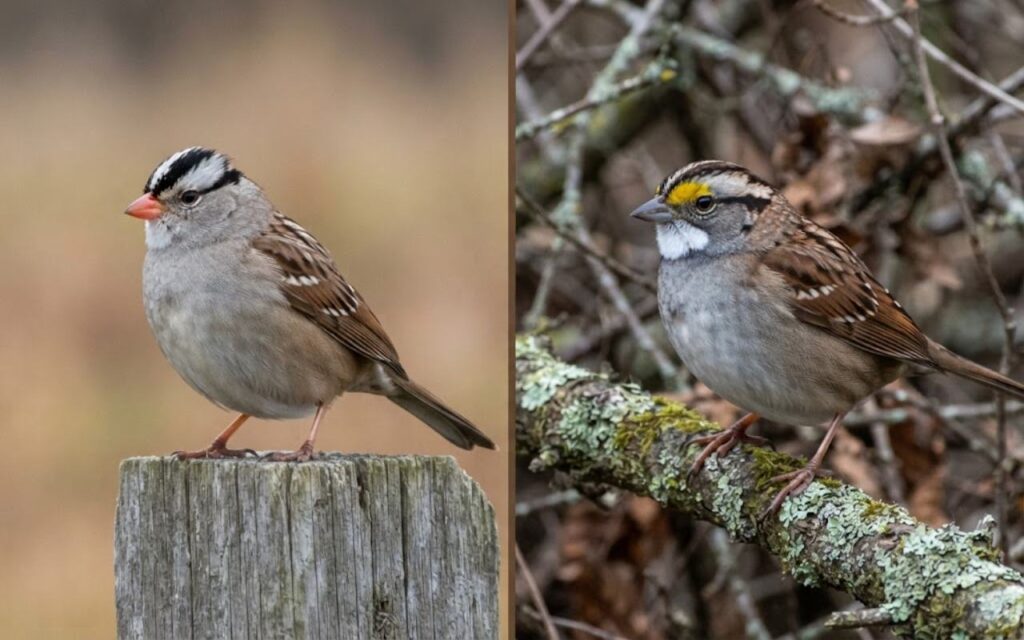
A raw split-screen photo showing a White-Crowned Sparrow with an orange beak and gray throat on the left, and a White-Throated Sparrow with a white bib and yellow lores on the right.

White-Crowned Sparrow vs White-Throated Sparrow: Essential Identification Tips for Birders

Mastering White-crowned Sparrow vs White-throated Sparrow identification requires moving past basic field guides and evaluating structural markings that persist across every lighting condition. While classic illustrations depict striking adult birds in pristine breeding plumage, winter backyard flocks present a dizzying mix of polymorphic adults, dull immatures, and shadowed silhouettes. Birders frequently struggle to separate these

White-Crowned Sparrow vs White-Throated Sparrow: Essential Identification Tips for Birders Read More »

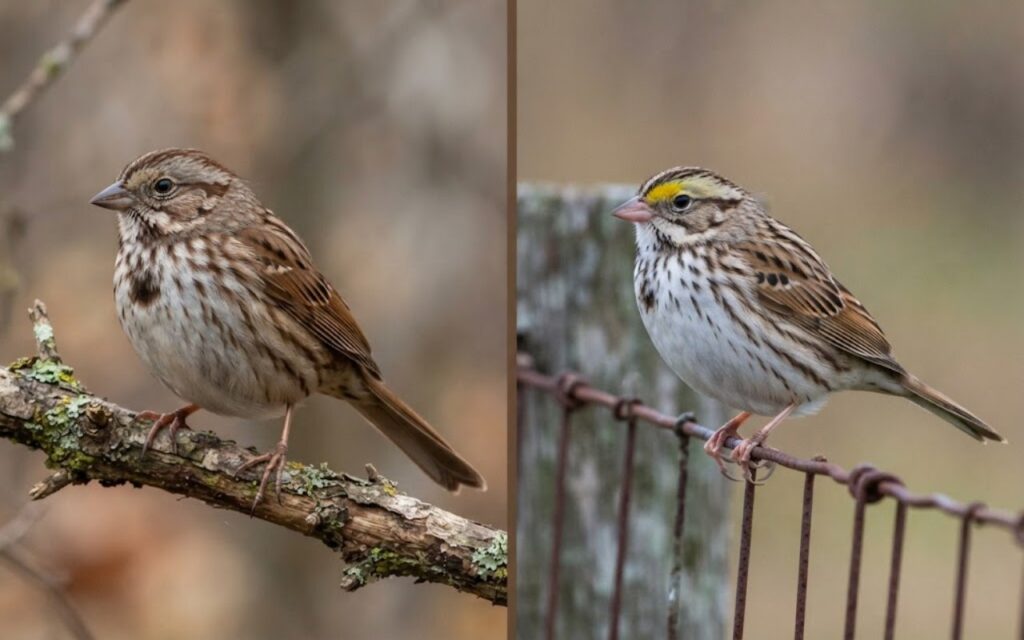
A raw split-screen photo showing a long-tailed Song Sparrow with blurry breast streaking on the left and a short-tailed Savannah Sparrow with a yellow eyebrow patch on the right.

Song Sparrow vs Savannah Sparrow: Key Identification Tips for Birders

Mastering Song Sparrow vs Savannah Sparrow: ID Tips is an essential rite of passage for birders navigating confusing little brown jobs across North American fields and hedgerows. Both species display heavily streaked underparts and similar brown tones, which leads to frequent identification errors in both backyard settings and open terrain. Disentangling these two widespread sparrows

Song Sparrow vs Savannah Sparrow: Key Identification Tips for Birders Read More »

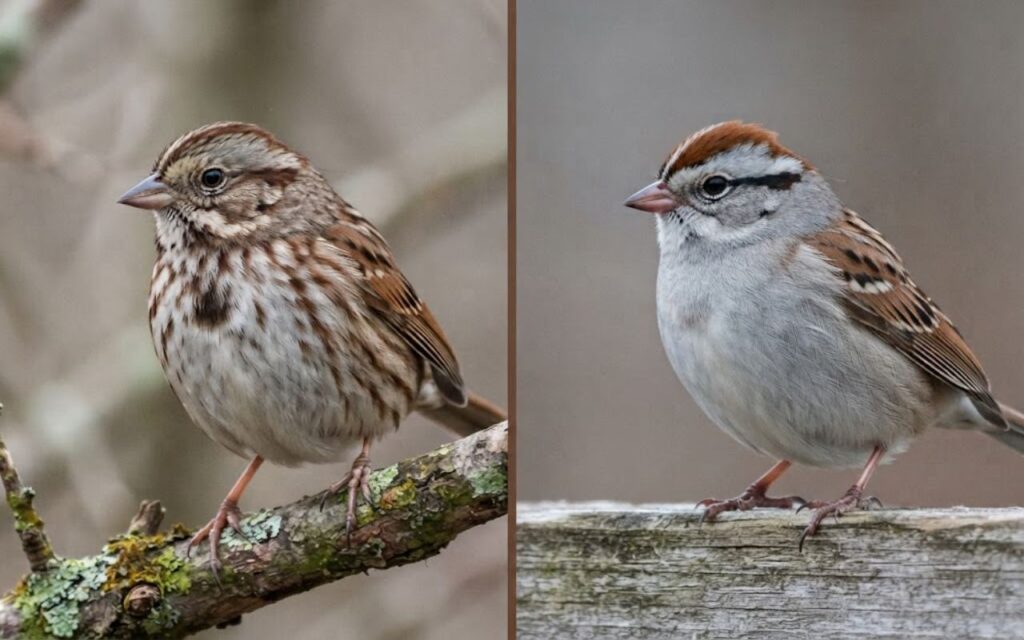
A raw split-screen photo showing a heavily streaked native Song Sparrow with a central chest spot on the left and an unstreaked gray-breasted Chipping Sparrow with a rufous cap on the right.

Song Sparrow vs Chipping Sparrow: Key Differences and Identification Guide

Navigating a reliable song sparrow vs chipping sparrow identification guide can save birders hours of second-guessing in the field and at backyard feeders. While both species share overlapping geographic ranges across North America, their physical dimensions, structural silhouettes, and vocal habits differ noticeably once you know what to look for. Novice observers often stumble when

Song Sparrow vs Chipping Sparrow: Key Differences and Identification Guide Read More »
Consent Preferences
Scroll to Top