
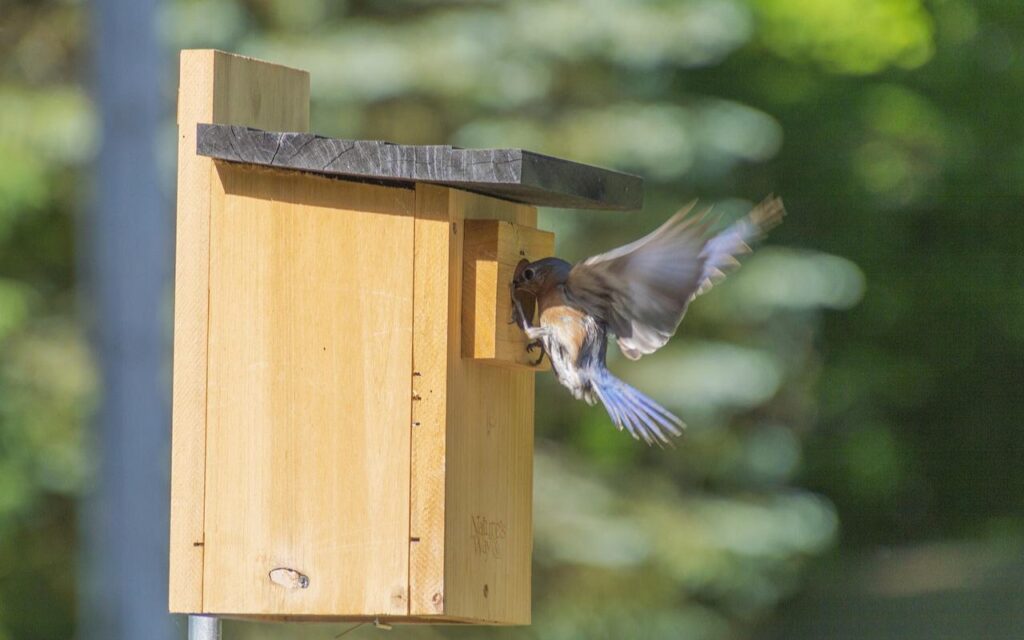
Learning how to protect a bluebird house from predators is essential because a nest box that is not actively guarded is not a conservation tool. It is a trap. Research consistently documents that cavity-nesting birds at unguarded boxes face predation rates that can eliminate the majority of nesting attempts in a given season.
The predators responsible, including raccoons, rat snakes, feral cats, House Sparrows, and Protocalliphora blowfly larvae, operate through specific, predictable physical mechanisms. These structural threat vectors can be easily countered with the right hardware in the right configuration.
This guide works through every category of bluebird house predator threat, from mammalian climbers to reptilian intruders to microscopic parasites. We provide the specific engineering response that each threat requires. Every recommendation is anchored to published research or verified field trial data from managed nest box programs.
Quick Answer: How to protect a bluebird house from predators?
To protect a bluebird house from predators, mount the box on a freestanding smooth galvanized steel pole equipped with a floating stovepipe baffle set four feet high. Install a heavy metal portal protector to block starlings and attach a wire mesh Noel guard to stop raccoons and cats from reaching inside the cavity.
Bluebird House Defense Masterclass: A Visual Guide to Protecting Nest Boxes
Visual Guide: Watch this comprehensive 10-minute video masterclass detailing the structural installation, mechanical physics, and field testing parameters of advanced backyard predator barriers. This detailed explainer briefing illustrates exactly how to isolate mounting hardware and fortify entrance portals, helping you confidently safeguard developing Sialia sialis broods without introducing toxic chemical materials into the nesting ecosystem.
Show Transcript:
0:00
Welcome to this explainer. Today we’re diving into something pretty personal for me.
0:15
A while back, I had a pretty painful realization right in my own backyard that changed how I look at birdhouses completely.
0:30
I honestly thought I was helping nature when I put up a nice, scenic bluebird house.
0:45
But when I checked the nest later, I realized I wasn’t building a sanctuary at all.
1:00
I had basically created an easy target, almost like a free buffet for local wildlife.
1:15
That mistake pushed me into a full rethink of everything I thought I knew about backyard bird setups.
1:30
I decided I wasn’t going to guess anymore. I was going to rebuild things using research, engineering thinking, and real data.
1:45
While going through Cornell Lab research, I came across a line that stuck with me.
2:00
It said that a nest box without active protection can actually function like a trap.
2:15
That hit hard, because my setup was exactly that.
2:30
My “helpful” birdhouse wasn’t helping conservation at all.
2:45
It was attracting raccoons, snakes, feral cats, and competing birds that took advantage of it.
3:00
Research shows unprotected nest boxes can lose most nesting attempts in a single season.
3:15
That completely changed how I looked at backyard bird setups.
3:30
I stopped thinking like a casual bird watcher and started thinking like someone responsible for protection.
3:45
But I needed proof that better design actually made a difference.
4:00
That’s when I found a key number: 6.7.
4:15
According to large NestWatch datasets from Cornell, boxes with predator guards had about a 6.7% higher success rate.
4:30
That might not sound huge at first.
4:45
But over multiple seasons and multiple broods, that difference adds up fast.
5:00
That was enough for me to rebuild everything from the ground up.
5:15
I started with the foundation: isolation.
5:30
The goal wasn’t just strength, it was removing every possible way predators could reach the box.
5:45
My old setup used a standard wooden post.
6:00
It looked natural, but it also gave predators something to grip and climb.
6:15
Raccoons and cats can climb rough surfaces using claws and friction.
6:30
That texture basically acted like a ladder.
6:45
So I replaced it with a smooth galvanized steel pole.
7:00
No bark, no grip points, nothing to climb.
7:15
That alone removed a major access route.
7:30
Then I looked at something I hadn’t considered before: snakes and how they climb.
7:45
By switching to smooth metal, I reduced their ability to get traction and push upward.
8:00
But I still needed an extra layer of defense.
8:15
So I added a stovepipe baffle that spins freely when weight is applied.
8:30
When an animal tries to climb it, the surface rotates and breaks their grip instantly.
8:45
Then I focused on placement height and clearance around the pole.
9:00
Roughly four feet off the ground is the cutoff where raccoons can still reach.
9:15
I also cleared nearby branches because trees act like launch pads for squirrels and raccoons.
9:30
Next came the entrance hole and protection system.
9:45
I used a 1.5 inch opening, which allows bluebirds in but blocks larger invasive birds.
10:00
Everything together forms a fully protected nesting system that finally works season after season.
10:06
So here’s the question I’ll leave you with: have you ever looked at your backyard setup like a system that needs real protection?
What Is the Best Way to Protect a Bluebird House From Predators?
The best way to protect a bluebird house from predators is to mount it on a freestanding smooth metal pole equipped with a free-floating stovepipe baffle positioned at least four feet off the ground. This configuration physically isolates the nest box from every climbing predator path and removes all leverage points that raccoons, snakes, and cats require to reach the cavity.
According to Cornell Lab’s NestWatch analysis of predator guard effectiveness, which used 24,114 nest records submitted between 2014 and 2016, nests in boxes with predator guards had success rates 6.7 percent higher than nests in boxes without guards. Stovepipe baffles and cone-type baffles were among the most effective designs tested, outperforming entrance hole extenders and other guard types in overall nest survival outcomes.
The underlying principle is isolation. A nest box mounted on a tree trunk, fence post, or wooden stake provides every climbing predator with a textured vertical surface that supports their locomotion method.
A smooth, galvanized steel electrical conduit pole of half-inch to one-inch diameter provides none of these friction points. The pole must be freestanding, with no adjacent structures, branches, or fence lines within 12 feet horizontally that a predator could use as a launching platform.
The Isolation Principle: Why Surface Texture Is the Deciding Variable
Raccoons, rats, and feral cats all climb vertical surfaces using a combination of claw purchase on rough substrate and grip force at contact points. Bark, rough wood grain, brick, and wire fence mesh all provide the micro-texture required for this leverage. A smooth steel conduit pole eliminates micro-texture across its entire surface, denying claw purchase from ground to box.
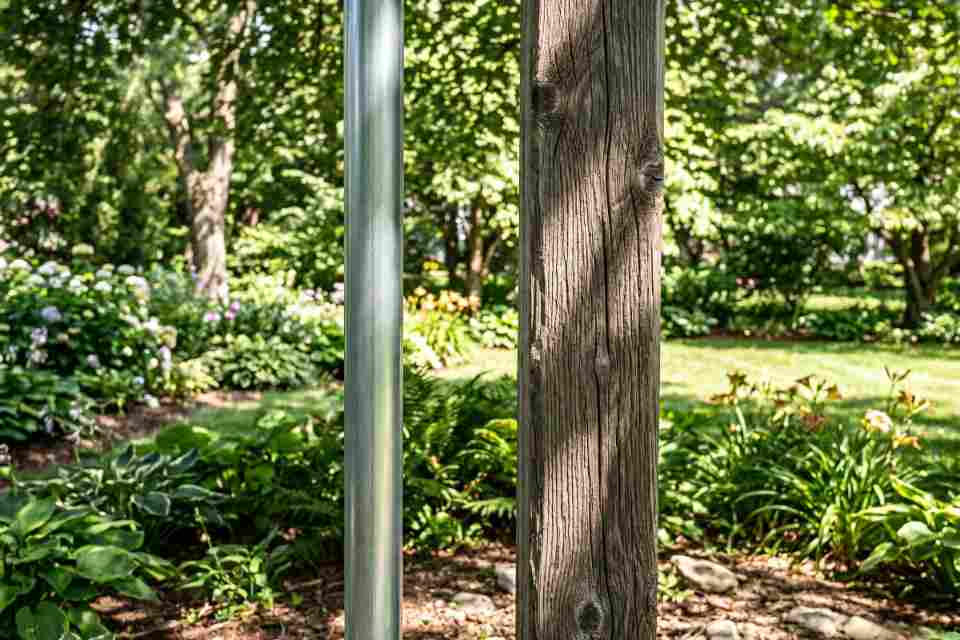
The stovepipe baffle adds a second layer to this isolation by presenting a large, smooth, freely rotating cylindrical surface that collapses any body position a climbing mammal attempts to establish. When a raccoon grips the top edge of the baffle cylinder, the baffle rotates under load, collapsing the raccoon’s grip and forcing it to the ground.
The free rotation is essential: a rigidly fixed baffle can potentially be climbed by a determined predator using sustained lateral pressure. A freely floating baffle cannot be climbed because no stable grip position can be maintained long enough to establish upward momentum.
How Do You Protect Bluebird Nests From Snakes?
To protect bluebird nests from climbing snakes, install an 8-inch wide, 24-inch long metal stovepipe baffle that floats freely on a smooth metal mounting pole at least four feet off the ground. The combination of smooth pole surface and unstable cylindrical baffle disrupts the concertina locomotion mechanism that rat snakes use to climb vertical structures.
Ornithological Data: Research published in Integrative and Comparative Biology confirmed that climbing snakes use concertina locomotion to ascend vertical surfaces. This biomechanical technique requires the snake to create two or more anchor points on the substrate by applying lateral or medial force with curved body sections before extending forward between them.
This method is entirely dependent on the snake being able to apply enough lateral force against the surface to maintain static friction at the anchor points.
A smooth metal pole surface reduces the available friction coefficient dramatically compared to bark or rough wood. The freely floating stovepipe baffle removes the possibility of establishing a stable anchor point altogether.
When a climbing rat snake reaches the baffle cylinder and attempts to coil around it to form an anchor, the cylinder rotates under the applied force, collapsing the anchor before upward progress is possible.
According to NestWatch predator management guidelines, snakes are an occasional threat to eggs and nestlings that can be deterred by installing a conical metal collar or stovepipe baffle below the box. The guide emphasizes that pole-mounted nest boxes must be placed completely away from trees to prevent climbing reptiles from bypassing these physical barriers via overhead branches.
Boxes mounted on trees or wooden fence posts cannot be adequately protected from snakes because the climbing surface cannot be made smooth, and the snake’s concertina locomotion gives it access to any textured vertical structure regardless of height.
What Type of Baffle Best Stops Raccoons and Squirrels?
The stovepipe baffle, a smooth metal cylinder 8 inches in diameter and at least 24 inches tall mounted freely on the pole below the box, is the most effective guard against raccoons and squirrels. The top of the baffle must be positioned at least four feet above the ground to exceed a raccoon’s maximum jump-and-reach distance from the ground surface.
Raccoon anatomy sets the dimensional requirements for effective baffle height. An adult raccoon standing on its hind legs on flat ground can reach approximately 18 to 24 inches above the ground with its forepaws. A raccoon that can jump and grip simultaneously can extend its effective reach to approximately three and a half to four feet from a standing position.
This is why Cornell Lab’s NestWatch predator guide specifies four feet as the minimum height for the top of the baffle, not the base: the top of the cylinder must be at or above the raccoon’s maximum reach to prevent it from gripping the upper edge and pulling itself over.
The 12-foot horizontal clearance radius is equally important. Raccoons and squirrels readily use horizontal approach routes, including overhanging branches, fence tops, and adjacent structures, to drop onto or reach around a baffle. A baffle on a perfectly installed pole is bypassed immediately if a branch overhangs the box at a height that allows a squirrel to drop directly to the box roof.
Auditing the clearance zone around each box should include looking up from the pole to identify any overhead canopy branches within 12 feet horizontally and removing or trimming them before the breeding season begins.
How Do You Keep Sparrows and Starlings Out of a Bluebird House?
Maintaining a round entrance hole diameter of exactly 1.5 inches physically excludes European Starlings, whose skeletal shoulder width exceeds this aperture. House Sparrows are small enough to enter any hole that admits a bluebird and require active nest monitoring and removal rather than passive exclusion by hole size alone.
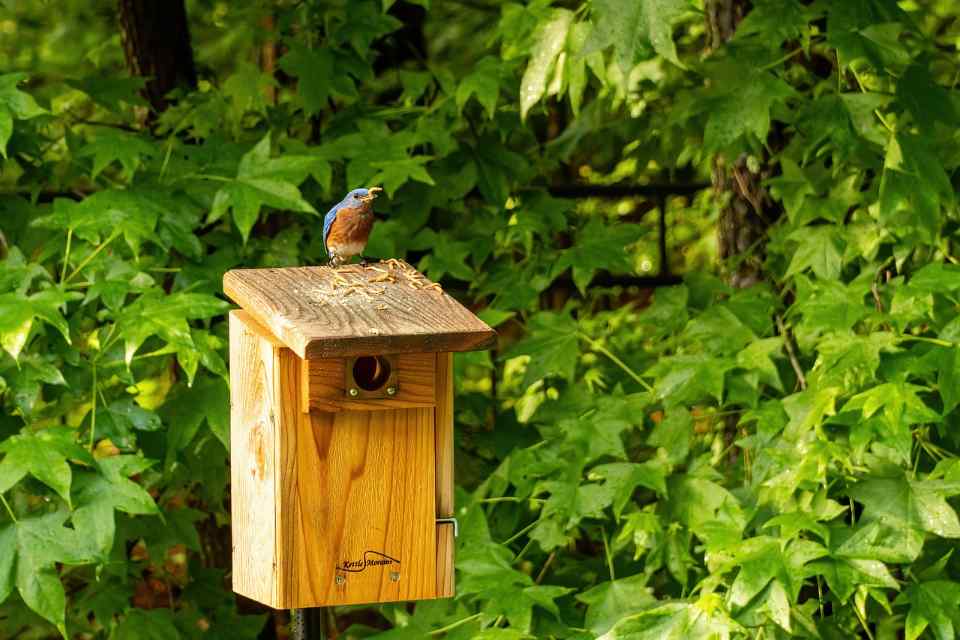
According to NestWatch invasive species guidelines, European Starlings cannot squeeze through an opening smaller than 1.5 inches. Restricting the entrance hole to this exact size successfully excludes starlings from the cavity while safely giving smaller native cavity-nesting birds full access to the nest box.
Any degradation of the entrance hole beyond this dimension, through weather, woodpecker activity, or soft wood wear, opens the box to starling colonization. Annual inspection and re-cutting or replacing the entrance hole plate is standard maintenance for any managed bluebird box.
A metal portal protector plate, a flat metal plate with a 1.5-inch hole drilled to specification mounted flush against the exterior entrance hole, serves two purposes simultaneously. It maintains the precise hole diameter against chewing and weather degradation, and its smooth metal surface resists the grip of House Sparrows attempting to cling at the entrance while assessing the cavity interior.
The no-perch design is critical alongside the hole guard: removing any exterior perch or ledge eliminates the standing platform that House Sparrows use to inspect and claim boxes. For a full analysis of how House Sparrows exploit nest sites and the management responses available to backyard birders, see our article on house sparrow nesting habits in urban areas.
For the European Starling threat context, monofilament deterrents can be useful as a secondary measure. Vertical strands of 10 to 15-pound monofilament fishing line hung 2 to 3 inches in front of the entrance hole at 1-inch intervals create a barrier that disrupts the direct approach flight path of European Starlings, whose wingspan and flight approach angle make it difficult to navigate between close-spaced vertical lines.
Eastern Bluebirds approach the entrance hole from below in an upward arc that passes easily between the monofilament strands. For the full competitive context of starling cavity competition, see our article on European starling nesting habits.
Does a Noel Guard Protect Bluebird Eggs From Aerial Attacks?
The Noel guard, a wire mesh cage extending outward from the entrance hole, protects the nest cavity from aerial predators by increasing the physical distance between the hole and the nest cup. This dimensional barrier makes it impossible for a crow or raccoon to reach the eggs or nestlings by inserting a limb or beak through the entrance.
The geometry of predator reach is the operative variable. An unguarded entrance hole placed directly on a shallow nest box allows a raccoon sitting on the box roof to insert its forepaw through the hole and reach the nest cup in a single downward motion. A standard nest box interior depth of six to eight inches reduces but does not eliminate this reach threat for large-pawed adults.
A Noel guard extends the distance from the exterior of the box to the entrance hole by three to four inches outward, adding to the total depth a predator must bridge. The combined effect of a correctly dimensioned box plus a Noel guard is an effective predator reach distance of 10 to 12 inches, which exceeds the reach capability of most raccoon-sized predators from a rooftop approach.
Blue jays and crows present a different threat geometry. Both species can remove eggs from shallow-depth boxes by inserting the bill through the entrance hole and grasping the egg. The Noel guard’s wire cage forces these birds to approach the hole at an angle rather than directly, which eliminates the direct bill insertion angle required for egg extraction.
Fledglings using the Noel guard wire mesh as a climbing ladder during emergence week is a secondary benefit: the inner face of the hardware cloth mesh provides grip for nestlings ascending toward the entrance hole on fledging day, functioning similarly to the scored interior wall surface recommended in standard nest box designs.
How Do You Prevent Ants and Blowfly Parasites From Destroying a Nest?
To prevent Protocalliphora blowfly larvae and crawling ants from damaging nestlings, remove old nest material completely after each brood fledges, apply a thin layer of food-grade diatomaceous earth beneath the fresh pine needle nest substrate, and maintain a grease barrier on the mounting pole to intercept ant columns. Never apply commercial chemical pesticides inside or near an active cavity.
Ornithological Data: A comprehensive host parasite study published in Integrative Zoology evaluated how environmental variations impact Protocalliphora blowfly larvae loads in wild bird populations. The research established that while the structural intensity of this avian blowfly parasitism decreases during higher temperatures, the overall body mass of developing fledglings remains statistically unrelated to the total parasite density inside the nest box cavity.
The study verified that elevated ambient temperatures during the nestling phase alter larval development success, meaning that micro-climate heat serves as a natural regulator. This physical constraint implies that early-spring broods nesting in moderate, humid conditions face the highest vulnerability, whereas mid-summer nest cups experience heat-induced parasite reductions.
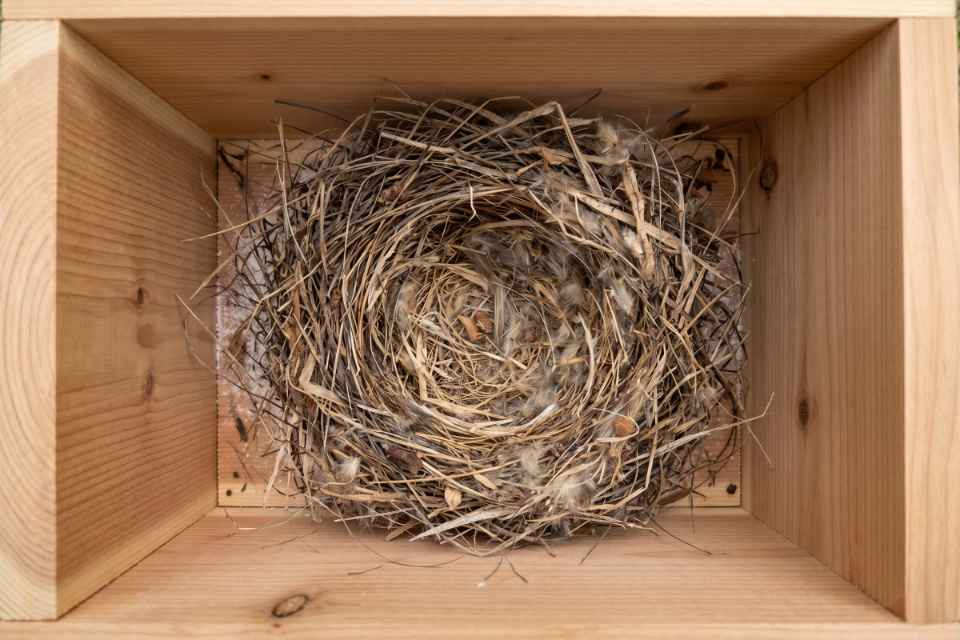
The core lifecycle vulnerability for this parasite is the pupal stage. After feeding on nestlings, Protocalliphora larvae drop into the base layer of the nest cup to pupate. Removing all old nest material completely after each brood fledges eliminates both larvae and pupae before they can complete the cycle and produce adults to reinfest the next brood.
Food-grade diatomaceous earth applied beneath the nest cup in a thin layer damages the cuticle of larvae passing through the base material through physical abrasion. This mechanism reduces pupal success without introducing harmful chemical toxins into the sensitive cavity environment.
The Tanglefoot or automotive grease barrier on the pole base intercepts crawling ant columns before they can reach the cavity entrance. Ants locate food sources and nest entry points through pheromone trails. A continuous grease band wrapped around the metal pole at 12 to 18 inches above the ground breaks this trail and physically traps individual insects that contact it.
Vegetable-based shortening or commercial insect trap grease applied to the pole surface every three to four weeks through the breeding season maintains the barrier. This periodic reapplication ensures the texture remains sticky and active against invading columns.
Lithium-based automotive grease, recommended by several bluebird society resources as an alternative pole treatment, serves the same function and provides higher weather resistance. Neither grease option should ever be applied directly to the wood of the box itself or anywhere within reach of the entry hole.
Can You Protect Bluebird Houses Using Natural Cat Repellents?
Natural olfactory deterrents including concentrated peppermint oil and crushed capsaicin can temporarily disrupt the scent-tracking behavior of domestic cats at the base of the mounting pole, but they must be applied exclusively to the pole base and surrounding ground area. These compounds must never contact the nest box wood or be applied near the entrance hole, as strong volatile aromatic compounds can prompt incubating females to abandon active eggs.
Domestic and feral cats locate nest boxes through a combination of visual observation of adult bird approach routes and olfactory tracking of ground-level scent trails. Masking the scent path at the pole base disrupts the latter mechanism.
Peppermint oil applied to the pole base and a 12-inch radius of surrounding soil creates a volatile compound barrier that cats find aversive enough to interrupt their approach in many cases.
This is a secondary deterrent, not a primary one, and its effectiveness diminishes as the volatile compounds dissipate. Reapplication every four to seven days during peak nesting season is required to maintain any deterrent effect.
Planting prickly-stemmed native ground covers around the base of the mounting pole provides a permanent physical deterrent that requires no maintenance once established.
Creeping juniper, native hawthorn seedlings, and other thorny low-growing natives create a contact-aversive zone that cats avoid when approaching from ground level.
This physical layer is more reliable than olfactory deterrents because it works independently of weather, temperature, and reapplication schedules. For a broader approach to protecting cavity-nesting birds from ground predators, see our article on how to keep raccoons away from bird feeders.
Forensic FAQ: Cavity Defenses and Structural Traps
Should a Bluebird House Have an Exterior Perch for the Parents?
No. A functional bluebird house must never include an exterior perch. Eastern Bluebirds do not require a perch to enter the nest cavity and do not use one during normal approach and entry behavior. House Sparrows, by contrast, use exterior perches as a visual staging platform to inspect the cavity interior, assess occupancy, and launch attacks on incubating females.
A perch-equipped box in House Sparrow territory is effectively advertising cavity availability to the species most likely to destroy bluebird nesting attempts. Removing the perch is one of the fastest single modifications available to convert a House Sparrow trap into a functional bluebird box.
How Deep Should a Protective Bluebird Box Be?
A secure bluebird box must have an interior depth of at least six to eight inches measured from the bottom edge of the entrance hole to the floor plate. This depth prevents a raccoon sitting on the box roof from reaching the nest cup through the entrance hole in a single downward arm extension.
If pine needle or nesting material accumulation raises the nest cup to within four inches of the entrance hole, the reach protection afforded by the box depth is eliminated. Monitoring the nest cup height during each brood and removing excess material before it approaches the entrance hole is standard nest box management practice.
Visual Defense Summary: The Complete Bluebird House Protection Blueprint
Reviewing physical measurements and hardware configurations is much easier when you can analyze the entire blueprint simultaneously. The detailed layout diagram below condenses the scientific data, predator reach dimensions, and gatekeeping rules from this guide into a single visual reference plan.
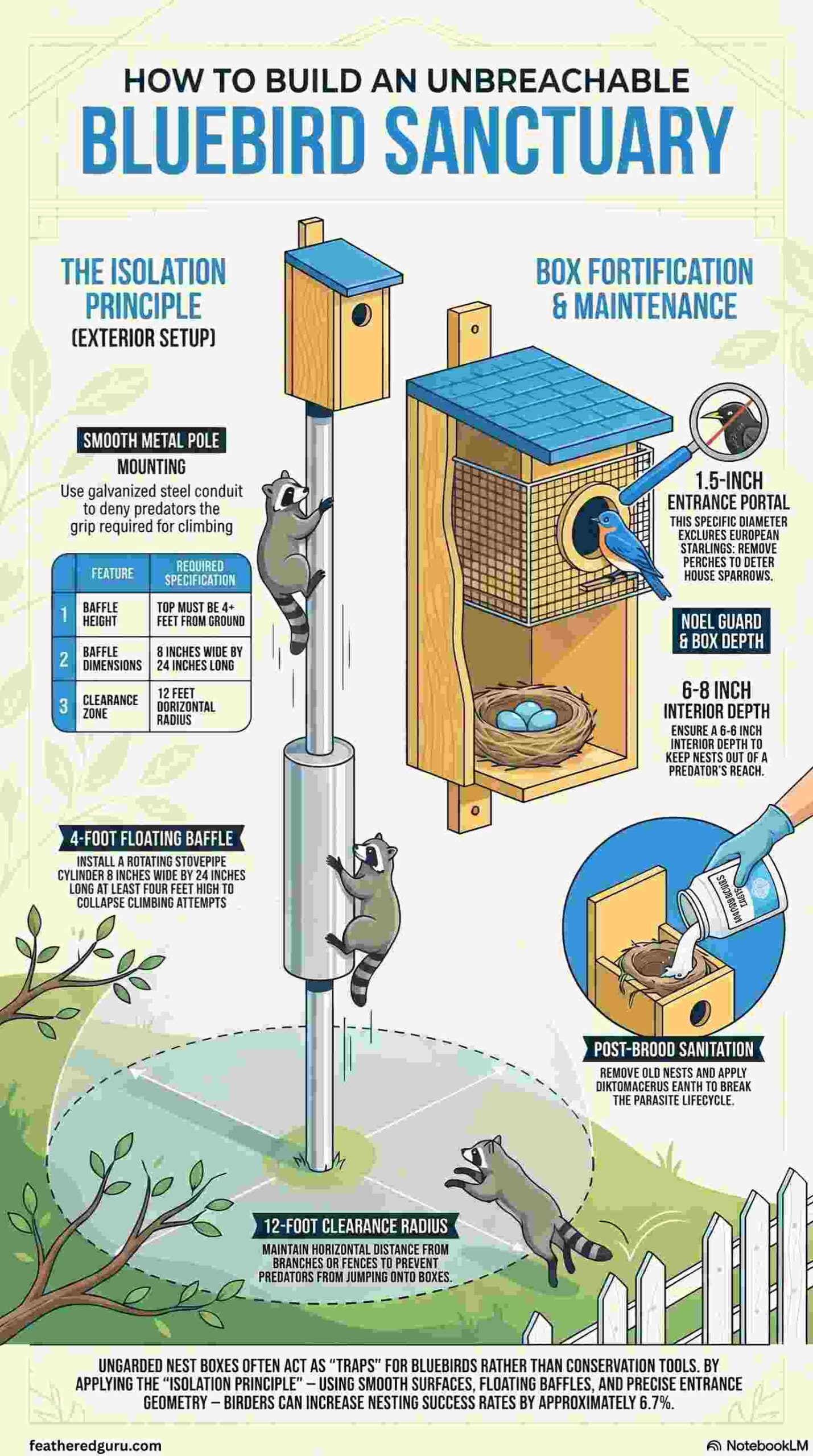
Conclusion: Building the Unbreachable Sanctuary
Upgrading a nest box setup from a wooden fence mount to an isolated, baffled, hole-guarded metal pole system changes the ecological function of the box entirely. Cornell Lab’s NestWatch data shows a 6.7 percent improvement in nest success with predator guards, which across a multi-year, multi-box property compounds into a measurable contribution to local Eastern Bluebird population stability.
The complete protection checklist: freestanding smooth metal pole, freely floating stovepipe baffle at minimum four feet height, 12-foot horizontal clearance radius maintained, 1.5-inch entrance hole maintained with metal plate, no exterior perch, six to eight inch interior depth, post-brood nest material removal, diatomaceous earth beneath substrate, and pole grease barrier renewed every four weeks.
Each element addresses a specific threat vector. Together they produce a nest box that birds choose to use and that successfully fledges young season after season.
For the full habitat and nesting box setup framework that maximizes bluebird breeding success alongside these protection measures, see our articles on how to attract Eastern Bluebirds to a birdhouse and how to attract Eastern Bluebirds to your yard.